
Climate Risk and Mortgage Lending: Strategic Opportunities in the Wake of the LA Wildfires
The 2024–2025 Los Angeles wildfires, which caused over $250 billion in economic losses and rendered countless properties uninsurable, have become a stark wake-up call for the financial sector. As mortgage lenders grapple with the escalating risks of climate-driven disasters, the crisis in Southern California underscores a broader transformation in real estate finance. The sector is no longer merely reacting to climate threats; it is proactively integrating resilience strategies into underwriting, pricing, and risk modeling. For investors, this shift represents both a challenge and an opportunity: those who adapt to the new paradigm of climate-aware lending will outperform peers, while laggards face mounting defaults and capital erosion.
The New Normal: Climate Risk as a Credit Factor
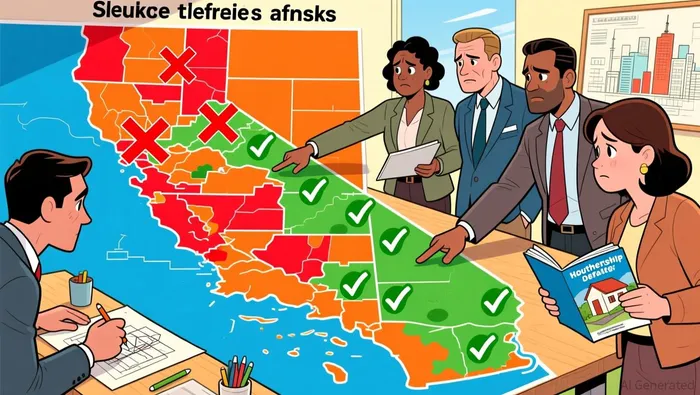
Mortgage lending has traditionally relied on historical data to assess risk. However, the accelerating pace of climate change-exemplified by the LA wildfires-has rendered such models obsolete. According to a report by , lenders are now factoring in climate awareness as a direct influence on mortgage approvals and loan amounts, particularly in high-risk regions. Smaller lenders, often more agile in adapting to local conditions, have been quicker to tighten credit standards in wildfire-prone areas, requiring higher down payments and stricter appraisals.
This recalibration is driven by the immobility of real estate and the long-term nature of mortgage loans. A 30-year fixed-rate mortgage issued today in a region vulnerable to wildfires exposes lenders to the risk of asset devaluation or total loss. As a result, financial institutions are increasingly deploying climate-stress testing models to simulate default probabilities under various disaster scenarios. These tools, which integrate geospatial data and climate projections, enable lenders to price risk more accurately and avoid overexposure to volatile markets.
Strategic Adaptation: From Risk Mitigation to Resilience Building
The financial sector's response to climate risk extends beyond underwriting. Lenders are now collaborating with insurers, regulators, and local governments to promote resilience at the community level. For instance, post-LA wildfires, there has been a surge in investments for vegetation management, prescribed burns, and "home hardening" measures such as fire-resistant roofing and defensible space requirements. While these initiatives reduce the likelihood of catastrophic losses, funding remains a critical bottleneck.
Investors with a long-term horizon can capitalize on this gap. Firms specializing in climate-resilient construction materials, advanced fire detection systems, and data analytics for risk modeling are emerging as key players. Similarly, mortgage lenders that partner with insurers to develop hybrid products-such as parametric insurance tied to climate triggers- stand to capture market share in high-risk regions. The European Business Magazine notes that lenders integrating climate risk modeling into their operations are already outpacing peers in profitability, as they avoid the "moral hazard" of insuring properties in increasingly untenable locations.
Policy and Profit: Navigating Regulatory Landscapes
Government intervention will play a pivotal role in shaping the future of mortgage lending. Policymakers have warned of the systemic risks posed by climate-related defaults, particularly in coastal and wildfire-prone areas. In response, regulatory bodies are likely to mandate climate risk disclosures for lenders, mirroring the European Union's Sustainable Finance Disclosure Regulation (SFDR). For investors, this means prioritizing institutions with transparent climate risk frameworks and robust governance.
At the same time, public-private partnerships offer untapped potential. The Los Angeles case highlights the importance of aligning financial incentives with resilience goals. For example, tax credits for properties retrofitted with fire-resistant features or grants for lenders offering low-interest loans to climate-adapted developments could create new revenue streams. Investors who engage with policymakers to shape these frameworks will gain a competitive edge.
Conclusion: The Resilience Premium
The LA wildfires have accelerated a paradigm shift in mortgage lending. Climate risk is no longer an abstract concern but a concrete factor influencing credit decisions, asset valuations, and regulatory priorities. For investors, the path forward lies in identifying firms that treat climate resilience as a strategic asset rather than a compliance burden. Those who invest in lenders with advanced risk modeling capabilities, insurers developing innovative products, and communities prioritizing adaptation will not only mitigate losses but also capture the resilience premium-a growing share of the market as climate threats intensify.
In the end, the financial sector's ability to adapt to the "new normal" will determine its survival. As the Yale Law Journal warns, the era of the "uninsurable future" is already here. But for those who act decisively, it is also an era of unprecedented opportunity.







Comentarios
Aún no hay comentarios