
Climate Risk and Insurance Sector Resilience: The Evolving Role of Catastrophe Bonds in a Warming World
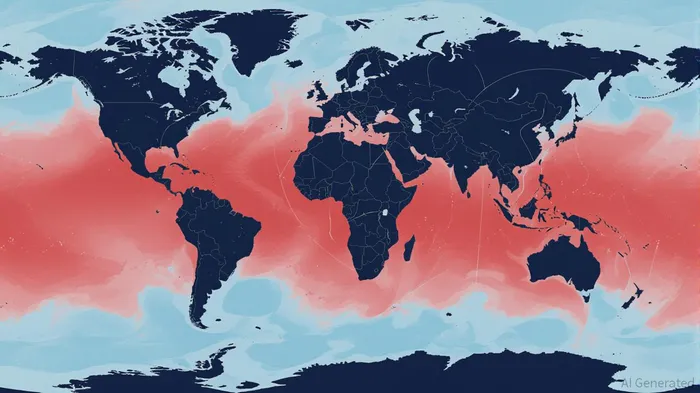
The insurance sector is facing an existential reckoning as climate change reshapes the frequency, intensityINTS--, and geography of hurricanes. While the total number of storms has remained relatively stable since the late 19th century, the proportion of Category 4 and 5 hurricanes has surged. A 2024 study by Climate Central found that maximum wind speeds for Atlantic hurricanes increased by an average of 18 mph due to human-driven ocean warming[1], while a 2023 Nature Scientific Reports analysis revealed a 28.7% acceleration in storm intensification rates since 1971[2]. These trends are not abstract: Hurricane Milton's explosive 2024 intensification over abnormally warm waters exemplifies the growing threat[3].
The geographic footprint of hurricanes is also shifting. A 2025 study noted a southward migration of North Atlantic hurricane formation zones since 1979, increasing risks for low-latitude islands and parts of North America[4]. Conversely, poleward shifts in other regions, driven by narrowing temperature gradients between the equator and poles, are exposing previously safe areas—such as southern Chile and New York—to tropical cyclones[5]. These changes compound risks for coastal communities, which now face not only stronger storms but also higher rainfall and slower-moving systems that exacerbate flooding[6].
Catastrophe Bonds: A Financial Lifeline or a Flawed Instrument?
As traditional reinsurance becomes uneconomical, the catastrophe bond (CAT bond) market has emerged as a critical tool for risk transfer. Global issuance hit $18.2 billion by July 2025, surpassing the 2024 record and projecting a potential $20 billion total for the year[7]. North America dominates this market due to persistent hurricane and wildfire risks, while Europe and the Asia-Pacific regions are seeing rapid growth in flood- and typhoon-linked bonds[8]. Investors are drawn to CAT bonds for their high returns (approximately 11%) and low correlation to traditional assets[9].
However, the market's resilience is being tested. Hurricane Beryl's 2024 devastation in Jamaica—a Category 5 storm that caused $1.5 billion in damages—exposed flaws in parametric triggers. A $150 million CAT bond issued by the Jamaican government failed to pay out because air pressure thresholds were not met, despite catastrophic losses[10]. This mismatch between predefined metrics and actual damages has sparked debates about the fairness of parametric models, which prioritize investor returns over equitable risk-sharing[11].
Adapting to a New Climate Reality
To address these challenges, insurers and modelers are updating risk assessments. Moody'sMCO-- RMS recently expanded its North Atlantic Hurricane Climate Change Model suite, incorporating storm surge modules that account for sea level rise and subsidence in the Gulf Coast[12]. These tools enable more precise local risk differentiation and better quantification of tail risks, critical for pricing CAT bonds in a warming world[13]. Similarly, the Network for Greening the Financial System (NGFS) is integrating probabilistic climate scenarios into models, aligning risk projections with regulatory expectations[14].
Innovative financing mechanisms are also emerging. Sovereign CAT bonds, supported by multilateral banks, are helping vulnerable nations like the Philippines and Jamaica build resilience. Meanwhile, parametric micro-insurance and green CAT bonds are being piloted to protect low-income communities and incentivize proactive adaptation[15]. California's $117 million Wildfire and Forest Resilience strategy, which funds reforestation and infrastructure upgrades, illustrates how public-private partnerships can bridge the “protection gap”[16].
The Road Ahead
The insurance sector's ability to adapt will hinge on three factors: updating risk models to reflect shifting climate patterns, diversifying financial tools to include resilience investments, and ensuring equitable access to protection. While CAT bonds offer a scalable solution, their limitations—such as rigid parametric triggers—must be addressed to avoid creating “insurance deserts” in high-risk regions[17].
For investors, the CAT bond market presents both opportunities and risks. The sector's growth is undeniable, but its long-term viability depends on the accuracy of climate models and the willingness of insurers to price in aggregate risks, such as secondary perils like tornadoes and hail[18]. As hurricanes like Helene and Milton in 2024-2025 demonstrate, the financial toll of climate change is no longer a distant threat—it is here, and the insurance sector must evolve to meet it.







Comentarios
Aún no hay comentarios