
Climate Risk and Infrastructure Resilience in Emerging Markets: The Growing Threat to Airport Operators and Valuations
Vulnerabilities in Emerging Market Airports
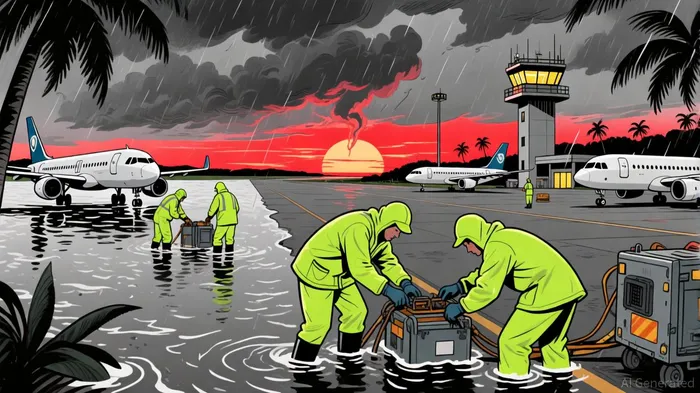
Airports in emerging markets face a dual challenge: aging infrastructure and limited financial resources to adapt to climate shocks. A 2024 study of 54 airports in Latin America and the Caribbean (LAC) found that 80% are already experiencing climate-related disruptions, including stronger storms and rising sea levels, according to a 2024 study of 54 airports. Yet, only 14% have conducted climate risk assessments, and a mere 3% have developed adaptation plans. This "exposure-adaptation gap" highlights systemic underpreparedness.
The financial toll of inaction is stark. Modernizing weather monitoring systems alone requires significant capital. A state-of-the-art airport weather station costs $500,000–$2 million upfront, with annual maintenance expenses exceeding 15% of initial investment, according to an Intel Market Research report. For airports in regions with tight budgets, such costs are prohibitive, forcing reliance on outdated systems that exacerbate operational risks.
Financial Impacts: Case Studies and Indirect Costs
While quantified data on climate-related losses for emerging market airports remains sparse, indirect evidence underscores the scale of the problem. In South Korea-a developed economy with similar infrastructure challenges-11 of 15 domestic airports recorded deficits in 2023. Muan International Airport, for instance, posted a loss of 25.3 billion won, partly due to poor infrastructure utilization and unmet demand forecasts, according to Business Korea. Though not climate-specific, this example illustrates how overambitious expansion without adaptive planning can lead to financial distress.
In emerging markets, the stakes are higher. Small island economies reliant on tourism face cascading impacts: weather-related flight disruptions shorten tourists' stays, damage reputations as reliable destinations, and reduce long-term revenue streams, as demonstrated by a study on airport inoperability. For example, Madeira's tourism-dependent economy has seen recurring losses from storm-related airport closures, with reputational harm compounding immediate revenue shortfalls.
United Airlines' Risk Modeling: A Proactive Approach
While emerging market airports lag in adaptation, global airlines are taking note. United Airlines recently conducted climate risk assessments for 119 of its operating locations using third-party modeling platforms, as outlined in United Airlines' climate appendix. By simulating acute risks like tropical cyclones and chronic threats such as rising temperatures, the airline aims to inform resilience strategies. Though focused on developed markets, this methodology highlights the growing importance of climate scenario analysis for investors.
Investment Implications: Valuation Risks and Opportunities
For investors, the key question is how to navigate the valuation risks posed by climate vulnerability. Airports with weak adaptation plans may face declining asset values as extreme weather events become more frequent. Conversely, operators that prioritize resilience-such as those investing in advanced weather systems or elevating runways in flood-prone areas-could see enhanced long-term returns.
The exposure-adaptation gap also creates opportunities for infrastructure-focused private equity or green bonds targeting climate-resilient projects. In LAC, where only 3% of airports have adaptation plans, there is untapped potential for investors to fund upgrades that mitigate risks while aligning with ESG mandates.
Conclusion: Building Resilience into Investment Strategies
As climate risks crystallize, investors must integrate infrastructure resilience into their due diligence. Emerging market airports, with their high exposure and low adaptation rates, represent a critical frontier. Those that fail to address vulnerabilities will likely see their valuations eroded by operational disruptions and reputational damage. For forward-looking investors, the challenge-and opportunity-lies in identifying operators and regions where proactive adaptation can turn climate risk into competitive advantage.







Comentarios
Aún no hay comentarios