
Climate Resilience in Southern Europe: Strategic Opportunities in Heatwave Adaptation and Tourism Sustainability
As southern Europe grapples with intensifying heatwaves and shifting tourism patterns, the region is becoming a hotbed of innovation in climate resilience infrastructure. From geothermal cooling systems to climate-adaptive real estate, investors are witnessing a convergence of urgency and opportunity. The economic toll of heatwaves—measured in lost productivity, strained tourism, and surging energy demand—has created a pressing need for capital in sectors poised to redefine the region's future.
The Heatwave Economy: Tourism and Labor in Transition
The ECB's latest research underscores a grim reality: heatwaves now reduce regional economic output by 1.5% in the short term and up to 3% four years later. Labor productivity in southern Europe, already strained by high temperatures, could fall by 10% in hotter regions, as workers demand investments in air conditioning and workplace adaptation. Meanwhile, tourism—a cornerstone of the region's economy—is evolving. European travelers are increasingly opting for off-season trips to avoid peak heat, driving a 36% year-on-year surge in demand for summer-avoidance holidays. Destinations like Malta and Cyprus are thriving, while larger hubs like Spain and Portugal are adapting with climate-conscious infrastructure.
However, the sector faces headwinds. Rising travel costs—flights up 5% and package holidays up 7% in early 2025—threaten to curb consumer spending. Yet, the ECB projects a 13% increase in European tourism expenditure this year, suggesting resilience. The key lies in aligning investments with the new normal: infrastructure that mitigates heat stress, real estate that supports sustainable tourism, and technologies that reduce energy dependence.
Cooling Technologies: The Next Frontier
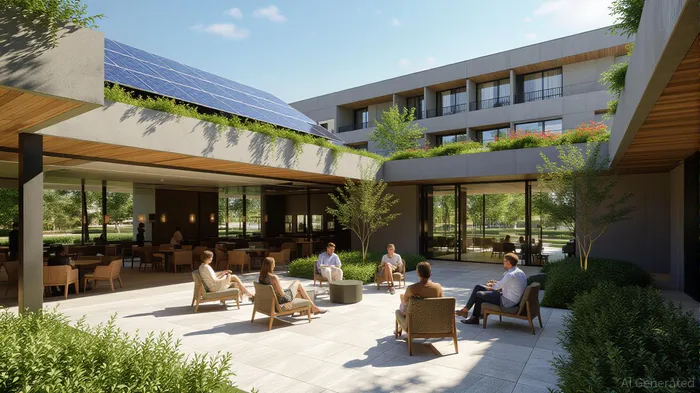
Southern Europe's shift toward sustainable cooling is accelerating. Geothermal systems, which leverage stable underground temperatures, are being deployed in cities like Zaragoza and Paris. The EU-funded Renaissance project in Spain, for instance, reduced energy consumption by 49% in social housing through solar panels, passive cooling, and green infrastructure. Similarly, Paris is expanding its district cooling network, using Seine river water to cool 38% of the city by 2025.
Absorption cooling, which uses heat instead of electricity, is gaining traction in regions with abundant solar resources. In southern Spain, natural ventilation and solar-powered systems have cut indoor temperatures by 5°C at night. These innovations are not just technical—they're economic. The ECB estimates that under current climate projections, heatwaves could add 1.8 percentage points to food price inflation by 2060. Investing in cooling infrastructure today is a hedge against tomorrow's costs.
Sustainable Tourism Models: Cities as Climate-Resilient Hubs
Southern European cities are reimagining tourism through sustainability. Barcelona's strategy now prioritizes “sustainability and competitiveness,” integrating environmental policies into urban planning. Lisbon's urban tourism plan balances visitor demand with resident quality of life, while Reykjavik's 10-year strategy aims to diversify the economy and reduce overtourism.
These models are attracting capital. Investors are paying premiums for real estate in cities that align with ESG (Environmental, Social, Governance) criteria. Properties with green certifications—such as LEED or BREEAM—see lower vacancy rates and higher tenant retention. For example, Barcelona's eco-friendly hotels report 20% higher occupancy during off-peak months, driven by travelers seeking sustainable experiences.
Climate-Responsive Real Estate: The New Gold Standard
The European real estate market is undergoing a seismic shift. The Corporate Sustainability Reporting Directive (CSRD) and Corporate Sustainability Due Diligence Directive (CS3D) are forcing 50,000 companies to disclose climate transition plans. Assets with strong sustainability credentials—such as energy-efficient buildings and climate-adaptive designs—are outperforming peers.
In Lisbon, developers are retrofitting historic properties with passive cooling techniques and solar panels, reducing energy costs by 30%. In Sicily, urban planners are using climate data to design flood-resistant neighborhoods. The ClimEmpower project, active in Spain, Greece, and Cyprus, is creating tools to integrate climate resilience into real estate development.
The Investment Imperative
The urgency for capital allocation is clear. Southern Europe's climate vulnerabilities—heatwaves, water scarcity, and urban heat islands—demand immediate action. Investors who target companies and projects in cooling technologies, sustainable tourism, and climate-responsive real estate will benefit from:
- Regulatory tailwinds: EU policies like the Renovation Wave and Fit for 55 incentivize energy efficiency.
- Market demand: Travelers and tenants increasingly prioritize sustainability, driving higher returns.
- Risk mitigation: Climate-resilient assets avoid the depreciation risks of non-compliant properties.
The ClimEmpower project in southern Europe is a case study in scalability. By 2025, its regional communities of practice will have developed tools to integrate climate data into urban planning, from drought models in Costa del Sol to flood-resistant designs in Sicilian cities. These innovations are not just theoretical—they're being piloted today.
Conclusion: Capitalizing on the Climate Transition
Southern Europe's adaptation to rising temperatures is no longer a distant challenge—it's an investment opportunity. From geothermal cooling in Zaragoza to climate-proof real estate in Barcelona, the region is leading a transition that promises both environmental and financial returns. For investors, the time to act is now: the ECB's research shows that delayed adaptation carries escalating costs, while early movers stand to capture market share in a rapidly evolving landscape.
By channeling capital into cooling technologies, sustainable tourism models, and climate-responsive real estate, investors can align with a future where southern Europe thrives—not just endures—amidst a warming world.







Comentarios
Aún no hay comentarios