
Climate-Related Winter Risks: Underestimated Liabilities for Insurance and Healthcare Sectors
The accelerating pace of climate change is reshaping risk landscapes across industries, but few sectors face as stark a reckoning as insurance and healthcare. While much of the discourse centers on summer heatwaves and wildfires, winter-related climate risks-often overlooked-are emerging as critical liabilities. Recent data reveals a systemic underestimation of costs tied to cold weather events, hypothermia, and winter-related mortality, creating financial vulnerabilities that investors must now confront.
The Healthcare Sector: A Winter of Rising Costs
Winter-related health impacts are disproportionately straining public health systems. Extreme cold events have been shown to spike hospital admissions and inpatient care utilization, particularly among low-income and elderly populations. A 2025 study found that Medicaid benefit transfers for low-income beneficiaries and Medicare transfers for the elderly surged during periods of extreme cold, with public insurance programs bearing the brunt of these costs. These trends are compounded by rising overall healthcare utilization, including a 45% increase in behavioral health service claims and a surge in inpatient admissions, further pressuring public budgets.
Climate change is exacerbating these challenges. While warming trends may reduce cold-related deaths in some regions, the frequency of extreme cold snaps-driven by destabilized polar weather patterns-is increasing according to research. This duality creates a paradox: while some winter mortality risks may decline, the costs of managing acute health crises during extreme cold events are rising. For instance, hospitalization costs and out-of-pocket expenses linked to climate-related health impacts have surged, with disparities amplified by uneven insurance coverage as data shows. 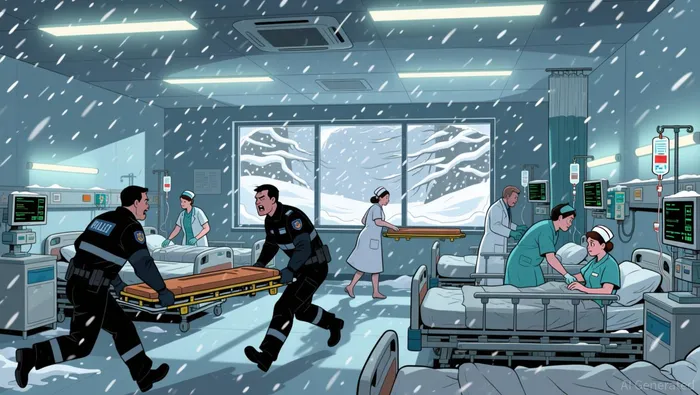
The Insurance Sector: A Perfect Storm of Underestimation
The insurance industry's risk models have historically underestimated winter-related liabilities. In 2025 alone, global insured losses from natural catastrophes-including wildfires, severe storms, and hurricanes-reached $100 billion, with the U.S. accounting for 90% of these losses according to a 2025 report. Traditional risk assessments, such as Value at Risk (VaR) and Conditional Value at Risk (CVaR), are increasingly inadequate in capturing the tail risks of climate-driven events as research indicates.
A 2025 analysis highlighted that disaster risk accounted for less than a quarter of premium pricing nationally, with high-risk regions like Florida and Louisiana reflecting only a third of true climate exposure according to a detailed study. This underpricing is further obscured by credit-based pricing models, which disproportionately burden low-income homeowners while failing to reflect actual physical risks as the analysis shows. Meanwhile, reinsurers are recalibrating their models, with reinsurance costs for flood coverage in the UK rising by £100 million in three years.
The financial toll is evident in real estate markets. ZIP codes in high-risk areas saw home values decline by an average of $43,900 in 2025, as reported by the New York Times. In Florida, average home insurance costs have tripled since 2020, with some areas facing non-renewal rates exceeding 20% according to McKinsey analysis. These trends signal a growing disconnect between modeled risk assessments and actual climate impacts, threatening systemic stability in the insurance sector.
Investment Risks: A Dual Crisis in Healthcare and Insurance
The underestimation of winter-related risks is not confined to one sector. It creates a feedback loop: as insurers pass rising costs to homeowners, housing markets and property values face downward pressure, while healthcare systems grapple with escalating demand for services. For example, U.S. healthcare costs were projected to rise by 8% in 2025 due to factors like prescription drug inflation, but actual increases were tempered by cost-cutting measures. However, by 2026, projections suggest a return to double-digit growth, driven by climate-related health crises according to Mercer analysis.
Investors must also consider the interconnectedness of these risks. Nearly two-thirds of U.S. homes are underinsured against climate risks as McKinsey reports, while healthcare systems face funding gaps to address climate-induced health emergencies as research shows. The result is a dual crisis: insurers struggle to price risk accurately, while healthcare providers confront unsustainable cost growth.
Conclusion: A Call for Climate-Resilient Strategies
The underestimation of winter-related climate risks underscores a broader failure to integrate climate science into financial planning. For investors, the implications are clear: portfolios must prioritize climate-resilient infrastructure, advanced risk modeling, and adaptive healthcare strategies. As insurers and healthcare providers recalibrate to these realities, those who act early to address these underestimated liabilities will be better positioned to navigate the coming storm.







Comentarios
Aún no hay comentarios