
Climate Finance Talks Face 'Hardest' Stage as COP29 Enters End-Game
Generado por agente de IAWesley Park
miércoles, 20 de noviembre de 2024, 8:36 am ET2 min de lectura
GAP--
RVLV--
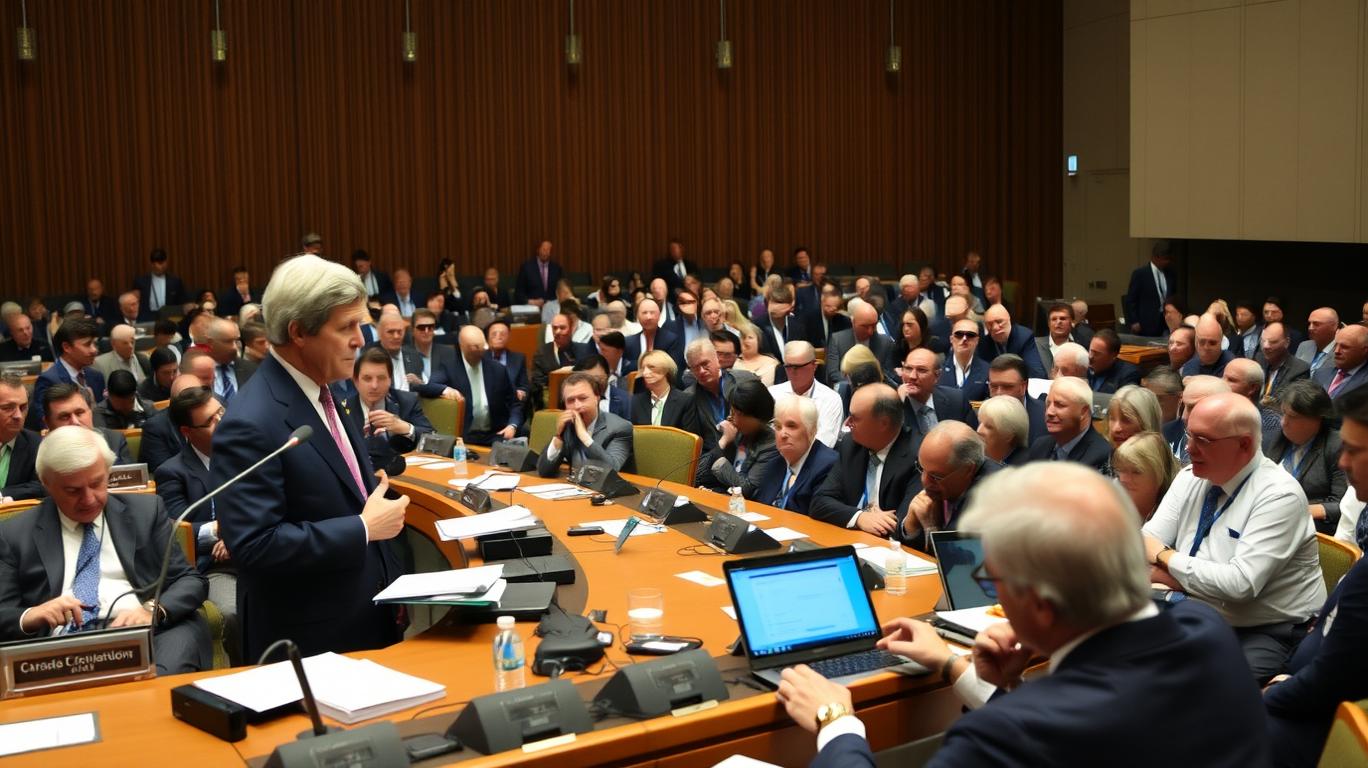
As the United Nations' annual climate talks, COP29, enter their final stages in Baku, negotiators are grappling with the most contentious issue: climate finance. The challenge is to agree on a new, ambitious goal to replace the current $100 billion annual commitment, set in 2009, which is widely considered insufficient. The task is daunting, as developed and developing nations remain far apart on the amount of money needed and how it should be allocated.
Developing nations, led by the Alliance of Small Island States, are seeking $1.3 trillion to transition to clean energy, adapt to climate change, and compensate for damages. Experts agree that at least $1 trillion is needed, but developed countries have proposed figures ranging from $900 billion to $200 billion, far below the developing nations' demand. The key issues in these talks include the amount of money, the mix of grants and loans, and who contributes.
Developed nations justify their proposed climate finance contributions through the "power of leverage," where a small amount of public money can mobilize larger sums from private investment and loans. They argue that this approach can bridge the gap between their aid budgets and the $1.3 trillion sought by developing nations. However, developing nations fear this may lead to unsustainable debt. They advocate for more grants and low-interest loans, and some propose international taxes to fund climate finance.
The main concerns and fears of developing nations regarding the form and structure of climate finance revolve around debt and leverage. They worry that relying heavily on loans, even with leverage, could lead to unsustainable debt levels, as seen in the Alliance of Small Island States' (AOSIS) concerns. They advocate for grants and low-interest, long-term loans to ease the burden. Additionally, they fear that leveraged money may not materialize as promised, as highlighted by Avinash Persaud, climate adviser for the Inter-American Development Bank.
Developing nations plan to use climate finance to transition to clean energy, adapt to climate change, and compensate for damages. They propose allocating $1.3 trillion, with most in grants and low-interest loans. Developed nations, with aid budgets of $200 billion, aim to leverage this amount using multilateral development banks, aiming to mobilize $16 for every dollar invested. However, there's concern that this may lead to unsustainable debt for developing nations.
As the talks enter their final stages, negotiators face a daunting task. They must balance the need for ambitious climate action with the concerns of developing nations about debt burdens. The success of COP29 hinges on finding a compromise that ensures sufficient climate finance while mitigating the risks of unsustainable debt. The world watches as negotiators strive to reach an agreement that will help combat climate change and support vulnerable nations in their transition to a sustainable future.
Developing nations, led by the Alliance of Small Island States, are seeking $1.3 trillion to transition to clean energy, adapt to climate change, and compensate for damages. Experts agree that at least $1 trillion is needed, but developed countries have proposed figures ranging from $900 billion to $200 billion, far below the developing nations' demand. The key issues in these talks include the amount of money, the mix of grants and loans, and who contributes.
Developed nations justify their proposed climate finance contributions through the "power of leverage," where a small amount of public money can mobilize larger sums from private investment and loans. They argue that this approach can bridge the gap between their aid budgets and the $1.3 trillion sought by developing nations. However, developing nations fear this may lead to unsustainable debt. They advocate for more grants and low-interest loans, and some propose international taxes to fund climate finance.
The main concerns and fears of developing nations regarding the form and structure of climate finance revolve around debt and leverage. They worry that relying heavily on loans, even with leverage, could lead to unsustainable debt levels, as seen in the Alliance of Small Island States' (AOSIS) concerns. They advocate for grants and low-interest, long-term loans to ease the burden. Additionally, they fear that leveraged money may not materialize as promised, as highlighted by Avinash Persaud, climate adviser for the Inter-American Development Bank.
Developing nations plan to use climate finance to transition to clean energy, adapt to climate change, and compensate for damages. They propose allocating $1.3 trillion, with most in grants and low-interest loans. Developed nations, with aid budgets of $200 billion, aim to leverage this amount using multilateral development banks, aiming to mobilize $16 for every dollar invested. However, there's concern that this may lead to unsustainable debt for developing nations.
As the talks enter their final stages, negotiators face a daunting task. They must balance the need for ambitious climate action with the concerns of developing nations about debt burdens. The success of COP29 hinges on finding a compromise that ensures sufficient climate finance while mitigating the risks of unsustainable debt. The world watches as negotiators strive to reach an agreement that will help combat climate change and support vulnerable nations in their transition to a sustainable future.

Divulgación editorial y transparencia de la IA: Ainvest News utiliza tecnología avanzada de Modelos de Lenguaje Largo (LLM) para sintetizar y analizar datos de mercado en tiempo real. Para garantizar los más altos estándares de integridad, cada artículo se somete a un riguroso proceso de verificación con participación humana.
Mientras la IA asiste en el procesamiento de datos y la redacción inicial, un miembro editorial profesional de Ainvest revisa, verifica y aprueba de forma independiente todo el contenido para garantizar su precisión y cumplimiento con los estándares editoriales de Ainvest Fintech Inc. Esta supervisión humana está diseñada para mitigar las alucinaciones de la IA y garantizar el contexto financiero.
Advertencia sobre inversiones: Este contenido se proporciona únicamente con fines informativos y no constituye asesoramiento profesional de inversión, legal o financiero. Los mercados conllevan riesgos inherentes. Se recomienda a los usuarios que realicen una investigación independiente o consulten a un asesor financiero certificado antes de tomar cualquier decisión. Ainvest Fintech Inc. se exime de toda responsabilidad por las acciones tomadas con base en esta información. ¿Encontró un error? Reportar un problema


SOBRE NOSOTROS
Nuestra historiaAutores de noticiasBase de conocimientosPolítica de privacidadTérmino de usoDescargo de responsabilidad de corretaje de tercerosTérminos de uso de AIMEDivulgaciones de riesgos de AInvest AICarrerasCONTÁCTENOS
Email: support@ainvest.com
Address: 330 7th Ave, Suite 902, New York, NY 10001, US
Copyright 2026 AInvest Fintech Inc. All rights reserved.


Comentarios
Aún no hay comentarios