
Climate-Driven Disruptions and Their Impact on Commodity Markets
The intensifying climate crisis is reshaping global commodity markets, with hurricanes emerging as a critical wildcard. As human-caused warming drives faster wind speeds and more destructive storm surges, the agricultural and energy sectors face compounding risks. For investors, this translates to a dual challenge: mitigating exposure to climate-driven volatility while capitalizing on emerging opportunities in resilience-focused infrastructure and adaptive technologies.
The Escalating Threat of Hurricanes
Recent data underscores a stark reality: Atlantic hurricanes have grown significantly more intense. From 2019 to 2023, 80% of hurricanes saw an average 18 mph increase in wind speed due to warmer ocean temperatures[2]. Hurricane Milton in 2024, for instance, rapidly intensified over waters warmed by climate change, with its formation made 400–800 times more likely[2]. While the total number of hurricanes has remained stable over the past 150 years[3], their destructive power is rising. The last 30 years have seen a clear upward trend in both intensity and duration[4], a pattern projected to continue[5].
Agricultural Sector: A $6.7 Billion Wake-Up Call
The 2024 hurricane season delivered a harsh lesson for U.S. agriculture. According to the American Farm Bureau Federation, hurricane-related crop losses reached $6.7 billion, with Texas bearing the brunt at $3.4 billion in total agricultural damages[2]. Georgia's cotton industry lost 500,000–600,000 bales, while Florida's citrus sector faced existential uncertainty after Hurricane Milton[4]. These disruptions highlight the fragility of traditional farming models in a warming world.
Yet, the crisis has also spurred innovation. The U.S. Department of Agriculture (USDA) allocated $2 billion to strengthen the specialty crops sector, including $140 million for post-disaster crop storage[1]. Farmers are adopting adaptive strategies: the Hamilton family in Georgia, for example, now grows crops year-round across three locations to stabilize income after extreme weather[1]. Precision agriculture, regenerative practices like no-till farming, and climate-resilient crop varieties are gaining traction[4].
Energy Sector: Infrastructure Under Siege
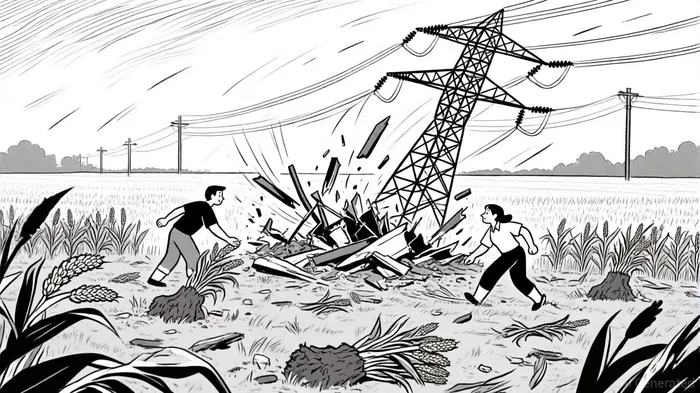
Energy markets are equally vulnerable. The 2024 Atlantic season, with 18 named storms and 11 hurricanes, caused widespread outages in the Gulf of Mexico. Crude oil production averaged 295,000 barrels per day in September, or 16% of total Gulf output[1]. Natural gas production also dipped, averaging 0.20 billion cubic feet per day[1]. Hurricanes Milton and Helene disrupted petroleum supply chains in Florida, while LNG export facilities faced operational halts due to rough seas[1].
The economic toll is profound. Historical events like Hurricane Katrina (2005) and Harvey (2017) demonstrated how prolonged outages can slash refining capacity and spike gasoline prices[3]. With 2025 forecasts predicting another active hurricane season[5], energy companies are prioritizing resilience. The National Renewable Energy Laboratory (NREL) is leading post-disaster recovery efforts, integrating renewable energy and storm-hardening practices in vulnerable communities[1]. However, a $3 trillion annual global energy investment still underfunds climate resilience, particularly in lower-income countries[2].
Investment Opportunities in Resilience
For investors, the shift toward climate resilience presents both risks and opportunities. In agriculture, controlled environment agriculture (CEA)—including vertical farming and hydroponics—is booming. The global CEA market, valued at $87.19 billion in 2024, is projected to grow to $271.01 billion by 2032[1]. Precision agriculture tools, such as IoT sensors and AI-driven farm management software, are also gaining traction[1].
In energy, the push for resilient infrastructure is accelerating. Grid modernization, decentralized renewable systems, and energy storage are critical. A 2025 study warns that high solar integration without storage increases blackout risks during extreme weather[2], underscoring the need for balanced investments. Meanwhile, governments are offering incentives: the USDA's Natural Resources Conservation Service programs support soil health and water management[4].
Strategic Recommendations for Investors
- Diversify Portfolios: Allocate capital to climate-resilient sectors, such as CEA and renewable energy storage.
- Leverage Government Programs: Utilize USDA grants and insurance subsidies to offset adaptation costs[1].
- Adopt Advanced Forecasting: Use probabilistic hurricane models and weather intelligence to mitigate operational risks[5].
- Prioritize Geographic Diversification: Invest in regions less exposed to hurricane corridors while supporting emerging agricultural zones in higher latitudes[4].
Conclusion
The intensifying hurricane threat is a clarion call for rethinking traditional investment strategies. While the agricultural and energy sectors face unprecedented risks, the surge in resilience-focused innovation offers a roadmap for sustainable growth. For investors, the key lies in balancing short-term hedging with long-term bets on adaptive technologies and infrastructure. As the 2025 hurricane season looms, proactive adaptation is no longer optional—it is a necessity.







Comentarios
Aún no hay comentarios