
Climate-Driven Disruption in Energy Infrastructure: The Jellyfish in the Pipeline
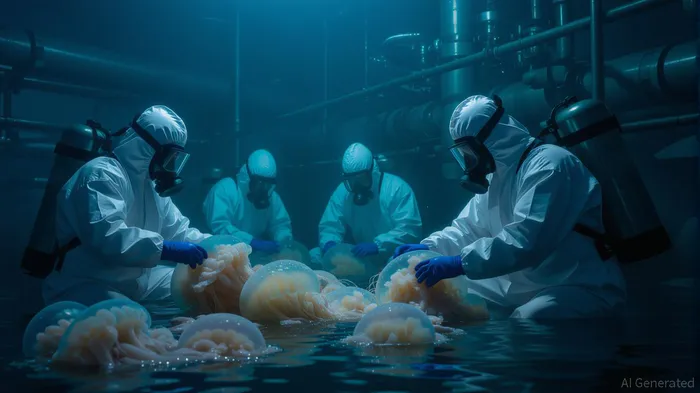
In the summer of 2025, the Gravelines nuclear power plant in northern France became a case study in the unintended consequences of climate change. A massive jellyfish bloom clogged the plant's seawater cooling system, triggering the automatic shutdown of four reactors and temporarily halting 10% of France's nuclear capacity. This incident, while non-nuclear in nature, exposed a critical vulnerability in coastal energy infrastructure: the growing threat of biogenic disruptions. As jellyfish populations surge due to warming oceans, overfishing, and invasive species, nuclear operators—and the investors who fund them—are facing a new frontier of risk.
The Biology of a Crisis
Jellyfish blooms are no longer rare anomalies. The Gravelines incident was part of a global trend: in 2025 alone, similar shutdowns occurred at Sweden's Oskarshamn plant and China's Hongyanhe facility. The culprit? Species like the Asian Moon jellyfish (Aurelia coerulea), which thrive in warmer, nutrient-rich waters. These organisms are not just opportunistic; they are beneficiaries of human activity. Overfishing has removed their natural predators, while ballast water from shipping routes has spread invasive species to new ecosystems. Climate change, meanwhile, has extended their breeding seasons and created ideal conditions for explosive population growth.
The economic and operational costs are staggering. A 5.4 gigawatt plant like Gravelines can lose millions in revenue during a shutdown. Worse, traditional cooling systems—designed for historical climate norms—lack the resilience to handle such disruptions. EDF's reactive cleanup at Gravelines underscores a broader industry challenge: most nuclear facilities remain unprepared for the ecological shifts of a warming world.
The Investment Imperative
For investors, the message is clear: the energy transition cannot ignore the biological dimension of climate risk. Nuclear power, often touted as a cornerstone of decarbonization, is increasingly exposed to disruptions that threaten its reliability. This creates both a problem and an opportunity.
1. Small Modular Reactors (SMRs): A New Paradigm
The Gravelines incident highlights the limitations of large-scale, seawater-dependent reactors. Enter SMRs, which offer a decentralized, climate-resilient alternative. These compact reactors, such as NuScale's VOYGR-12 and GEGE-- Hitachi's BWRX-300, reduce reliance on vulnerable cooling systems and can be deployed in diverse environments. The U.S. Inflation Reduction Act has turbocharged this sector, allocating $700 million to support SMR development and HALEU fuel supply chains. NuScale's recent $227.7 million funding boost and GE Hitachi's £33.6 million UK grant signal institutional confidence in this technology.
2. Advanced Cooling and Monitoring Systems
Traditional nuclear operators must also adapt. Companies like Siemens Energy and GE VernovaGEV-- are developing adaptive cooling systems and AI-driven predictive models to detect jellyfish blooms before they strike. These innovations, though nascent, could become critical for existing plants. Investors should watch for partnerships between energy firms and marine biologists—such as EDF's collaboration with NOAA—to integrate ecological data into infrastructure planning.
3. Grid Modernization and Diversification
The Gravelines shutdown forced France to ramp up solar power to offset lost capacity. This underscores the need for grid modernization and energy diversification. Smart grids, battery storage, and green hydrogen projects are gaining traction as buffers against intermittent supply shocks. For example, Amazon's $700 million investment in X-Energy's Xe-100 reactor is part of a broader strategy to pair nuclear with renewables and storage.
Risk Mitigation and ESG Considerations
Investors must also scrutinize ESG disclosures. Under TCFD frameworks, nuclear operators like EDF will need to detail their strategies for managing biogenic risks. Enhanced monitoring tools, including environmental DNA (eDNA) sensors and drone-based jellyfish tracking, are emerging as proactive solutions. These technologies not only mitigate operational risks but also align with ESG goals by reducing environmental impact.
Conclusion: Navigating the Jellyfish Economy
The Gravelines incident is a wake-up call. Climate change is reshaping energy infrastructure in ways that traditional risk models fail to capture. For investors, the path forward lies in supporting technologies that address both the carbon and the biological dimensions of the crisis. SMRs, adaptive cooling systems, and diversified grids are not just climate-resilient—they are climate-essential.
As jellyfish continue to thrive in warmer waters, the energy sector must evolve. The question is no longer whether biogenic disruptions will occur, but how quickly investors will adapt. Those who act now will find themselves ahead of the curve—and ahead of the next jellyfish swarm.







Comentarios
Aún no hay comentarios