
Climate-Adaptive Real Estate: How Startups Are Revolutionizing Heat-Resilient Property Development
The real estate sector is undergoing a seismic shift as climate change accelerates. With global temperatures projected to rise by 1.5°C above pre-industrial levels by 2030, heatwaves, droughts, and energy crises are no longer distant threats—they are today's operational realities. For investors, the question is no longer if to act but how to capitalize on the technologies redefining resilience in property development. Startups at the forefront of this transformation are not just mitigating risks; they are building the infrastructure for a $1.2 trillion climate-resilient real estate market by 2030.
The Heat-Resilient Imperative
Extreme heat is the new baseline. In 2025, Phoenix, Las Vegas, and Dubai routinely exceed 110°F, straining energy grids and devaluing properties in vulnerable zones. Traditional real estate models are ill-equipped for this reality. However, a wave of startups is addressing this gap through innovations in energy storage, AI-driven building management, and climate-risk analytics. These technologies are not just reducing operational costs—they are creating assets that retain value in a warming world.
Key Innovations and Investment Opportunities
1. Renewable Energy Storage and Microgrids
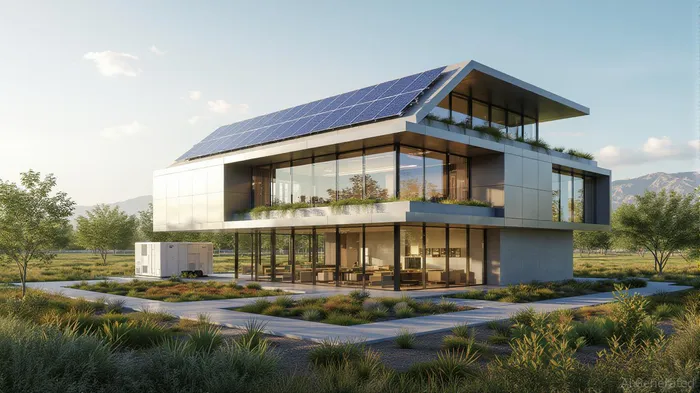
Battery storage costs have plummeted 18% since 2024, enabling commercial real estate to store solar energy and maintain power during outages. Startups like Runwise (recently raised $30M) are deploying AI-powered systems that optimize energy use in real-time, reducing cooling costs by 36%. Meanwhile, AIM (secured $50M in June 2025) is integrating smart grids with hydrogen storage, a critical step toward decarbonizing heating systems.
AI-Driven Climate Risk Analytics
ZestyAI, a leader in climate risk modeling, has raised over $50M in 2025 by helping insurers and property owners quantify heatwave exposure. Its platform uses satellite data and machine learning to predict property vulnerabilities, enabling preemptive investments in insulation, reflective materials, or elevated foundations. For investors, this is a gateway to a growing market: climate risk analytics is projected to grow at 25% CAGR through 2030.Proptech Platforms for Resilient Operations
Platforms like ProptechOS are digitizing building management, combining IoT sensors with predictive maintenance tools. These systems reduce downtime during heat events and align with ESG mandates. For example, a 2025 study found that buildings using such platforms see a 37% premium in rental rates due to enhanced tenant comfort and sustainability credentials.
Why Now Is the Time to Invest
The convergence of regulatory pressure, investor demand, and technological scalability is creating a perfect storm for climate-adaptive real estate. In the U.S., Washington State's Clean Buildings Performance Standard and the EU's revised Energy Performance of Buildings Directive (EPBD) are mandating energy efficiency. Meanwhile, green financing incentives from Fannie Mae and Freddie Mac are making heat-resilient retrofits economically viable.
For investors, the focus should be on startups with recurring revenue models and partnerships with institutional real estate players. ZestyAI's subscription-based risk analytics, Runwise's SaaS platform for building operators, and AIM's hydrogen-integrated energy systems are prime examples. These companies are not just mitigating climate risks—they are future-proofing portfolios against a $1.8 trillion annual loss in property value projected by 2050 due to heat exposure.
Risks and Strategic Considerations
While the sector is promising, due diligence is critical. Startups in energy storage and AI analytics face regulatory hurdles and technological scalability challenges. Investors should prioritize companies with proven partnerships (e.g., AIM's collaboration with European hydrogen projects) and diversified revenue streams. Additionally, geographic diversification is key: while the U.S. leads in PropTech investment, the Asia-Pacific region is growing at 20.5% annually, offering high-growth opportunities in cities like Singapore and Dubai.
Conclusion: Building a Resilient Portfolio
The real estate of 2030 will be defined by its ability to withstand—and even profit from—climate extremes. Startups are the architects of this transformation, turning heat resilience from a cost center into a competitive advantage. For investors, the message is clear: those who integrate climate-adaptive technologies into their portfolios today will reap the rewards of a market that values sustainability as much as profitability.
In a world where every degree of warming reshapes asset value, the most forward-thinking investors are already betting on the startups that will redefine the built environment. The question is, will you follow?







Comentarios
Aún no hay comentarios