
Clear Channel Outdoor Holdings: Navigating the Digital and Urban Shift in OOH Advertising
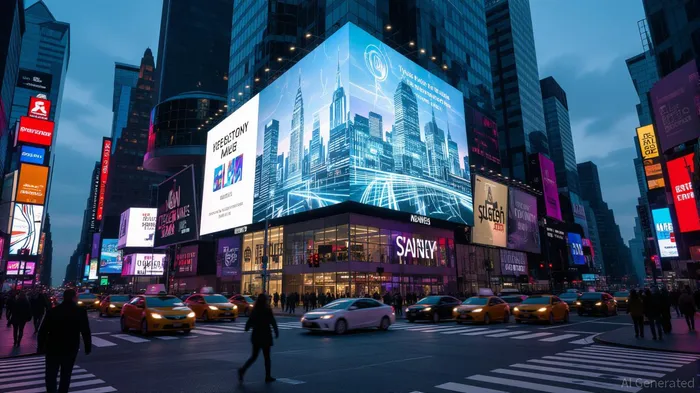
The out-of-home (OOH) advertising market is undergoing a seismic shift, driven by digital transformation and urbanization. As cities become denser and consumer attention spans shrink, advertisers are increasingly turning to immersive, data-driven solutions to capture audiences. Clear Channel Outdoor HoldingsCCO-- (CCOH), a dominant player in the sector, finds itself at a critical juncture: leveraging these macro trends to solidify its market position or risk obsolescence in a rapidly evolving landscape.
The Digital Imperative: From Static to Dynamic
According to a report by Statista, the global OOH advertising market is projected to reach US$41.82 billion in 2025, with digital OOH accounting for a significant portion of this growth[1]. Traditional static billboards are being replaced by digital displays capable of real-time content updates, location-based targeting, and interactive features. For instance, digital billboards in high-traffic urban zones now use AI-driven analytics to adjust messaging based on time of day, weather, or even pedestrian flow[1].
While CCOH has historically led in physical OOH infrastructure, its recent strategic moves in digital innovation remain opaque. Publicly available data from 2024–2025 reveals no new partnerships or technological investments specific to CCOH in this space. However, the broader industry's shift toward digital suggests that competitors like Outfront MediaOUT-- and JCDecaux are accelerating their own digital OOH portfolios, potentially pressuring CCOH to catch up.
Urbanization as a Catalyst for Growth
Urbanization rates in key markets like the United States and China are amplifying the value of OOH advertising. With over 80% of the U.S. population now living in urban areas[1], advertisers are prioritizing high-impact locations such as transit hubs, shopping districts, and mixed-use developments. Digital OOH in these environments offers unparalleled reach, with ads dynamically tailored to local demographics and cultural trends.
CCOH's extensive footprint in urban centers—particularly in North America—positions it to capitalize on this trend. Yet, the lack of recent announcements regarding urban-specific initiatives (e.g., smart city integrations or AR-enabled campaigns) raises questions about its agility compared to peers. For example, JCDecaux's recent deployment of AI-powered digital kiosks in European cities highlights the competitive edge of proactive urbanization strategies[1].
Sustainability and the Future of OOH
Sustainability is another non-negotiable factor in modern advertising. Brands are increasingly prioritizing eco-conscious practices, and OOH is no exception. Digital displays, when paired with energy-efficient technologies, offer a lower carbon footprint than traditional print media. Moreover, data-driven targeting reduces waste by ensuring ads reach relevant audiences[1].
CCOH's sustainability disclosures remain limited, but industry benchmarks suggest that companies integrating green technologies into their OOH networks—such as solar-powered billboards or LED recycling programs—are gaining favor with ESG-focused investors[1]. Without clear evidence of such initiatives, CCOH risks lagging in a market where environmental responsibility is becoming a differentiator.
Investment Considerations: Balancing Opportunity and Risk
For investors, CCOH's strategic positioning hinges on its ability to align with digital and urbanization trends. While the company's legacy assets provide a stable revenue base, its long-term growth depends on reinvention. The absence of recent press releases or earnings call mentions of digital OOH investments in 2024–2025 signals either a lack of momentum or a reluctance to disclose progress.
However, the broader OOH market's projected growth offers a buffer. Even if CCOH underperforms in digital innovation, its entrenched presence in urban markets ensures a baseline of demand. The key question for investors is whether the company will accelerate its digital transformation to match industry leaders or rely on its existing infrastructure.
Conclusion
Clear Channel Outdoor Holdings occupies a pivotal role in the OOH sector, but its future success depends on its capacity to embrace digital transformation and urbanization. While the company's current strategic moves remain under the radar, the industry's trajectory is clear: dynamic, data-driven, and sustainable. For CCOH to retain its leadership, it must bridge the gap between its physical legacy and the digital future—before competitors redefine the market entirely.







Comentarios
Aún no hay comentarios