
Clean Harbors' PFAS Incineration Breakthrough: A Catalyst for Regulatory-Aligned Waste Management Innovation
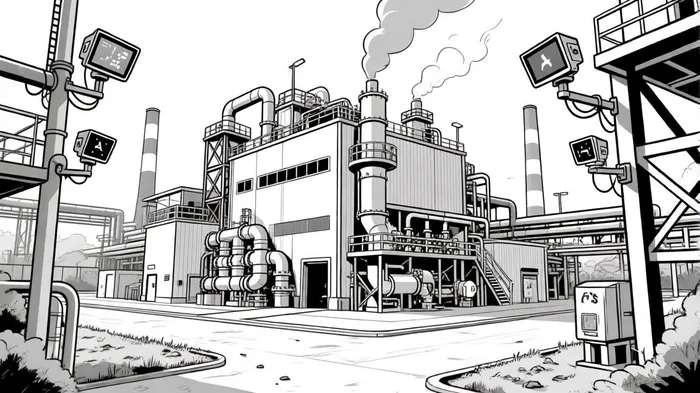
The industrial environmental technology sector is undergoing a transformative shift, driven by the urgent need to address PFAS contamination. Clean HarborsCLH--, a leader in hazardous waste managementWM--, has emerged at the forefront of this movement with its groundbreaking high-temperature incineration technology. Recent developments underscore the company's ability to align with—and even anticipate—regulatory demands, positioning it as a critical player in the $2.5 billion global PFAS treatment market, which is projected to grow at a 15% compound annual growth rate (CAGR) through 2033[1].
Technological Edge: Meeting Stricter Standards
Clean Harbors' November 2024 study, conducted in collaboration with the U.S. Environmental Protection Agency (EPA) and the Department of Defense (DoD), demonstrated that its incineration process can destroy multiple PFAS compounds at temperatures between 2,000–2,200°F. Crucially, the technology met the EPA's newly introduced OTM-50 and 0010 emission standards—criteria not previously tested—achieving emissions two to eight times below regulatory limits[1]. Third-party validation from experts like Dr. Melvin Keener and Dr. Jens Blotevogel further bolsters the credibility of these results[2]. This technological leap not only addresses the “forever chemicals” dilemma but also aligns with the EPA's upcoming regulatory agenda, which includes stricter effluent guidelines for the chemical manufacturing sector by January 2026[3].
Market Dynamics: Scaling a Scalable Solution
The company's “Total PFAS Solution,” launched in 2024, offers an end-to-end service model that integrates analysis, filtrationATMU--, remediation, and destruction. This comprehensive approach differentiates Clean Harbors in a competitive landscape dominated by firms like Waste Management, Veolia, and Suez[1]. A strategic investment in a Kimball, Nebraska incinerator—commissioned in December 2024—has further expanded its capacity to handle complex PFAS waste streams. Analysts project this facility will contribute meaningfully to EBITDA growth as it ramps to full operational capacity within 12–18 months[1].
The market's rapid expansion is fueled by regulatory pressures and public health concerns. Over 68% of recent scientific studies link PFAS exposure to long-term health risks, while 45% of industrial firms are accelerating containment strategies due to litigation and health complaints[5]. Clean Harbors' ability to command mid-single-digit price increases across key service lines in 2025 highlights its pricing power in a sector where operational costs often exceed initial budgets by 57%[5].
Regulatory Alignment: A Strategic Advantage
The EPA's September 2025 Unified Agenda outlines a regulatory roadmap that Clean Harbors is uniquely positioned to navigate. While the agency plans to withdraw maximum contaminant levels (MCLs) for certain PFAS by February 2026, it will extend compliance deadlines for PFOA and PFOS to 2031[3]. Clean Harbors' adherence to the strictest standards—OTM-50 and 0010—positions it to influence future regulations and solidify incineration as a preferred PFAS destruction method. This alignment is critical as 71% of North America's PFAS remediation market is driven by federal clean water standards[4].
Competitive Landscape and Challenges
Despite its leadership, Clean Harbors faces competition from firms like Evoqua and WSP in the specialized PFAS remediation segment[1]. However, its end-to-end model and early investments in high-temperature incineration create a moat. The broader market, while growing, grapples with high operational costs and supply chain disruptions. Yet, innovations such as modular systems and AI-driven predictive tools—adopted by 54% and 33% of providers, respectively—are mitigating these challenges[4].
Conclusion: A Model for Regulatory-Aligned Innovation
Clean Harbors' PFAS incineration breakthrough exemplifies how industrial environmental technology can align with regulatory evolution to drive sustainable growth. As the EPA tightens standards and public awareness of PFAS risks intensifies, companies that integrate cutting-edge solutions with proactive regulatory engagement will dominate the market. Clean Harbors' strategic investments, technological rigor, and end-to-end service model position it as a bellwether for the sector—a testament to the power of innovation in addressing one of the most pressing environmental challenges of our time.





Comentarios
Aún no hay comentarios