
Clean Harbors: A High-Debt Growth Story or a Mispriced Opportunity?
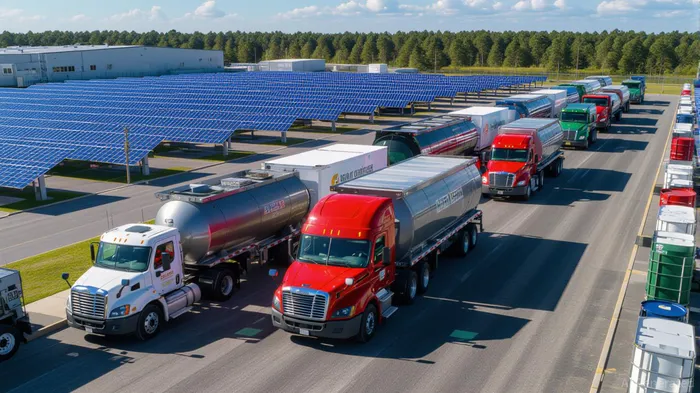
Clean Harbors (CLH) has long been a standout in the waste managementWM-- sector, but its recent performance has sparked a critical question: Does its current stock price reflect a compelling value, or is the market overbought on a company with structural risks? To answer this, we must dissect its financial fundamentals, valuation metrics, and industry positioning.
The Fundamentals: Profitability vs. Leverage
Clean Harbors' Q2 2025 results highlight a mixed bag. Revenue held steady at $1.55 billion, but earnings per share (EPS) dipped to $2.36 from $2.46 in 2024. Adjusted EBITDA, however, rose to $336.2 million, driven by cost discipline and a 21.7% margin—a 60-basis-point improvement. The Environmental Services segment, which handles hazardous waste and industrial services, grew revenue by 3%, while the Safety-Kleen Sustainability Solutions (SKSS) segment collected 64 million gallons of waste oil, a key driver of its re-refining operations.
Yet, the company's debt-to-equity ratio of 119% remains a red flag. While its levered free cash flow of $296.8 million is robust, the high leverage could constrain flexibility during economic downturns. For context, Waste Management (WM), a peer with a $91 billion market cap, maintains a debt-to-equity ratio of 0.65, underscoring CLH's aggressive capital structure.
Valuation: Cheap by Historical Standards, But Not Without Caveats
Clean Harbors' stock trades at a P/E of 34.24 (TTM) and an EV/EBITDA of 13.91, both below its 10-year averages of 56.86 and 18.5, respectively. Analysts estimate its fair value at $354.06, implying a 31% upside from its August 15 closing price of $243.13. This suggests the market is pricing in a pessimistic near-term outlook.
However, the company's five-year revenue growth has slowed to 5.4% from a 14.1% CAGR, and its EPS growth has turned negative in the past two years. While analysts project a 18.7% EPS increase for 2025, this would merely return to 2023 levels. The stock's beta of 1.18 also indicates heightened volatility, which could amplify losses in a downturn.
The Industry Context: A Crowded Space with High Stakes
Clean Harbors operates in a sector where margins are razor-thin and competition is fierce. Its peers, including Waste Management and Republic ServicesRSG--, have lower leverage and more diversified revenue streams. Yet, CLH's 14.93% ROE and 6.48% profit margin outperform the industry average, reflecting its operational efficiency.
The company's sustainability initiatives, such as re-refining waste oil into renewable fuels, position it well for regulatory tailwinds. However, its reliance on cyclical industrial demand (e.g., construction, manufacturing) exposes it to macroeconomic risks.
Investment Implications: A Case for Cautious Optimism
For investors, Clean HarborsCLH-- presents a classic value vs. growth dilemma. The stock appears undervalued based on historical and peer comparisons, but its high debt and slowing growth warrant caution. Key risks include:
- Debt servicing costs: With interest rates near multi-decade highs, refinancing could strain cash flow.
- Margin compression: Rising disposal costs and pricing pressures could erode EBITDA.
- Regulatory shifts: Stricter environmental policies might require capital-intensive upgrades.
Conversely, the company's strong free cash flow generation, improving safety metrics (TRIR of 0.40 in Q2), and strategic focus on sustainability offer a buffer. If CLHCLH-- can maintain its EBITDA margin above 20% and delever its balance sheet, the stock could unlock significant upside.
Final Verdict: A Buy for the Patient, a Watch for the Prudent
Clean Harbors is not a “buy and hold” stock for risk-averse investors. Its valuation is compelling, but the path to unlocking value requires patience and a tolerance for volatility. For those willing to bet on its operational execution and sustainability pivot, CLH could be a high-conviction play. However, the high debt load and near-term earnings challenges mean this is best suited for investors with a 2–3 year horizon.
In the end, Clean Harbors embodies the paradox of modern industrial investing: a company with strong fundamentals and a clear strategic vision, yet burdened by legacy debt. Whether it becomes a bargain or a bust will depend on its ability to balance growth with prudence—a test it has yet to fully pass.





Comentarios
Aún no hay comentarios