
The Clean Energy Market Liquidity Revolution: How CleanTrade is Reshaping VPPA Trading and Investment Opportunities
Strategic Infrastructure Development: A New Framework for Clean Energy Trading
CleanTrade's infrastructure innovation lies in its ability to standardize and regulate clean energy derivatives, aligning them with the rigorous frameworks of traditional energy exchanges. The platform's SEF structure streamlines end-to-end workflows, from bid sourcing to compliance reporting, while integrating verifiable ESG metrics and real-time analytics. This infrastructure reduces counterparty risk and enhances transparency, critical factors for institutional investors seeking scalable, diversified portfolios. For instance, the platform's data-driven tools enable precise risk management, allowing investors to hedge against price volatility in renewable assets while aligning with ESG goals.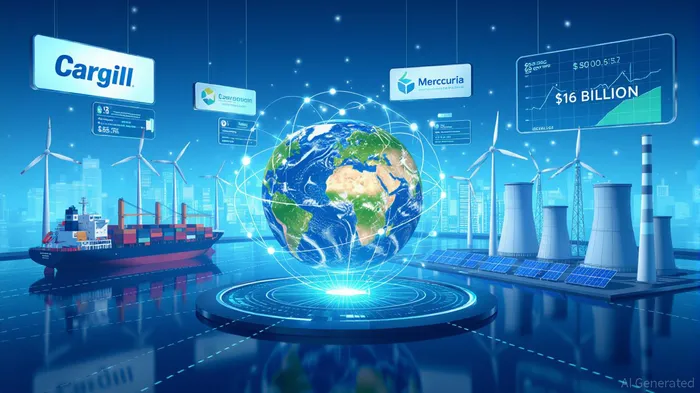
Moreover, CleanTrade's integration with global infrastructure projects underscores its role in fostering resilient supply chains. The European Union's Clean Industrial Deal Strategy, for example, emphasizes partnerships with third countries to develop green value chains, a vision mirrored in CleanTrade's approach. By leveraging regulatory cooperation and infrastructure development, the platform mitigates supply risks and accelerates innovation in clean technologies according to analysis.
Institutional-Grade Market Access: Regulatory Clarity and Scalability
The CFTC's September 2025 authorization of CleanTrade as a SEF marked a pivotal milestone, providing the regulatory clarity needed to attract institutional capital. This endorsement transformed VPPAs and RECs into tradable commodities with standardized protocols, akin to those in oil or gas markets. As a result, major players like Cargill and Mercuria have joined the platform, signaling a broader acceptance of clean energy as a legitimate asset class according to reports.
Regulatory alignment with traditional energy exchanges also addresses historical barriers such as market fragmentation. CleanTrade's SEF design enables institutional investors to access liquidity pools previously unavailable in the clean energy sector, while its transparent pricing mechanisms reduce information asymmetry. This institutional-grade access is further bolstered by the platform's ability to aggregate demand from diverse stakeholders, including corporations, utilities, and ESG-focused funds, creating a self-reinforcing cycle of growth according to market analysis.
Global Partnerships and the Future of Clean Energy Investment
CleanTrade's impact extends beyond its platform, influencing broader geopolitical and economic strategies. The European Union's Clean Trade and Investment Partnerships (CTIPs), such as the EU–South Africa agreement signed in 2025, exemplify this. These partnerships combine financial support, technology transfer, and regulatory alignment to build sustainable supply chains for green hydrogen and critical raw materials according to official statements. The €4.7 billion investment package under the EU–South Africa CTIP, for instance, underscores the potential for CleanTrade-like platforms to facilitate cross-border capital flows while advancing decarbonization goals according to economic analysis.
However, challenges remain. Critics caution that power imbalances in such partnerships could lead to neo-mercantilist dynamics, undermining equitable growth according to academic analysis. CleanTrade's success will depend on its ability to balance institutional demands with ethical considerations, ensuring that its infrastructure supports both financial returns and environmental justice.
Conclusion: A Liquid Future for Clean Energy
CleanTrade's integration of strategic infrastructure, regulatory innovation, and global partnerships is redefining the clean energy market. By addressing liquidity constraints and institutional hesitancy, the platform is enabling a new era of scalable, transparent, and ESG-aligned investments. For investors, this represents a unique opportunity to capitalize on a rapidly evolving asset class while contributing to global decarbonization efforts. As the market continues to mature, CleanTrade's role in bridging the gap between sustainability and financial performance will likely cement its position as a cornerstone of the clean energy transition.







Comentarios
Aún no hay comentarios