
Clean Energy Market Infrastructure and Liquidity: How Institutional-Grade Platforms Are Reshaping ESG Investing
The Liquidity Conundrum in Clean Energy Markets
Traditional clean energy markets have been plagued by illiquidity due to the complexity of transactions involving VirtualVIRTUAL-- Power Purchase Agreements (VPPAs), physical Power Purchase Agreements (PPAs), and Renewable Energy Certificates (RECs). These instruments often lack standardized pricing mechanisms, leading to opaque valuations and limited scalability. According to a report by Bitget, this fragmentation has historically deterred institutional investors, who require robust risk management frameworks and real-time transparency to deploy capital effectively.
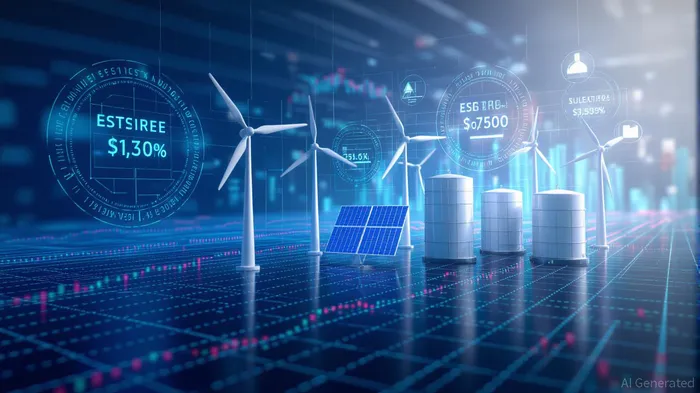
CleanTrade: A Paradigm Shift in Market Infrastructure
REsurety's CleanTrade platform, launched in September 2025 as the first CFTC-approved Swap Execution Facility (SEF) for clean energy transactions, represents a breakthrough in addressing these challenges. By standardizing the trading of VPPAs, PPAs, and RECs, CleanTrade introduces a level of efficiency previously absent in the sector. Data from the platform's early performance reveals its transformative potential: within two months of its launch, CleanTrade attracted $16 billion in notional value, demonstrating strong institutional confidence in its structured approach.
The platform's real-time transparency and advanced analytics further reduce counterparty risk, enabling corporations and ESG funds to hedge price volatility while tracking decarbonization progress with precision. As noted in a Bitget analysis, CleanTrade's infrastructure has also attracted major institutional players such as Cargill and Mercuria, who executed a landmark $16 billion notional value transaction in a short timeframe, validating the platform's role in institutional adoption.
Institutional Capital and ESG Investing: A Symbiotic Relationship
The surge in institutional capital flowing into clean energy markets is closely tied to the rise of ESG investing. A Q3 2025 report highlights that institutional capital inflows into renewable energy through platforms like CleanTrade reached $75 billion, reflecting a global shift toward decarbonization. This momentum is supported by CleanTrade's ability to streamline transactions, with 77% of sustainable investors prioritizing ESG integration between 2023 and 2025.
Moreover, institutional demand for ESG-aligned assets is accelerating. The Morgan Stanley 2025 Sustainable Signals report underscores that 84% of institutional investors globally plan to increase the proportion of sustainable assets in their portfolios within the next two years. CleanTrade's standardized instruments and liquidity mechanisms directly address this demand, providing a scalable framework for institutional capital to engage in clean energy markets while meeting ESG objectives.
The Road Ahead
As clean energy markets continue to evolve, platforms like CleanTrade are poised to play a pivotal role in bridging the gap between liquidity constraints and institutional ambitions. By fostering a transparent, efficient trading environment, CleanTrade not only enhances market accessibility but also reinforces the credibility of ESG investing as a viable strategy for decarbonization. With institutional capital increasingly aligned with sustainability goals, the future of clean energy infrastructure appears firmly anchored in innovation and collaboration.







Comentarios
Aún no hay comentarios