
Clean Energy Infrastructure Financing: A Strategic Avenue for Long-Term Capital Deployment
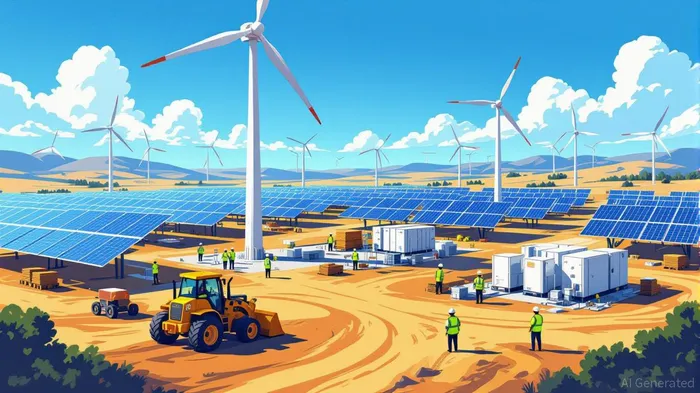
, and institutional investors are sitting at the starting line with a golden opportunity to deploy capital where it matters most: decarbonization and energy resilience. At the heart of this transformation lies a critical question: How do we scale clean energy infrastructure fast enough to meet climate goals while ensuring reliable power for a growing population? The answer, increasingly, is institutional debt facilities—a tool that combines the stability of long-term financing with the urgency of climate action.
, a project that, while not explicitly detailed in public records, aligns with broader trends in energy modernization. For context, . These projects aren't just about renewables; they're about reimagining the grid for a future where reliability and sustainability coexist.
The Power of Institutional Debt: Stability Meets Scalability
Institutional debt facilities, such as those supported by the USDA's New ERA program, offer a unique value proposition. Unlike equity, which dilutes ownership, or short-term loans, which strain cash flow, these facilities provide long-term, low-cost capital tailored to the 10–20-year lifespans of clean energy assets. For example, , . This model is replicable—and scalable.
The key lies in targeting sectors with high decarbonization potential: solar, wind, battery storage, and grid modernization. Wisconsin's clean energy transition, for instance, hinges on expanding transmission infrastructure to support renewable capacity growth [2]. Projects like these require upfront capital but deliver compounding returns through reduced fossil fuel dependency and regulatory tailwinds.
Madison Energy's $800M: A Case Study in Strategic Deployment
While specifics on Madison Energy's facility remain opaque, its $800 million allocation suggests a focus on energy-efficient infrastructure and resource optimization—themes echoed in Horace Mann Educators' own ESG initiatives, such as its 500-panel solar array and waste reduction programs [1]. By 2025, such projects are poised to become sector leaders, leveraging institutional debt to accelerate timelines and mitigate risk.
. , particularly if paired with battery storage to address intermittency. For investors, this means capital deployed today isn't just funding turbines—it's building a moat around future energy markets.
The Road Ahead: Policy, Profit, and Public Good
The Biden administration's emphasis on rural electrification and decarbonization creates a tailwind for these projects. The Inflation Reduction Act's tax credits and the USDA's New ERA program are turbocharging demand for institutional debt, making it easier for cooperatives and regional players to access capital. For example, Madison Energy's facility—assuming it mirrors Arizona's model—could position itself as a template for how to align private returns with public goods.
But the window is narrowing. , the cost of inaction—both economically and environmentally—will rise. Institutional investors who act now can lock in yields while contributing to a cleaner, more resilient grid.
Conclusion: This Is the Time to Build
Clean energy infrastructure isn't just a sector—it's a strategic asset class. Madison Energy's $800 million facility, while still under the radar, represents the kind of bold thinking needed to bridge the gap between climate goals and capital deployment. For institutional investors, the message is clear: Deploying debt in this space isn't just about returns; it's about building the energy systems of tomorrow. And in a world where energy resilience is a non-negotiable, that's a bet worth making.







Comentarios
Aún no hay comentarios