
The CLARITY Act and Senate Banking Draft: A New Era for U.S. Crypto Market Structure
The U.S. crypto market is on the cusp of a transformative regulatory shift, driven by the passage of the CLARITY Act (H.R. 3633) in the House and the Senate Banking Committee's discussion draft of the Responsible Financial Innovation Act (RFIA). These legislative efforts aim to resolve jurisdictional conflicts between the SEC and CFTC, redefine digital asset classifications, and establish a framework for innovation while addressing systemic risks. For investors, this evolving landscape presents both challenges and opportunities, particularly in regulated digital asset ecosystems.
Regulatory Framework: CFTC vs. SEC Jurisdiction
The CLARITY Act, passed by the House in July 2025, categorizes digital assets into three tiers: digital commodities, investment contract assets, and permitted payment stablecoins. This division assigns exclusive CFTC oversight to digital commodities in spot markets, while the SEC retains authority over investment contracts. The Senate Banking Committee's RFIA draft, however, adopts a broader definition of "digital commodities" as any fungible digital asset transferable without intermediaries and recorded on a public distributed ledger. This divergence highlights the need for harmonization but also signals a unified push to reduce regulatory ambiguity.
For investors, the CFTC's expanded role in spot markets could stabilize trading environments by imposing market-integrity obligations on exchanges, brokers, and custodians. This aligns with the Senate Agriculture Committee's proposal to mandate robust risk management systems and conflict-of-interest policies for digital commodity market participants. Such measures may attract institutional capital, which has historically been wary of crypto's regulatory uncertainty.
Strategic Opportunities in DeFi and Staking
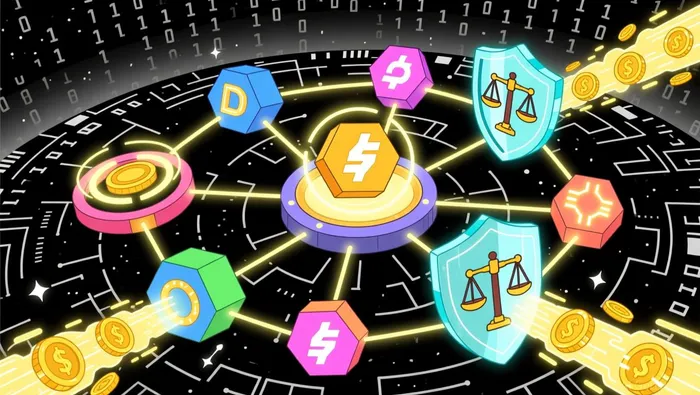
The Senate draft's introduction of terms like "Ancillary Assets" and "Gratuitous Distributions" (e.g., staking rewards and airdrops) opens new regulatory guardrails for decentralized finance (DeFi) protocols. By requiring the SEC to implement "Regulation Crypto," the bill seeks to govern exemptions for investment contracts involving these activities. This clarity could spur innovation in staking-as-a-service platforms and yield-generating protocols, which have faced scrutiny under existing securities laws.
Investors should prioritize DeFi projects that align with the CFTC's market-integrity standards, such as those with transparent governance and cybersecurity protocols. For example, staking pools registered under CFTC oversight may become safer havens for capital compared to unregulated alternatives. Additionally, the Senate's focus on preventing illicit financial activity in DeFi could drive demand for compliance-focused infrastructure providers, such as blockchain analytics firms and KYC/AML platforms.
Stablecoins: A Regulated Payment Layer
Permitted payment stablecoins, defined under the CLARITY Act as digital assets redeemable for fiat currency at a 1:1 ratio, are positioned to become a cornerstone of the U.S. digital economy. The Senate draft's emphasis on stablecoin-linked rewards and consumer protections suggests a regulatory environment that balances innovation with systemic risk mitigation.
Investors may find opportunities in stablecoin-pegged asset-backed tokens (e.g., tokenized treasuries or gold) and cross-border payment platforms leveraging stablecoin rails. The Senate's requirement for robust disclosure and segregation of user funds could also benefit custodial services and institutional-grade stablecoin providers, which are better equipped to meet compliance demands.
Venture Capital and Developer Ecosystems
The Blockchain Regulatory Certainty Act, a bipartisan effort led by Senators Lummis and Wyden, addresses a critical gap by excluding non-custodial developers from money transmitter regulations. This clarification could catalyze venture capital inflows into blockchain infrastructure, including decentralized apps (dApps), smart contract platforms, and open-source tooling.
Startups focused on interoperability solutions, cross-chain bridges, and modular blockchain architectures may see heightened interest, as these technologies align with the Senate's goal of fostering a "blockchain-centric" market structure. Additionally, the Senate's prohibition on public officials profiting from crypto ventures could reduce corruption risks and enhance investor confidence in emerging projects.
Challenges and Risks
While the CLARITY Act and Senate draft aim to stimulate innovation, critics warn of potential loopholes. The CLARITY Act's regulatory framework is perceived as weaker than existing securities laws, with concerns over insufficient disclosures and conflicts of interest. The Senate's broader definitions may also create compliance burdens for smaller firms, favoring well-capitalized incumbents.
Investors must remain vigilant about unresolved issues, such as the lack of a formal definition for "decentralized finance" in the Senate draft. Cross-agency coordination between the SEC and CFTC, as outlined in the SEC's Project Crypto initiative, will be critical to avoid regulatory arbitrage.
Conclusion: A Structured Market Emerges
The CLARITY Act and Senate Banking Draft mark a pivotal step toward a regulated U.S. crypto market. By delineating agency jurisdictions, introducing consumer protections, and fostering innovation in DeFi and stablecoins, these frameworks create a fertile ground for strategic investment. However, success will depend on legislative harmonization, cross-border collaboration (e.g., the Transatlantic Taskforce for Markets of the Future), and the ability of market participants to adapt to evolving compliance standards.
For investors, the key lies in identifying projects and sectors that align with the new regulatory ethos-those that prioritize transparency, interoperability, and institutional-grade security. As the U.S. races to maintain global competitiveness in digital assets, the next 12–18 months will likely define the contours of a mature, regulated crypto ecosystem.







Comentarios
Aún no hay comentarios