
Clarifying BST Strategies: A Tax-Efficient Approach to Income Generation from Tech Stocks
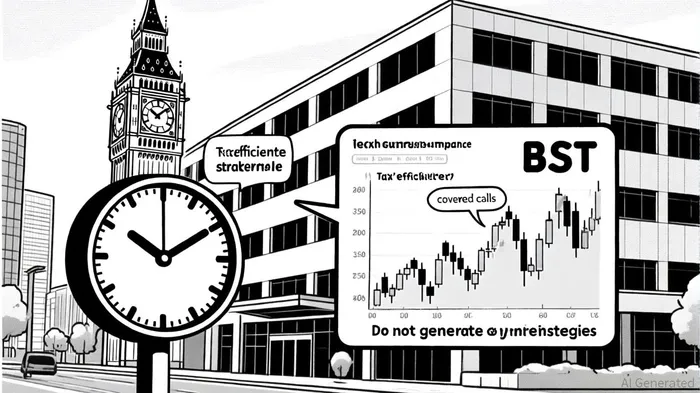
In the realm of income generation from tech stocks, acronyms often carry significant weight. However, a recent surge in references to "BST strategies" has sparked confusion among investors. After extensive research, it becomes clear that "BST" does not denote an investment strategy but rather refers to British Summer Time, a daylight saving time zone[1]. This revelation raises critical questions about the terminology used in financial discourse and underscores the importance of precision in strategy naming.
The BST Misconception and Its Implications
The term "BST" is commonly associated with the UK's seasonal time adjustment, which shifts clocks forward by one hour during the summer months[2]. Investors seeking income strategies may have conflated this term with established tactics such as covered calls (Buy-Write strategies) or dividend reinvestment. While these strategies are well-documented, their conflation with BST highlights a need for clarity. For instance, a covered call strategy involves selling call options against a stock position to generate premium income, a tactic distinct from any time-related framework[3].
Tax Efficiency in Tech Stock Income Strategies
Given the misidentification of BST, let us pivot to strategies that align with the user's intent: tax-efficient income generation. Tech stocks, often held in taxable accounts, benefit from strategies that minimize capital gains taxes and leverage qualified dividends. For example:
1. Covered Calls: By selling call options on non-core holdings, investors can generate income while capping upside potential. This strategy is particularly effective with high-volatility tech stocks like NVIDIA or Amazon[4].
2. Dividend Reinvestment Plans (DRIPs): Reinvesting dividends in tax-advantaged accounts (e.g., IRAs) allows compounding without immediate tax liability[5].
3. Tax-Loss Harvesting: Offsetting gains from tech stocks with losses in other assets can reduce overall tax exposure.
Long-Term Sustainability and Portfolio Resilience
Sustainable income strategies require balancing yield with risk. Tech stocks, while growth-oriented, often trade at elevated valuations. A laddered options strategy, where multiple expiration dates are used to collect premiums, can provide steady income without overexposure to short-term volatility. Additionally, diversifying across sectors (e.g., pairing tech with utilities or consumer staples) ensures that income streams are not overly reliant on a single industry's performance.
Conclusion
While the term "BST strategies" appears to be a misnomer, the underlying goal of tax-efficient income generation from tech stocks remains valid. Investors should focus on well-established tactics like covered calls, dividend reinvestment, and tax-loss harvesting, ensuring alignment with both regulatory frameworks and long-term portfolio objectives. As markets evolve, clarity in terminology will remain as critical as the strategies themselves.







Comentarios
Aún no hay comentarios