
The Citrus Shift: How US Tariffs Are Redrawing Global Supply Chains and Creating Investment Opportunities
The United States' 50% tariff on Brazilian citrus products, set to take effect on August 1, 2025, marks a seismic shift in one of the world's most entrenched trade relationships. Brazil, which supplies over half of the orange juice consumed in the U.S., now faces a crisis that threatens its dominance. This disruption creates a rare opportunity for investors to capitalize on vulnerabilities in Brazil's citrus sector and emerging opportunities in alternative suppliers like Florida and Israel, as well as logistics and substitute commodities. With geopolitical tensions fueling uncertainty, the clock is ticking to position portfolios before the August 1 deadline.
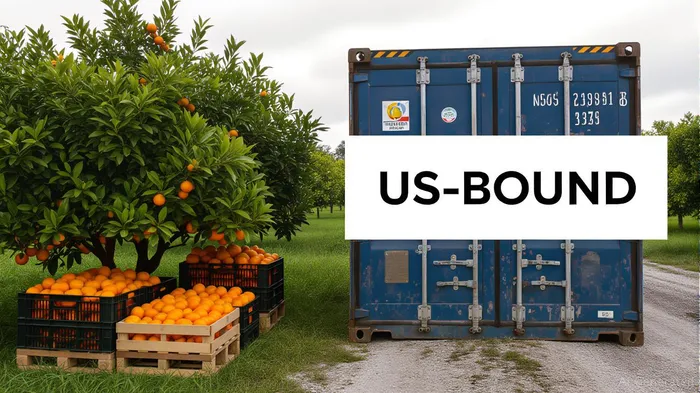
Brazil's Dominance Under Siege
Brazil's citrus industry has long been the backbone of U.S. orange juice imports, with 53% of all juice consumed in the U.S. coming from Brazil. The 50% tariff, however, will add $500 million annually to Brazilian exporters' costs, pricing many out of the market. To put this in perspective, Brazil's 2024 exports of frozen concentrated orange juice (FCOJ) to the U.S. totaled 207,200 tons, generating $879.8 million in revenue. With the tariff in place, the cost of FCOJ alone could rise by $435 million—nearly half the current revenue—making Brazilian exports uncompetitive unless prices spike.
The tariff's timing is politically charged, tied to Brazil's treatment of former President Bolsonaro. This adds a layer of instability, as trade measures could escalate further if diplomatic tensions worsen.
Florida: Limited Potential, Strategic Bet
Florida's citrus industry, battered by citrus greening (HLB) and hurricanes, is in no position to fully replace Brazil. The USDA forecasts 2024–2025 orange production at 11.63 million boxes—a 36% drop from 2023—due to HLB's relentless spread. Even with increased nitrogen fertilization (up to 220 lb/acre) and advanced disease management, Florida's output remains constrained.
However, this is a strategic opportunity for investors. Companies like Florida Citrus Mutual (a cooperative representing growers) and Gulf Citrus Packing could see demand spikes if Brazil's exports collapse. A play on Florida's recovery hinges on breakthroughs in HLB-resistant citrus strains or increased federal funding for research.
Israel: The Rising Citrus Powerhouse
Israel's citrus exports, projected to hit $21.31 million in 2024, are set to grow as U.S. buyers seek alternatives. With production rebounding post-war (up 15% in 2024–25), Israel's tangerines and lemons could fill gaps. A key advantage is its proximity to Europe and Asia, though Red Sea shipping risks remain.
Investors should watch Gan-Shmuel, Israel's largest citrus processor, which exports to Asia and Europe. The company's ability to pivot to U.S. markets—leveraging its high-quality citrus and advanced processing—could make it a hidden gem.
Logistics: The Silent Winner
The tariff's transshipment clause—applying a 50% duty to goods routed through third countries—will force Brazil to rethink supply chains. This creates opportunities in logistics and shipping firms capable of handling citrus exports under new constraints.
- Maersk (MAERSK-B.CO) and CMA CGM (CMAC): Their global networks could benefit from rerouted cargo.
- U.S. Port Operators like Port of Miami and Port of New York: Increased inspections and tariffs may boost handling fees.
Substitute Commodities: Betting on Beverage Trends
As orange juice demand softens in the U.S. (down 15% in Europe since 2023), investors might pivot to rising alternatives like lemons, limes, and cold-pressed juices. Mexico, already supplying 29.6% of U.S. citrus imports, could expand its share, but its USMCA tariff-free status gives it an edge.
Investment Play:
- Lemon/lime producers in Chile and Mexico (e.g., Cecilia Citrus) could see demand spikes.
- Cold-pressed juice brands like Suja Life or Organic Avenue may benefit from health-conscious consumers shifting away from traditional orange juice.
The Bottom Line: Act Before August 1
The tariff's implementation on August 1 is a hard deadline. Investors must act swiftly to:
1. Buy into Florida citrus cooperatives or HLB-resistant tech firms.
2. Add logistics stocks exposed to citrus supply chain shifts.
3. Short Brazilian citrus exporters like Cutrale Group, which lack pricing power.
The geopolitical angle is critical: Brazil's retaliation could include sanctions or trade restrictions, further destabilizing markets. For now, the U.S. citrus sector is a high-risk, high-reward arena—perfect for aggressive investors willing to bet on a reshaped supply chain.
Final Note: Monitor the USDA's June 12 citrus forecast for Florida's 2024–2025 production revisions, which could shift this calculus.
This article synthesizes sector vulnerability and strategic opportunities, urging investors to act decisively before the tariff reshapes global citrus markets. The stakes are high—and the clock is ticking.







Comentarios
Aún no hay comentarios