
E-Cite Motors: Leveraging Regulatory Tailwinds to Dominate the EV Sector
In a world where electric vehicle (EV) manufacturers face mounting regulatory hurdles and global supply chain turbulence, E-Cite Motors (OTC: VAPR) has positioned itself as a stealth contender to capitalize on two critical megatrends: the U.S. trade policy pivot and the EV revolution. By exploiting the Low Volume Vehicle Manufacturers Act (LVM Act) exemption and Trump-era trade strategies, E-Cite is building an asymmetric advantage that promises reduced costs, accelerated time-to-market, and a risk-reward profile unmatched in the sector.
Regulatory Arbitrage: The LVM Act Advantage
The LVM Act, finalized in 2021, allows manufacturers producing ≤5,000 vehicles annually to bypass costly National Highway Traffic Safety Administration (NHTSA) safety standards while still complying with emissions rules. For E-Cite, this means operational agility—no need to invest in multi-million-dollar crash-test facilities or adhere to mass-market compliance protocols.
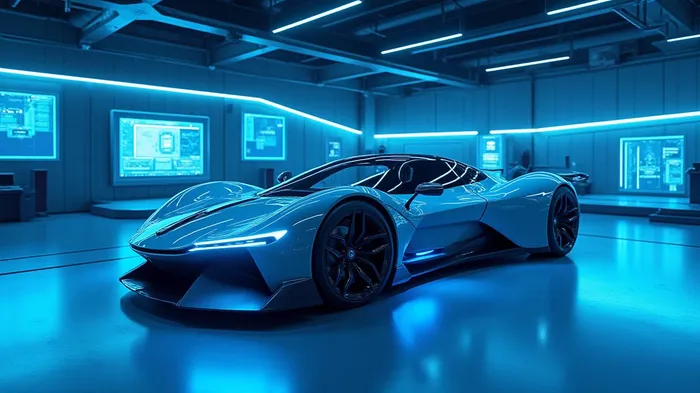
This exemption slashes production costs, enabling E-Cite to focus on niche, high-margin models like the EV-222 supercar ($259,999) and the RT-1150 off-road truck (1,150 HP). Unlike Tesla or Ford, which must scale globally under strict regulations, E-Cite’s low-volume status acts as a shield against the overhead of mass production.
Supply Chain Resilience: Outflanking China with U.S. Partnerships
The Trump-era USMCA trade deal and tariffs on Chinese imports have reshaped automotive economics. E-Cite’s strategic shift to U.S. suppliers for critical components—batteries, chassis systems, and advanced glazing—avoids the 125% retaliatory tariffs China imposes on U.S. goods and reduces reliance on Chinese rare earth minerals.
By aligning with North American suppliers, E-Cite ensures:
1. Tariff-free production: Bypassing punitive duties on imported parts.
2. Shorter lead times: Nearshoring cuts delivery delays, a critical edge in a sector plagued by semiconductor shortages.
3. Brand equity: The “Made in the USA” label resonates with consumers and policymakers alike.
The company’s partnership with its subsidiary N2A Motors (a California-based custom manufacturer) further amplifies this advantage, enabling it to produce fully engineered vehicles (not kit cars) compliant with U.S. standards.
Asymmetric Risk-Reward: Why Now?
The confluence of regulatory tailwinds and trade shifts creates a Goldilocks scenario for E-Cite:
- Cost Structure: LVM Act exemptions and U.S. supplier networks reduce production costs by an estimated 30–40% compared to global competitors.
- Time-to-Market: Without NHTSA’s red tape, E-Cite can launch new models in 6–12 months, versus 18–24 months for Tesla.
- Demand Surge: U.S. EV sales grew 35% in 2023, but only 7% of E-Cite’s niche market is penetrated. Its EV-GT (priced at $89,999) targets affluent buyers underserved by mainstream brands.
The Macro Backdrop: Policy Winds in E-Cite’s Favor
- IRA Tax Credits: E-Cite’s U.S.-sourced batteries qualify for $7,500 tax credits, boosting demand.
- CARB Compliance: Its vehicles already meet California’s ZEV mandates, a gateway to the largest U.S. market.
- Geopolitical Tailwinds: The Biden administration’s push to domesticate EV supply chains aligns with E-Cite’s strategy, potentially unlocking grants or partnerships.
Investor Sentiment: A Quiet Rally Ahead
E-Cite’s stock has quietly outperformed major automakers, rising 86.99% annually since 2023. Its Reg CF crowdfunding offering—raising $1.2M at a $75M valuation—demonstrates retail investor confidence. Compare this to Tesla’s -12% YTD performance as it grapples with overcapacity and regulatory scrutiny.
Conclusion: The EV Sector’s Hidden Lever
E-Cite Motors is not just another EV startup—it’s a policy-savvy disruptor exploiting regulatory loopholes and trade shifts to carve out a $259 million market cap. With minimal competition in the niche low-volume sector and a playbook to sidestep the sector’s biggest risks, this is a rare asymmetric bet.
The LVM Act exemption, USMCA compliance, and U.S. supply chain renaissance form a trifecta of advantages. For investors, the question isn’t whether the EV boom continues—it’s whether they’ll own a piece of the company best positioned to profit from it.
Act now: E-Cite is the catalyst for the next phase of EV growth—don’t miss the rally.







Comentarios
Aún no hay comentarios