
Circular Economy Innovation in the Energy Sector: Strategic Partnerships as Catalysts for ESG Value and Operational Efficiency
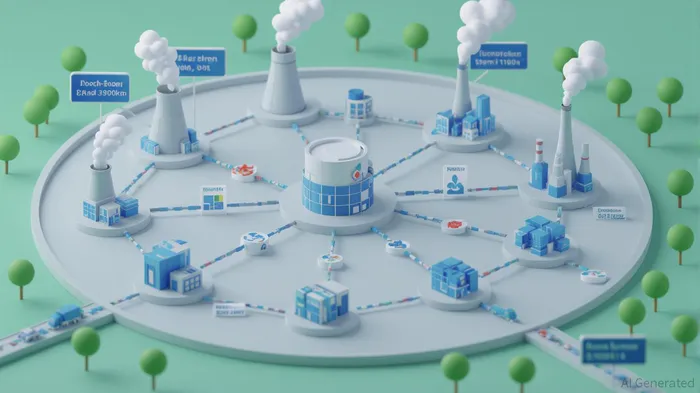
The energy sector is undergoing a transformative shift as circular economy principles converge with strategic partnerships to unlock unprecedented ESG value and operational efficiency. This evolution is not merely a response to regulatory pressures but a calculated investment in resilience, driven by cross-industry collaboration and technological innovation.
Strategic Alliances: The Engine of Circular Value Creation
Strategic partnerships are emerging as the linchpin of circular economy success in energy. For instance, Syre, a textile-to-textile recycling startup supported by H&M, has secured $100 million in Series A funding to scale its circular polyester production. This partnership enables brands like GapGAP-- and Target to reduce reliance on virgin materials, aligning with ESG goals while creating a $3.14 billion market opportunity for agentic AI in energy by 2030 [1]. Similarly, Google and Dow have collaborated on AI-powered sorting technology to recycle hard-to-process plastics, addressing a critical circularity barrier in the plastics industry [3].
In the oil and gas sector, Northern Oil and Gas (NOG) has integrated methane capture and water recycling initiatives, achieving 18% EBITDA margins—surpassing industry averages—while reducing environmental footprints [1]. These examples underscore how partnerships transcend traditional boundaries, enabling resource optimization and shared risk mitigation.
Agentic AI: A Dual Driver of Efficiency and Sustainability
The integration of agentic AI systems is redefining operational efficiency in energy. Real-time optimization of drilling operations has reduced costs by up to 30%, while AI-driven grid balancing has cut carbon footprints by 5–20% [1]. For example, Delta Air Lines leveraged lightweight cabin kits and optimized flight paths to reduce fuel burn by 1% in 2025, saving $110 million and cutting emissions proportionally [2]. Such innovations highlight the symbiotic relationship between AI and circularity, where data-driven decisions amplify both economic and environmental returns.
ESG Metrics as Financial Leverage
Quantifiable ESG outcomes are increasingly tied to financial performance. H&M's circular economy model, which incorporates 29.5% recycled materials, has driven a 41% reduction in Scope 1 and 2 emissions while maintaining revenue growth [2]. Meanwhile, Eni's Versalis has demonstrated the viability of chemical recycling through its Hoop technology, converting complex plastic waste into high-quality materials at a demonstration plant [3]. These cases illustrate how circular strategies are not just ethical imperatives but competitive advantages, with Newsweek-recognized energy firms outperforming peers by an average of 18% in EBITDA margins [1].
Investment Implications and the Path Forward
For investors, the circular economy in energy represents a dual opportunity: mitigating climate risks while capitalizing on efficiency-driven growth. Firms that prioritize strategic alliances—such as Tesla's ecosystem-driven innovation in renewable integration—demonstrate how interconnected systems can reduce emissions and create long-term value [2]. However, success hinges on rigorous ESG metrics and scalable partnerships.
The 2025 energy landscape reveals a sector-wide shift toward operational excellence and environmental responsibility. As circularity becomes a cornerstone of competitive advantage, investors must prioritize companies that embed these principles into their core strategies. The financial rewards—measured in both profitability and planetary impact—are clear.







Comentarios
Aún no hay comentarios