
Circle's Resilience and Governance Under Pressure: A Deep Dive into Stablecoin Security and Institutional Responses
In the volatile world of digital assets, stablecoins have emerged as critical infrastructure for both retail and institutional markets. Among them, Circle's USDCUSDC-- has become a cornerstone of crypto finance, but its resilience under pressure remains a focal point for investors. This analysis evaluates Circle's governance and security protocols, institutional responses to market stress, and regulatory challenges, drawing on recent data and real-world events.
Circle's Security and Governance: A Foundation of Transparency
Circle's approach to stablecoin security is anchored in its reserve structure and third-party audits. As of 2025, USDC is fully backed by highly liquid fiat reserves held in the CircleCRCL-- Reserve Fund, an SEC-registered money market fund[1]. The company provides weekly disclosures of reserve holdings and monthly third-party assurance from a Big Four accounting firm, ensuring reserves exceed circulating USDC[1]. Additionally, Circle has completed SOC 2 Type 2 audits, affirming compliance with cybersecurity standards[2]. These measures have bolstered trust, particularly as the stablecoin ecosystem grapples with technical vulnerabilities and liquidity risks[3].
However, challenges persist. Critics, including blockchain analyst ZachXBT, have accused Circle of overstating its regulatory compliance[4]. Such scrutiny underscores the tension between decentralized ideals and centralized oversight-a dynamic that will shape stablecoin governance for years.
Market Stress and Institutional Responses: Lessons from 2025
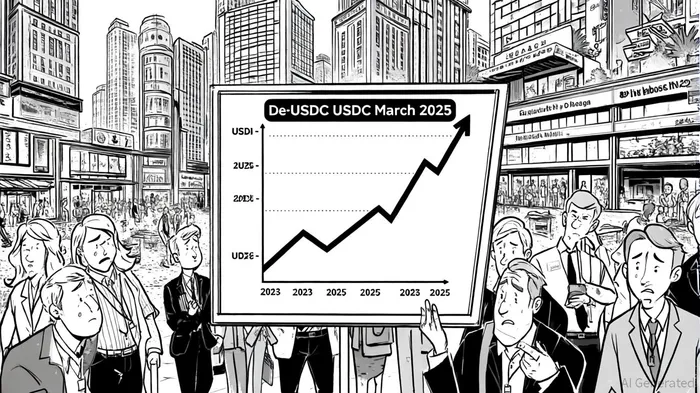
The March 2025 de-pegging event, where USDC briefly traded at $0.9999, tested Circle's resilience. Unlike the 2023 crisis tied to the collapse of Silicon Valley Bank (SVB), this event was resolved swiftly. Circle's proactive diversification of reserves to Globally Systemically Important Banks (GSIBs) like BNY Mellon mitigated risks[5]. The company also introduced operational rules for its Circle Payments Network (CPN), enabling institutions to customize compliance frameworks for transactions[6]. These rules allow real-time risk controls based on geography, counterparty, and transaction type, ensuring alignment with regulatory standards without sacrificing liquidity[6].
Institutional adoption of USDC has surged, with the stablecoin dominating 74.6% of institutional over-the-counter trades in H1 2025[7]. Partnerships with JPMorgan, Citibank, and Mastercard have further solidified USDC's role in cross-border settlements and tokenized asset markets[8]. For example, in August 2025, Circle minted $750 million USDC on SolanaSOL-- to support the Alpenglow upgrade, while Sharps Technology contributed $400 million to Solana's treasury, signaling institutional confidence in the network's scalability[9].
Regulatory Challenges and Strategic Alignment
Circle's governance strategy is increasingly shaped by regulatory developments. The company has aligned with the EU's MiCA framework and advocated for U.S. legislation like the GENIUS Act, which mandates full-reserve requirements and monthly audits for stablecoin issuers[10]. Despite the House's failure to pass key crypto legislation in July 2025, Circle's compliance-first approach-highlighted by daily audits by Deloitte and full U.S. Treasury-backed reserves-has positioned USDC as a trusted tool for enterprise payments[11].
Financially, Circle's Q2 2025 results revealed a $482 million net loss, primarily due to IPO-related expenses, but revenue and reserve income grew 53% YoY to $658 million[12]. USDC circulation expanded 90% YoY to $65.2 billion by August 2025, reflecting robust demand despite short-term volatility[12].
Conclusion: Balancing Innovation and Compliance
Circle's resilience in 2025 demonstrates the importance of robust governance and institutional collaboration in stablecoin markets. While risks like liquidity challenges and regulatory uncertainty persist, Circle's strategic diversification, transparency protocols, and proactive engagement with regulators have reinforced its position as a leader in the space. For investors, the key takeaway is clear: stablecoins like USDC will remain pivotal to global finance, but their long-term success hinges on balancing innovation with compliance-a challenge Circle appears well-equipped to navigate.







Comentarios
Aún no hay comentarios