
Cipher Mining's Strategic Expansion into HPC and AI Infrastructure: A New Era of Growth
In the rapidly evolving energy-IT convergence sector, Cipher MiningCIFR-- (CIFR) has emerged as a pivotal player, leveraging its infrastructure assets to pivot from BitcoinBTC-- mining toward high-performance computing (HPC) and artificial intelligence (AI) infrastructure. This strategic shift, underpinned by geographic diversification, long-term contracts with tech giants, and a focus on energy efficiency, positions the company to capitalize on the surging demand for AI-driven compute resources. As the global AI market accelerates, Cipher's dual-purpose model-combining Bitcoin mining with HPC-offers a compelling case for long-term value creation.
Geographic Diversification: Scaling for Resilience and Growth
Cipher's geographic expansion in 2025 has been a cornerstone of its strategy to mitigate risks and enhance scalability. The company's Black Pearl site in Texas, now fully energized, contributes 24% of its Bitcoin production while serving as a critical node for HPC operations. This site's success has been amplified by the acquisition of a 200-megawatt facility in Ohio, granting direct access to PJM Interconnection, the largest wholesale electricity market in the U.S. By diversifying its footprint across Texas and Ohio, CipherCIFR-- not only secures access to low-cost energy but also strengthens its ability to serve AI clients in regions with high computational demand.
This geographic strategy aligns with broader industry trends. As noted in a report by Bloomberg, data centers in the U.S. are increasingly prioritizing locations with robust grid connectivity and renewable energy availability. Cipher's Ohio acquisition, for instance, leverages PJM's grid reliability while positioning the company to benefit from Ohio's growing tech ecosystem. Such moves ensure operational resilience against regional energy volatility and create a foundation for future expansions.
Business Model Transformation: From Bitcoin to HPC Dominance
Cipher's pivot to HPC is not merely a diversification tactic but a fundamental reorientation of its revenue streams. In October 2025, the company secured a landmark 15-year, $5.5 billion lease agreement with Amazon Web Services (AWS), committing to deliver 300 megawatts of capacity for AI workloads starting in July 2026. This deal, coupled with a 10-year, 168-megawatt agreement with Fluidstack and Google as reported in financial news, underscores Cipher's ability to attract high-margin, long-term contracts from industry leaders. Analysts project that HPC revenue will surpass Bitcoin mining revenue by 2027, with HPC earnings expected to reach $739 million annually.
This transformation reflects a broader industry shift. As highlighted by Reuters, cryptocurrency miners are increasingly repurposing their infrastructure to meet AI demand, driven by the economic pressures of Bitcoin's volatile market. Cipher's dual-use model-where the same facilities support both Bitcoin mining and HPC-maximizes asset utilization while reducing capital expenditures. For example, the Black Pearl site's existing power infrastructure is being adapted to host AI workloads, minimizing the need for redundant investments.
Financial Strength and Energy Efficiency: Enablers of Sustainable Growth
Cipher's financial strategy in 2025 has been instrumental in funding its ambitious expansion. Q3 2025 revenue surged 65% year-over-year to $72 million, driven by Bitcoin price appreciation and increased hashrate output. The company also secured $1.3 billion in convertible notes to finance future projects, ensuring liquidity for large-scale developments like the Colchis site in West Texas-a 1-gigawatt facility expected to energize by 2028 as detailed in investor updates.
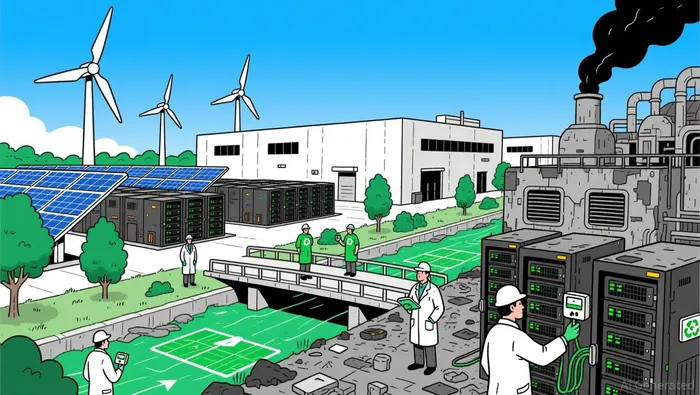
Equally critical is Cipher's focus on energy efficiency. The company's HPC infrastructure operates at 16.5 joules per terahash, with approximately 70% of its energy mix sourced from renewable energy, including solar, wind, and hydro as detailed in industry analysis. This aligns with industry-wide trends emphasizing sustainability, as noted by Deloitte, which predicts that energy consumption for AI training could rise by 160% by 2030. Cipher's adoption of liquid cooling and power optimization technologies further enhances its competitiveness, reducing operational costs and environmental impact.
Industry Trends and Long-Term Value Creation
The convergence of energy and IT infrastructure is reshaping the data center landscape, and Cipher's strategic initiatives position it at the forefront of this evolution. According to a 2025 analysis by HPC Wire, energy efficiency is no longer a peripheral concern but a strategic imperative for data center operators. Cipher's emphasis on low-cost power and renewable energy procurement directly addresses this challenge, enabling it to offer cost-effective HPC solutions to AI clients.
Moreover, the company's partnerships with AWS and Google highlight its ability to secure revenue stability in an otherwise volatile market. These contracts, with durations spanning a decade or more, provide predictable cash flows and reduce exposure to Bitcoin's price fluctuations. As noted in a report by SP Global, such long-term agreements are becoming a hallmark of the AI infrastructure sector, where companies prioritize scalability and reliability.
Conclusion: A Strategic Pivot with High Conviction
Cipher Mining's strategic expansion into HPC and AI infrastructure represents a bold yet calculated move to future-proof its business. By diversifying geographically, securing high-margin contracts, and prioritizing energy efficiency, the company is well-positioned to capitalize on the AI boom while mitigating risks inherent to Bitcoin mining. While the absence of specific sustainability certifications like LEED or ISO 14001 remains a minor gap in its public disclosures, Cipher's operational metrics-such as its renewable energy mix and energy efficiency-speak to a commitment to sustainable practices.
For investors, Cipher's transformation offers a compelling narrative: a company leveraging its existing assets to align with one of the most transformative technological trends of the decade. As the energy-IT convergence accelerates, Cipher's dual-purpose model and strategic foresight could unlock substantial long-term value.







Comentarios
Aún no hay comentarios