

Cinemark: A Value Investor's Assessment of a Leveraged Business
The classic value investor's question is straightforward: does the current price offer a sufficient margin of safety relative to the business's intrinsic value? For CinemarkCNK--, the answer hinges on reconciling strong operational health with a deeply leveraged balance sheet. The company's recent performance suggests a business that is compounding well, but the stock's price action and financial structure demand extreme caution.
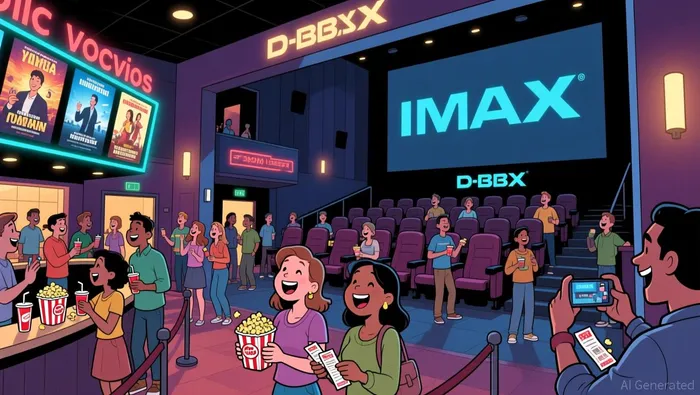
On the operational side, the news is compelling. Cinemark achieved its highest domestic box office results since the pandemic in 2025, outperforming both its own prior records and the broader industry. This wasn't a one-off; it was a sustained beat, with milestones from Memorial Day to Christmas Day and record-breaking openings for major films. This strength is underpinned by strategic investments in premium formats and customer loyalty, as evidenced by record revenue from D-BOX motion seats and a record subscription level for its Movie Club membership program. The business is clearly executing and capturing demand for out-of-home entertainment.
Yet, the market's verdict on this performance has been harsh. Despite the operational beat, the stock is trading near its 52-week low at $22.76, with a 1-year total shareholder return of -24.36%. This disconnect is the core puzzle. It suggests investors are looking past the strong 2025 results and focusing on what they perceive as a high-risk profile. That risk is quantified in the balance sheet. Cinemark carries a debt-to-equity ratio of 7.55 and an enterprise value of $91.14 billion. This extreme leverage creates a narrow margin of safety; any significant downturn in box office receipts or a rise in interest rates could quickly strain the company's ability to service its obligations.
The valuation metrics themselves are a study in tension. The stock trades at a forward P/E ratio of 12.96 and a P/FCF ratio of 9.32, which appear modest. However, these multiples are applied to a company with a current ratio of 0.76 and an interest coverage ratio of 2.20. The market is pricing in the risk that the high fixed costs of this leveraged model could amplify losses during a down cycle. The implied fair value of $33.91 per share represents a significant premium to the current price, but it assumes the company can navigate its debt load while sustaining its premium pricing and attendance growth.
For a value investor, the setup is clear. The intrinsic value appears to be above the current price, supported by operational momentum. But the margin of safety is thin because of the debt. This is not a business where a simple earnings multiple tells the full story. The wide moat of premium formats and loyalty is real, but it must be enough to cover the high fixed costs and the principal on a massive debt load. The market's skepticism is a rational response to that leverage. A true margin of safety would require either a much lower price, a significant reduction in debt, or a near-certain path to earnings growth that can comfortably service the interest. Until one of those conditions is met, the investment remains a high-risk bet on continued operational excellence.
The Business Moat: Durability and Growth Levers
Cinemark's operational strength points to a durable business model, but the quality of its moat and the sustainability of its growth levers are critical for a value investor. The company's competitive advantages are built on three pillars: geographic reach, a powerful link to the film slate, and a potential strategic acquisition.
First, Cinemark's geographic footprint provides a tangible moat. As the third-largest U.S. theater operator with about 300 domestic locations, it commands a roughly 15% U.S. market share. This scale offers pricing power and operational efficiencies. More importantly, its operations in faster-growing international markets like Latin America provide a growth lever that is less dependent on the cyclical U.S. box office. This diversification reduces concentration risk and taps into a broader demographic, enhancing the durability of the business over the long term.
Second, the company's fortunes are inextricably tied to the quality of the film slate, a relationship that acts as a powerful growth driver. Cinemark's record-breaking results in 2025 were not accidental; they were directly fueled by major franchise releases. The company achieved all-time highest Memorial Day weekend, a second-largest horror opening, and its biggest PG-rated opening, all of which are hallmarks of a strong pipeline. This creates a virtuous cycle: a rich slate drives attendance, which in turn justifies investments in premium formats like XD and IMAX, boosting per-customer spending. The business is a pure play on the health of Hollywood's output, making the film slate the single most important external factor for its future cash flows.
Third, the ongoing sale process for Warner Bros. Discovery's theater assets presents a potential catalyst that could enhance its market position. While the details are still unfolding, the prospect of acquiring additional screens and locations from a major studio provides a clear path to scale. Such an acquisition could solidify Cinemark's leadership in key markets and improve its leverage in negotiations with film distributors. For a value investor, this represents a potential accretive opportunity that could improve the return on capital without requiring new equity issuance.
The durability of this moat, however, hinges on two factors. First, the company must continue to execute its premiumization strategy, as evidenced by record revenue from D-BOX motion seats and a record subscription level for its Movie Club membership program. These initiatives build customer loyalty and increase the average revenue per patron, which is essential for compounding value. Second, the moat is only as wide as the film slate remains robust. Any significant disruption or disappointment in the pipeline would quickly test the business's resilience, as the company's revenue is highly correlated to the success of the movies it screens.
In sum, Cinemark possesses a multi-faceted moat. Its geographic reach and loyalty programs provide a defensive core, while its direct link to the film slate and potential acquisition opportunities offer offensive growth levers. For the business to compound over the long cycle, it must successfully navigate the inherent volatility of that film slate while leveraging its scale and strategic position to convert hits into sustainable cash flows.
Financial Health & Valuation: The Margin of Safety Test
The margin of safety for a value investor is not found in a single ratio, but in the convergence of financial resilience, valuation, and risk. For Cinemark, the numbers tell a story of a business that is profitable and generating cash, but one whose extreme leverage creates a precarious setup. The market's skepticism, reflected in a 1-year total return of -24.36%, is a rational response to this profile.
Financially, the company shows a clear dichotomy. On one hand, it boasts strong profitability, with a return on equity of 33.05% and a debt-to-equity ratio of 7.55. This high ROE is a function of its leverage, magnifying returns in good times but also losses in bad. The company's cash flow generation is solid, with free cash flow of 5.11 billion in the last 12 months. Yet, its balance sheet is stretched, carrying 54.36 billion in debt against only 8.49 billion in cash, resulting in a net cash position of -45.87 billion. This is the core vulnerability.
The Altman Z-Score of 1.4 is a stark warning sign, indicating a high risk of bankruptcy. This metric, which combines profitability, leverage, liquidity, and solvency, underscores that the company operates in a zone of significant distress. The Piotroski F-Score of 6 suggests moderate financial strength, but it is a score that reflects stability, not safety. In a leveraged business, stability is not enough; durability under stress is required.
Valuation presents a similar tension. The stock trades at a forward P/E of 12.96 and a P/FCF ratio of 9.32, which appear reasonable. However, these multiples are applied to a company with a debt-to-EBITDA ratio of 3.29 and an interest coverage ratio of 2.20. The EV/EBITDA multiple of 5.79 is low, but it is a function of the massive enterprise value of $91.14 billion, which includes the debt. This leverage means that a small drop in EBITDA could quickly deteriorate the interest coverage and strain the balance sheet.
The market's recent price action captures this volatility. While the stock has seen a 30-day share price return of 7.26%, its 3-year total return of 119.41% shows a history of momentum that has been sharply reversed. This pattern of volatility is typical of high-beta stocks in cyclical industries with heavy debt.
For a value investor, the margin of safety calculation is straightforward but unforgiving. The implied fair value of $33.91 per share represents a significant premium to the current price, but it assumes the company can navigate its debt load while sustaining its premium pricing and attendance growth. Given the Altman Z-Score and the thin interest coverage, that path is fraught with risk. The margin of safety is not in the price; it is in the company's ability to grow earnings fast enough to service its debt and reduce leverage over time. Until that path becomes clearer, the investment remains a high-risk bet on continued operational excellence.
Catalysts and Risks: What the Patient Investor Should Watch
For the patient investor, the path to a closing valuation gap is defined by a handful of near-term events and long-term trends. The next earnings report, scheduled for Friday, February 20, 2026, is the immediate catalyst. It will provide the first official financial review of the blockbuster 2025 film slate's impact, offering updated guidance on how much of that strength is sustainable. This report is critical for validating the business's growth levers and will be scrutinized for any shift in the company's outlook on the 2026 pipeline.
The primary risk that will be tested is the high debt load. With an interest coverage ratio of just 2.20, Cinemark operates with minimal financial cushion. This constraint directly threatens capital allocation, limiting the company's ability to invest in growth or weather a downturn in box office receipts. Any sign of weakening EBITDA or a rise in interest rates would quickly amplify this vulnerability, making the debt service a larger drag on cash flow and potentially forcing a deleveraging plan that could slow expansion.
On the positive side, a key catalyst for shareholder returns is the resolution of convertible note dilution concerns. The company's recent $300 million buyback authorization is a direct move to offset equity dilution. If management successfully executes on this plan, it would improve financial flexibility and ensure a larger share of future earnings flows through to each remaining shareholder. This is a tangible step toward enhancing the return on capital, which is essential for a leveraged business.
In the longer term, the investment thesis hinges on two factors. First, the company must continue to convert a strong film slate into compounding cash flows, leveraging its premium formats and loyalty programs to boost per-customer spending. Second, the potential for accretive acquisitions, particularly from a major studio's theater assets, could provide a strategic growth path without adding new debt. A patient investor should monitor these developments, but the near-term focus must remain on the February earnings and the company's ability to manage its precarious balance sheet while the film slate delivers.





Comentarios
Aún no hay comentarios