
CHIPS Act Under Trump: Uncertainty and Opportunity
Generado por agente de IAWesley Park
lunes, 25 de noviembre de 2024, 4:59 pm ET1 min de lectura
INTC--
ON--
TSM--
The CHIPS Act, a bipartisan effort to boost U.S. semiconductor manufacturing, is poised to reshape the industry but faces uncertainty under a Trump administration. The act, signed into law by President Biden, committed almost $53 billion to invest in domestic semiconductor manufacturing and research, aiming to bolster U.S. competitiveness with China. However, as the 2024 U.S. presidential election nears, the future of the CHIPS Act under a new Trump administration remains uncertain.
Trump's proposed tariff increases on semiconductor imports, up to 50% and 60% respectively, could significantly impact CHIPS Act beneficiaries like Intel and TSMC. Higher tariffs may lead to increased costs for these companies, potentially offsetting some of the benefits from the billions in grants they receive. This could make their U.S. operations less competitive, as they may struggle to pass on these additional costs to consumers. Additionally, these tariffs could discourage foreign companies from building new facilities in the U.S., as they would face higher production costs. This could slow down the CHIPS Act's aim to boost domestic semiconductor manufacturing and research.
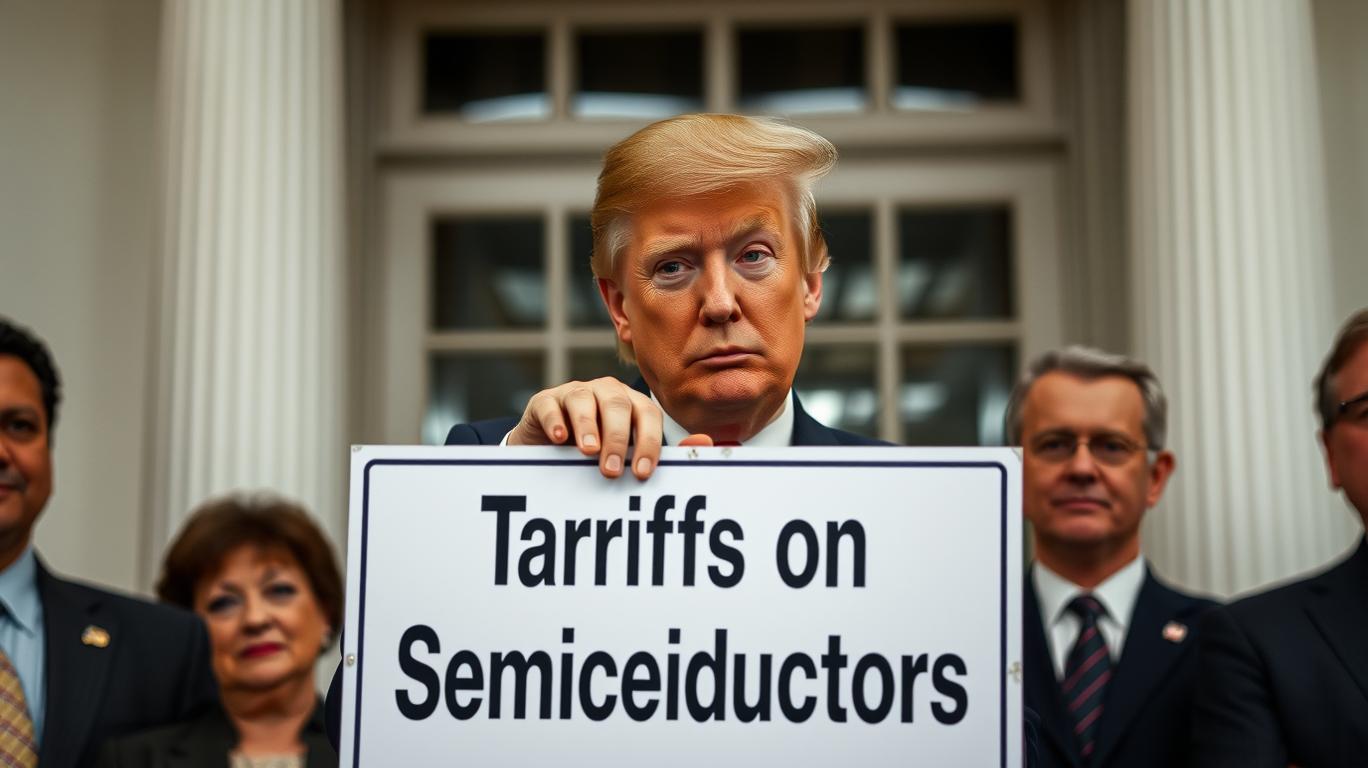
The CHIPS Act under a new Trump administration may see modifications that could weaken or strengthen domestic competitiveness. One potential change is a rollback of incentives, which could impair U.S. semiconductor manufacturing competitiveness and jeopardize investments in onshore production, leaving companies vulnerable to intensified global competition. Alternatively, Trump may uphold the CHIPS Act, as experts expect, despite his campaign rhetoric, which could strengthen domestic competitiveness. The future of the CHIPS Act under a Trump administration remains uncertain, but the industry should prepare for potential changes to strengthen its resilience.
Given the uncertainty surrounding Trump's policies, investors should evaluate the long-term prospects of CHIPS Act beneficiaries by considering companies' operational agility, management robustness, and ability to adapt to potential policy shifts. TSMC, Intel, and Samsung, current beneficiaries, must prove their adaptability to thrive under evolving trade policies and supply chain disruptions.
In conclusion, the CHIPS Act presents a significant opportunity for the U.S. semiconductor industry, but its future under a new Trump administration remains uncertain. While Trump's proposed tariff increases could complicate funding allocation and U.S. semiconductor manufacturing, companies can adapt their strategies to mitigate risks. Investors should stay informed about policy changes and focus on companies with strong management and enduring business models to capitalize on the long-term potential of the CHIPS Act.
Trump's proposed tariff increases on semiconductor imports, up to 50% and 60% respectively, could significantly impact CHIPS Act beneficiaries like Intel and TSMC. Higher tariffs may lead to increased costs for these companies, potentially offsetting some of the benefits from the billions in grants they receive. This could make their U.S. operations less competitive, as they may struggle to pass on these additional costs to consumers. Additionally, these tariffs could discourage foreign companies from building new facilities in the U.S., as they would face higher production costs. This could slow down the CHIPS Act's aim to boost domestic semiconductor manufacturing and research.
The CHIPS Act under a new Trump administration may see modifications that could weaken or strengthen domestic competitiveness. One potential change is a rollback of incentives, which could impair U.S. semiconductor manufacturing competitiveness and jeopardize investments in onshore production, leaving companies vulnerable to intensified global competition. Alternatively, Trump may uphold the CHIPS Act, as experts expect, despite his campaign rhetoric, which could strengthen domestic competitiveness. The future of the CHIPS Act under a Trump administration remains uncertain, but the industry should prepare for potential changes to strengthen its resilience.
Given the uncertainty surrounding Trump's policies, investors should evaluate the long-term prospects of CHIPS Act beneficiaries by considering companies' operational agility, management robustness, and ability to adapt to potential policy shifts. TSMC, Intel, and Samsung, current beneficiaries, must prove their adaptability to thrive under evolving trade policies and supply chain disruptions.
In conclusion, the CHIPS Act presents a significant opportunity for the U.S. semiconductor industry, but its future under a new Trump administration remains uncertain. While Trump's proposed tariff increases could complicate funding allocation and U.S. semiconductor manufacturing, companies can adapt their strategies to mitigate risks. Investors should stay informed about policy changes and focus on companies with strong management and enduring business models to capitalize on the long-term potential of the CHIPS Act.

Divulgación editorial y transparencia de la IA: Ainvest News utiliza tecnología avanzada de Modelos de Lenguaje Largo (LLM) para sintetizar y analizar datos de mercado en tiempo real. Para garantizar los más altos estándares de integridad, cada artículo se somete a un riguroso proceso de verificación con participación humana.
Mientras la IA asiste en el procesamiento de datos y la redacción inicial, un miembro editorial profesional de Ainvest revisa, verifica y aprueba de forma independiente todo el contenido para garantizar su precisión y cumplimiento con los estándares editoriales de Ainvest Fintech Inc. Esta supervisión humana está diseñada para mitigar las alucinaciones de la IA y garantizar el contexto financiero.
Advertencia sobre inversiones: Este contenido se proporciona únicamente con fines informativos y no constituye asesoramiento profesional de inversión, legal o financiero. Los mercados conllevan riesgos inherentes. Se recomienda a los usuarios que realicen una investigación independiente o consulten a un asesor financiero certificado antes de tomar cualquier decisión. Ainvest Fintech Inc. se exime de toda responsabilidad por las acciones tomadas con base en esta información. ¿Encontró un error? Reportar un problema


SOBRE NOSOTROS
Nuestra historiaAutores de noticiasBase de conocimientosPolítica de privacidadTérmino de usoDescargo de responsabilidad de corretaje de tercerosTérminos de uso de AIMEDivulgaciones de riesgos de AInvest AICarrerasCONTÁCTENOS
Email: support@ainvest.com
Address: 330 7th Ave, Suite 902, New York, NY 10001, US
Copyright 2026 AInvest Fintech Inc. All rights reserved.


Comentarios
Aún no hay comentarios