
Chipotle's Strategic Leadership Transition and Growth Prospects: Assessing the Sustainability of Scott Boatwright's Operational and Innovation-Driven Strategy in a Challenging Macroeconomic Environment
Chipotle Mexican Grill's leadership transition in late 2024, marked by the appointment of Scott Boatwright as CEO, has set the stage for a bold reimagining of the fast-casual dining giant's operational and innovation strategies. As the company navigates a macroeconomic landscape defined by inflation, wage pressures, and shifting consumer behavior, Boatwright's approach-centered on automation, kitchen efficiency, and digital engagement-has drawn both optimismOP-- and skepticism. This analysis evaluates the sustainability of these strategies, weighing their potential to drive long-term growth against the headwinds of 2025.
Operational and Innovation-Driven Strategies: A Double-Edged Sword
Boatwright's 2025 roadmap prioritizes modernizing kitchen operations to enhance throughput and consistency. A flagship initiative is the deployment of a digital makeline in Southern California, designed to streamline the preparation of bowls and salads, which account for 65% of online orders. This automation, coupled with tools like produce slicers, dual-sided planchas, and three-pan rice cookers, aims to reduce labor strain while maintaining culinary standards. Early tests suggest these innovations improve employee efficiency, allowing staff to focus on higher-value tasks.
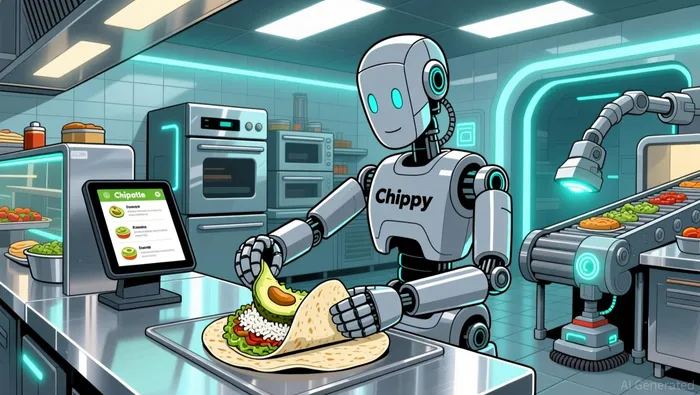
However, the reliance on automation raises questions about scalability and cost. While tools like "Autocado" (an avocado-processing robot) and "Chippy" (an autonomous kitchen assistant) demonstrate Chipotle's commitment to "cobotics"-automation that supports rather than replaces employees-the upfront investment in such technologies could strain margins, particularly in a high-inflation environment. Moreover, the success of these initiatives hinges on seamless integration with existing workflows, a challenge that could lead to operational friction if not managed carefully.
Financial Performance: Growth Amid Constraints
Chipotle's third-quarter 2025 results highlight both progress and persistent challenges. Total revenue rose 7.5% year-over-year to $3.0 billion, driven by new restaurant openings and digital sales, which now account for 36.7% of total revenue.Yet, comparable restaurant sales grew by a modest 0.3%, with transaction volumes declining 0.8% as consumers tighten budgets. This trend reflects broader macroeconomic pressures, including rising student loan repayments and higher unemployment, which disproportionately affect Chipotle's core demographic of 25- to 35-year-olds.
Boatwright's emphasis on value over price competition-through initiatives like a high-protein menu and loyalty programs-has helped offset some of these headwinds. However, the company's labor and food costs remain elevated, squeezing profit margins. Analysts note that while automation and kitchen efficiency gains could mitigate these pressures, their impact may take time to materialize.
Sustainability and Strategic Resilience
Chipotle's sustainability strategy extends beyond financial metrics. The company's investment in high-efficiency equipment, such as dual-sided planchas and rice cookers, not only improves labor productivity but also reduces waste and energy consumption, aligning with its environmental goals. Additionally, international expansion-particularly in markets like Mexico via a development agreement with Alsea-offers a long-term growth avenue, though execution risks remain.
Critics, however, caution that Boatwright's focus on innovation may not be enough to counteract structural shifts in consumer spending. As noted in a recent analyst report, "Chipotle's ability to sustain growth depends on its capacity to balance technological investment with pricing flexibility in a cost-conscious market." The company's reliance on digital engagement, while a strength, also exposes it to platform-specific risks, such as algorithmic changes or data privacy concerns.
Conclusion: A Calculated Gamble
Scott Boatwright's strategy represents a calculated gamble: leveraging automation and digital innovation to future-proof ChipotleCMG-- against macroeconomic volatility. While the early results are promising-particularly in digital sales and operational efficiency-the path to sustained growth remains fraught. The company's success will depend on its ability to scale these innovations without compromising margins, adapt to shifting consumer priorities, and execute its international ambitions effectively. For investors, the key question is whether these initiatives can translate into durable competitive advantages in a sector where margins are razor-thin and consumer loyalty is fickle.
For now, the jury is out. But given the urgency of the challenges and the boldness of the response, Chipotle's story in 2025 is one worth watching closely.





Comentarios
Aún no hay comentarios