
China's WTO Policy Shifts and the Reshaping of Global Trade: Strategic Investment Opportunities in Emerging Markets
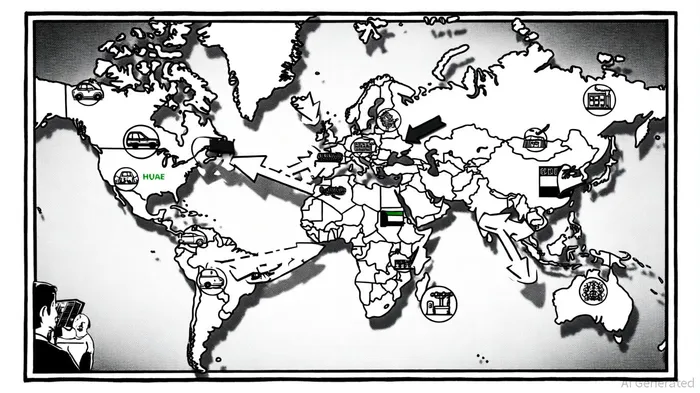
In September 2025, China made a landmark announcement at the United Nations General Assembly: it would forgo access to Special and Differential Treatment (SDT) in future World Trade Organization (WTO) negotiations[1]. This decision, framed as a "culmination of many years of hard work," marks a pivotal shift in China's approach to global trade governance. By relinquishing privileges tied to its developing country status—such as the ability to set higher tariffs and use subsidies—China signals its readiness to engage as a "rule-maker" rather than a "rule-taker" in the multilateral trading system[2]. This strategic recalibration has profound implications for global trade dynamics, particularly for emerging markets like Hungary, the UAE, and Thailand, which are now central to China's post-SDT trade and investment strategy.
The WTO Shift: From SDT to Strategic Market Access
China's decision to forgo SDT aligns with broader U.S. pressure to abandon what Washington deems "unfair advantages" for developing nations[1]. However, this move is not merely symbolic. By adopting a more transparent and market-oriented approach, China aims to strengthen its credibility in WTO negotiations and counter accusations of non-market practices. This shift is already influencing trade agreements and tariff adjustments. For instance, the U.S.-China trade truce in mid-2025—reducing average U.S. tariffs on Chinese goods from 126.5% to 51.1%—was accompanied by China's pledge to streamline its own trade policies[3]. These adjustments create a more predictable environment for emerging markets seeking to integrate into China's supply chains.
Hungary: A Gateway to European Electromobility
Hungary has emerged as a prime beneficiary of China's WTO-driven trade strategy. The country attracted 44% of all Chinese foreign direct investment (FDI) in Europe in 2024[3], with major projects like BYD's EUR 5 billion EV factory in Szeged and CATL's EUR 7.3 billion battery plant in Debrecen set to begin production in 2025[3]. These investments, supported by Hungarian tax exemptions and workforce localization programs, are projected to create 11,000 direct and indirect jobs by 2030[3]. The strategic alignment between China and Hungary is further reinforced by the latter's role as a logistics hub for Chinese goods entering the EU. As the European Commission grapples with balancing geopolitical concerns over Chinese investments, Hungary's pragmatic, business-first approach has secured its position as a critical node in China's European supply chain[3].
UAE: Renewable Energy and Digital Infrastructure
The UAE has capitalized on China's WTO policy shifts to deepen its role as a Middle Eastern hub for renewable energy and digital trade. In 2025, Trina Solar launched a $5 billion full photovoltaic (PV) chain project in the UAE, aligning with the country's Vision 2030 goals[3]. This collaboration reflects China's broader strategy to export its expertise in green technology to emerging markets. Additionally, the UAE's free trade agreements with China, which include reduced tariffs on chemical imports and streamlined customs procedures, have made it an attractive destination for Chinese manufacturers seeking to bypass U.S. tariffs[3]. The UAE's $10 billion joint investment fund with China, announced in March 2025, further underscores its ambition to become a re-export center for Chinese goods in the Middle East[3].
Thailand: Semiconductor and EV Manufacturing Hub
Thailand's strategic location and government incentives have made it a focal point for Chinese investments in semiconductors and electric vehicles. Companies like BYD, Changan, and Great Wall Motors have established manufacturing facilities in Thailand, leveraging subsidies for zero-emission vehicles and a growing domestic market[3]. The country's Belt and Road Initiative (BRI) connectivity projects, including upgraded logistics infrastructure, have enhanced its appeal as a production base for Chinese firms diversifying away from China. By 2025, BRI countries accounted for 51.1% of China's total foreign trade in Q1, with Thailand benefiting from a 20% trade growth boost[3]. These investments are not only driven by economic logic but also by geopolitical realignment, as Thailand seeks to balance ties with China and U.S.-aligned partners.
Geopolitical Considerations and Future Outlook
While China's WTO policy shifts open new avenues for investment, they also introduce risks. The European Union's "de-risking" strategy, which seeks to reduce dependency on Chinese supply chains, could complicate Hungary's and Thailand's integration into China's economic ecosystem[3]. Similarly, U.S. protectionist policies may force further diversification of Chinese investments into markets like the UAE and Morocco[3]. However, the long-term trend is clear: China's strategic pivot toward emerging markets is accelerating, driven by both necessity and opportunity.
Conclusion
China's WTO policy shift represents a recalibration of its global economic strategy, with emerging markets at the center of its new trade and investment architecture. For investors, the opportunities are vast: Hungary's electromobility sector, the UAE's renewable energy projects, and Thailand's semiconductor and EV manufacturing hubs offer high-growth potential. As China navigates the complexities of global trade under pressure from the U.S. and EU, these markets will likely serve as both safe havens and strategic assets. The key for investors is to act swiftly, leveraging China's evolving trade policies to secure positions in regions poised for rapid economic transformation.







Comentarios
Aún no hay comentarios