
U.S.-China Trade Tensions and Rare Earths Supply Chains: Strategic Materials Investing in a Trump-Led Policy Environment
The U.S.-China rivalry over rare earth elements (REEs) and critical minerals has intensified in 2025, with President Donald J. Trump's administration adopting a bold, interventionist approach to secure supply chains and counter China's dominance. As Beijing imposes export restrictions on REEs, Washington has responded with a dual strategy: aggressive domestic production incentives and retaliatory trade measures. For investors, this geopolitical and industrial shift creates both opportunities and risks in the critical minerals sector.
Trump's Equity-Driven Supply Chain Strategy
The Trump administration has moved beyond traditional subsidies to directly invest in U.S. rare earth and lithium projects, a hallmark of its 2025 policy agenda. According to a Reuters report, the Department of Defense has taken a 15% equity stake in MP MaterialsMP--, the sole rare earth processor in the U.S., to bolster domestic magnet production for defense and electric vehicles (EVs). Similarly, a 5% stake in Lithium Americas' Thacker Pass lithium mine-North America's largest lithium project-signals a commitment to securing raw materials for EV batteries, Reuters also reported.
This "ownership stake" model is part of a broader executive order signed in March 2025, which prioritizes mineral production on federal lands and streamlines permitting for critical mineral projects, according to a White House fact sheet. The administration has also deployed the Defense Production Act (DPA) to accelerate domestic refining capacity, including a $400 million investment in MP Materials with guaranteed minimum prices for neodymium and praseodymium, ensuring stable market conditions for U.S. producers, according to an AP report.
Trade Tensions and Retaliatory Measures
China's recent export restrictions on REEs have prompted Trump to escalate trade tensions. As CBS News reported, the administration has threatened to raise tariffs on Chinese goods and cancel high-level diplomatic engagements, framing Beijing's actions as "hostile" and economically destabilizing. A planned 50% tariff on copper imports in summer 2025 further underscores this approach, aiming to protect domestic mining interests while pressuring China to negotiate, according to a Carnegie Endowment analysis.
Simultaneously, the administration has launched a Section 232 investigation into the national security risks of U.S. reliance on imported processed critical minerals, a move that could lead to import quotas or additional tariffs, per a White House fact sheet. These measures reflect a broader strategy to reduce dependency on China, which controls over 60% of global rare earth processing capacity, and to reorient supply chains toward U.S. allies and domestic producers.
Investment Implications and Strategic Opportunities
For investors, the Trump-led push to "de-risk" supply chains presents several high-conviction opportunities:
1. Equity-Backed Producers: Companies like MP Materials and Lithium Americas, now partially owned by the U.S. government, benefit from guaranteed demand and price floors, reducing market volatility.
2. Technology Partnerships: The administration's collaboration with tech giants such as Apple and Microsoft-offering multibillion-dollar tax incentives-could drive innovation in recycling and downstream manufacturing, according to an Economy.ac report.
3. Offshore and Seabed Exploration: New executive orders permitting seabed mineral extraction open access to untapped resources, potentially creating a new frontier for mining firms, as noted in a White House fact sheet.
However, risks remain. The administration's aggressive tariffs could provoke retaliatory measures from China, disrupting global trade flows. Additionally, environmental and regulatory challenges-despite streamlined permitting-may delay project timelines.
Conclusion: A New Era for Critical Minerals Investing
The Trump administration's 2025 policies mark a paradigm shift in U.S. critical minerals strategy, blending direct government intervention with industrial policy to counter China's grip on global supply chains. For investors, this environment favors long-term positioning in domestic producers, recycling technologies, and companies aligned with the administration's "Operation Warp Speed" for rare earths. Yet, geopolitical volatility and regulatory hurdles necessitate a balanced approach. As the U.S. races to build a self-sufficient supply chain, strategic materials investing has become a cornerstone of both economic and national security. 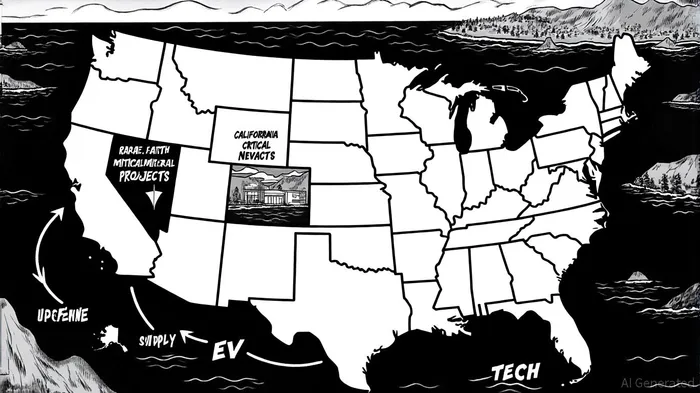





Comentarios
Aún no hay comentarios