
China-U.S. Trade Talks and the Reshaping of Global Supply Chains: Strategic Investment Opportunities in Nearshoring-Enabled Sectors
The Geopolitical Chessboard and Supply Chain Resilience
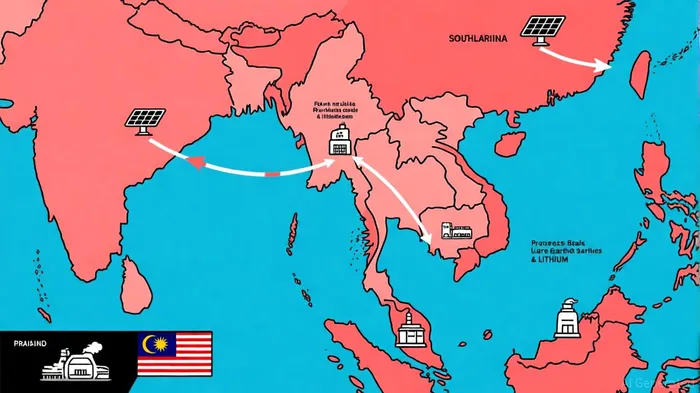
The U.S. and China are no longer merely trading partners-they are strategic adversaries competing to dominate supply chains for critical resources. A key battleground is the rare earth elements sector, where China's historical dominance has forced the U.S. to pivot toward Southeast Asia. In October 2025, the U.S. signed memoranda of understanding (MoUs) with Malaysia and Thailand to diversify access to critical minerals. These agreements include commitments from Malaysia to avoid export quotas on rare earths and focus on domestic processing, while Thailand prioritizes technology transfer and sustainable resource governance.
The implications for investors are profound. According to a report by the International Monetary Fund (IMF), Asian nations are accelerating regional integration to mitigate U.S. tariff impacts, with potential GDP gains of 1.4% from reduced non-tariff barriers. This shift creates opportunities for firms specializing in supply chain resilience, such as those leveraging automation, AI-driven logistics, or green hydrogen production.
Nearshoring-Enabled Sectors: Critical Minerals and Beyond
The U.S. has identified critical minerals as a cornerstone of its nearshoring strategy. A $1.8 billion Orion Critical Mineral Consortium, led by Orion Resource Partners LP and supported by the U.S. International Development Finance Corporation (DFC) and Abu Dhabi's ADQ, aims to secure supply chains for battery metals and rare earths, according to a DFC press release. While exact U.S. company investments in Malaysia and Thailand remain unspecified, the MoUs emphasize partnerships between American and Southeast Asian firms to streamline permitting and enhance processing capabilities.
Industries poised to benefit include:
1. Defense and Aerospace: Reduced reliance on Chinese rare earths for advanced manufacturing.
2. Renewable Energy: Secure access to materials for solar panels, wind turbines, and EV batteries.
3. Semiconductors: Diversified sources for gallium, indium, and other rare earths critical to chip production.
Challenges and Opportunities
Despite progress, challenges persist. The absence of concrete investment figures from U.S. firms in Malaysia and Thailand highlights the early-stage nature of these partnerships. Additionally, geopolitical risks-such as potential Trump-Xi summit outcomes-remain unpredictable. However, the emphasis on environmental, social, and governance (ESG) standards in these agreements, according to the MINVEST partnership, suggests long-term resilience, aligning with global sustainability trends.
Strategic Recommendations for Investors
- Prioritize Critical Minerals Exposure: Invest in firms with partnerships in Southeast Asia, such as those involved in the Orion consortium.
- Diversify Across Nearshoring Sectors: Allocate capital to defense, renewable energy, and semiconductor supply chains.
- Monitor Geopolitical Signals: Track tariff adjustments and trade agreements for immediate market impacts.
As the U.S.-China trade dynamic evolves, the ability to adapt to nearshoring trends will define investment success. The coming months will test whether diplomacy can temper rivalry-or if the race for supply chain dominance will accelerate fragmentation. For now, Southeast Asia's role as a bridge between East and West offers a compelling narrative for resilient, forward-looking portfolios.







Comentarios
Aún no hay comentarios