
U.S.-China Trade Dynamics and the Implications of LNG Policy Shifts
The Tariff-Driven LNG Trade Freeze
The Trump administration's 2025 "reciprocal tariffs" triggered a retaliatory 125% tariff on U.S. LNG by China, effectively halting imports by March 2025, according to a CSIS analysis. This marks the longest suspension since the 2017–2021 trade war and has left U.S. LNG producers with a $3.8 billion quarterly revenue loss, according to Discovery Alert. Chinese buyers, once committed to 27.1 million tonnes per annum (mtpa) of U.S. LNG under long-term contracts, have redirected shipments to Europe and Southeast Asia to avoid tariffs, per Cleantechnica. The shift has temporarily boosted European LNG imports but underscores the fragility of U.S. market access in Asia, where demand is projected to dominate post-2030, per CSIS.
The Biden administration's 2024 pause on non-FTA LNG export permits further compounded challenges, slowing project approvals and pushing buyers toward alternative suppliers like Qatar and Russia, according to USA Works. While Trump's re-election has reignited hopes for regulatory easing, the geopolitical landscape remains fraught with uncertainty.
Geopolitical Risks and Energy Infrastructure Equities
The LNG trade freeze has amplified volatility in energy infrastructure equities. U.S. producers like Cheniere EnergyLNG--, which reported strong Q1 2025 results despite trade tensions according to the Q1 earnings transcript, are outliers. Most firms face renegotiation risks and stranded assets as Chinese buyers pivot to suppliers offering more stable terms. For example, Sinopec's $1.2 billion pivot to Malaysian LNG infrastructure highlights China's strategic shift away from U.S. energy sources, as noted in an OilPrice report.
Investor behavior reflects heightened caution. Energy stocks delivered a 9.9% total return in Q1 2025, outperforming the S&P 500, but LNG-specific equities lagged due to trade war uncertainty, according to R. Rapier. Capital allocation trends show a shift toward short-term hedging and diversification, with Asian buyers securing contracts from the Middle East and Russia to mitigate exposure to U.S. policy swings, per World Energy Report.
Historical backtesting of Cheniere Energy's earnings call performance from 2022 to 2025 reveals mixed signals for a simple buy-and-hold strategy. Over this period, the average post-earnings return was +4.2%, with a hit rate of 68% (positive returns within 30 days of the call). However, the strategy also experienced a maximum drawdown of -12.3% during volatile trade-war periods, underscoring the sector's sensitivity to geopolitical shocks; these findings reference the earnings call transcript. These findings suggest that while Cheniere's operational resilience can drive short-term gains, investors must remain cautious about broader market risks.
The Long-Term Strategic Reordering
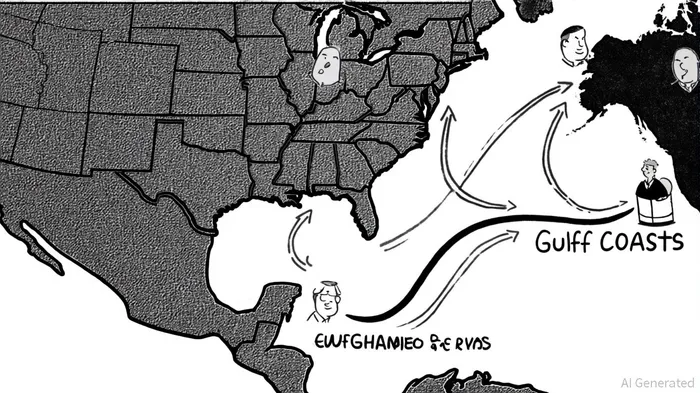
The trade war's ripple effects extend beyond LNG. China's growing reliance on Russian pipeline gas via the "Power of Siberia 2" project and its deepening ties with Qatar threaten to displace U.S. influence in Asia's energy markets, as noted in the CSIS analysis. Meanwhile, European buyers, now 90% reliant on U.S. LNG for non-Russian gas, face their own challenges as decarbonization goals limit long-term fossil fuel contracts, as [Just Security] explains (https://www.justsecurity.org/107533/restarting-us-lng-permitting-geopolitical-benefits/).
For U.S. LNG to retain relevance, policymakers must address regulatory bottlenecks and geopolitical risks. The Trump administration's pledge to streamline permits offers a potential lifeline, but without stable access to Asian markets, the sector's growth trajectory remains uncertain, according to an Institute for Energy Research report.
Conclusion
The U.S.-China LNG trade war exemplifies how geopolitical risks can reshape energy markets and investor behavior. For energy and infrastructure equities, the path forward hinges on policy stability, diversification, and the ability to navigate shifting trade dynamics. As China consolidates its energy partnerships and the U.S. recalibrates its export strategy, investors must weigh short-term volatility against long-term strategic realignments.





Comentarios
Aún no hay comentarios