
U.S.-China Trade Dynamics and Agricultural Markets: A Strategic Inflection Point for Agribusiness
The U.S.-China trade war, now in its eighth year, has reached a critical juncture in 2025, with soybean trade dynamics serving as a barometer for broader economic and geopolitical tensions. President Donald Trump's recent assertions that China will resume soybean purchases under a potential trade deal have sparked renewed interest in agribusiness equities and agricultural commodity markets. However, the credibility of these predictions-and their implications for investors-requires a nuanced analysis of market fundamentals, geopolitical risks, and the structural shifts reshaping global trade.
The Soybean Stalemate: A Microcosm of Trade Tensions
China's boycott of U.S. soybeans, initiated in 2018 and exacerbated by retaliatory tariffs, has left American farmers in a precarious position. By September 2025, U.S. soybean exports to China had plummeted by 51.29% year-to-date, resulting in a $2.6 billion revenue loss, according to FinancialContent. This collapse reflects China's strategic pivot to South American suppliers, particularly Brazil, which now accounts for 85% of its soybean imports, according to the Farm Bureau. The U.S. share of China's soybean market has dwindled to 12%, down from a peak of 70% during the 2018 trade war, per S&P Global.
Trump's proposed aid package-reportedly exceeding $10 billion-aims to cushion farmers against these losses, according to AP. Yet, as Treasury Secretary Scott Bessent acknowledged, such measures are stopgaps, not solutions. The administration's reliance on tariff revenue to fund this relief underscores the fragility of its trade strategy, which critics argue underestimates China's ability to endure prolonged economic pressure, a point Politico makes.
Trump's Prediction: A Strategic Inflection Point?
Trump's claim that China will resume soybean purchases hinges on his planned October summit with President Xi Jinping. While a deal could theoretically restore U.S. market share, analysts caution against overoptimism. China's diversification of suppliers-bolstered by Brazil's record 169 million metric ton production in 2024-25-has created a self-sustaining trade ecosystem that reduces its dependency on U.S. exports, as the Commodity Board reports.
A soybean agreement would, however, represent a strategic inflection point for agribusiness firms. Companies like Cargill, Archer-Daniels-MidlandADM-- (ADM), and BungeBG--, which have pivoted to South American operations to mitigate U.S. export declines, could face a reversal of fortune. For instance, Cargill's global logistics network is well-positioned to facilitate a rebound in U.S. soybean shipments, while ADM's processing infrastructure could benefit from renewed demand, Dow Theory Letters notes.
Market Implications for Agribusiness Equities
The potential for a U.S.-China soybean deal introduces both opportunities and risks for agribusiness stocks. Morgan Stanley recently cut its price targets for Bunge (BG) and ADMADM--, citing weaker 2025 earnings outlooks driven by trade uncertainties, according to Yahoo Finance. However, a resolution could reverse this trend. For example, Bunge's stock, currently trading at $74 with a 6.77% projected annual increase, might see upward pressure if U.S. exports regain traction, per StockAnalysis. Similarly, ADM's biofuel policy tailwinds could amplify gains in a post-deal scenario, as AgroLatam reports.
Conversely, U.S. agricultural input providers-such as DeereDE-- & Company and Bayer AG-face prolonged headwinds. Reduced farmer profitability has already curtailed demand for fertilizers and machinery, with cash receipts for crop sales projected to fall 2.5% in 2025, according to Farm Progress.
The Geopolitical Tightrope
While Trump frames soybeans as "lowest-hanging fruit" for a trade deal, as CBS News reports, the geopolitical calculus is complex. China's recent export restrictions on rare earth minerals and its deepening economic ties with Russia and Southeast Asia suggest it is no longer incentivized to capitulate on trade terms, a trend Asia Times highlights. A soybean agreement would require concessions from both sides, including U.S. tariff reductions and Chinese commitments to address intellectual property concerns-a scenario that remains uncertain.
Conclusion: Navigating Uncertainty
For investors, the U.S.-China soybean dispute embodies the dual risks and rewards of geopolitical brinkmanship. Trump's prediction of a resumption in purchases could signal a short-term inflection point for agribusiness equities, but long-term gains depend on structural factors: China's appetite for U.S. exports, Brazil's production capacity, and the resilience of global supply chains.
In this volatile landscape, diversification remains key. Agribusinesses with hybrid models-balancing U.S. and South American operations-may emerge as winners, while those overly reliant on U.S. soybean exports face prolonged challenges. As the October summit approaches, market participants must weigh Trump's optimism against the hard realities of a trade war that has already reshaped the global agricultural order.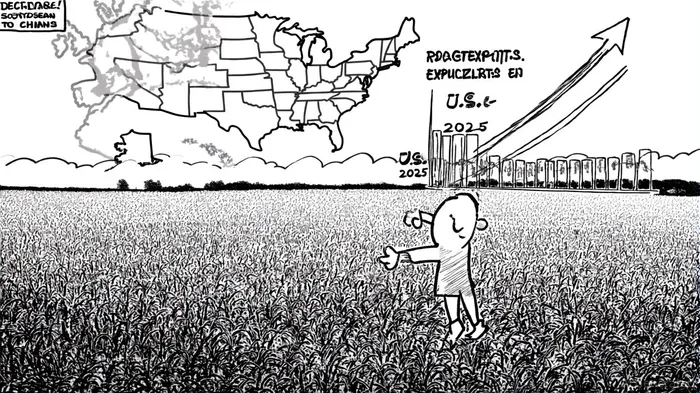





Comentarios
Aún no hay comentarios