
U.S.-China Tariff Escalation and Its Impact on Global Supply Chains: Identifying Resilient and Beneficiary Sectors for Investors
The U.S.-China trade war has entered a new phase in 2025, with tariffs spiking to as high as 270% on Chinese imports, including machinery and port equipment, according to a Global Trade Magazine report. While these measures have created headwinds for global businesses, they've also accelerated a seismic shift in supply chains and investment patterns. For investors, the challenge is to identify sectors that are either resilient to these disruptions or actively benefiting from them.
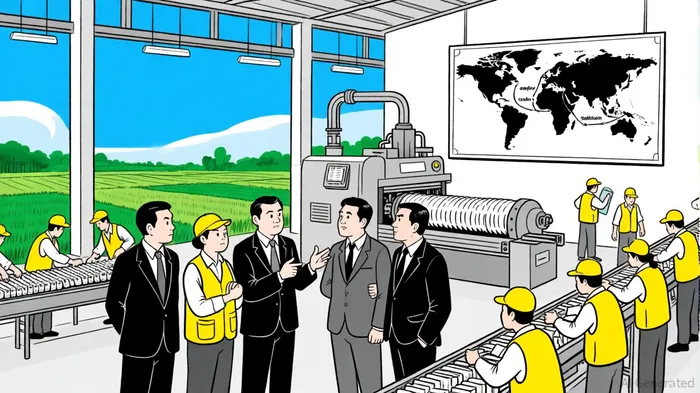
Resilient Sectors: Diversification and Regionalization
1. Supply Chain Diversification (China Plus One)
Companies are rapidly adopting the "China plus one" strategy, spreading production across multiple regions to mitigate risks. Electronics giants like AppleAAPL-- have shifted up to 20% of production to India and Vietnam by 2026, according to a Supply Chain Brain analysis, incurring high upfront costs but reducing exposure to tariffs. This trend is supported by government incentives under agreements like the USMCA, which promote duty-free trade among the U.S., Mexico, and Canada, as Supply Chain Brain reports.
2. Nearshoring and Regionalization
The automotive and retail sectors are leading the charge in nearshoring, relocating manufacturing closer to U.S. markets. For example, Mexico has become a hub for automotive parts, leveraging its proximity and lower labor costs, as Supply Chain Brain notes. This shift is not just about tariffs-it's about building resilience against future geopolitical shocks.
3. Automation and Advanced Manufacturing
Industries with complex manufacturing needs, such as pharmaceuticals and semiconductors, are investing heavily in automation to offset the challenges of relocation, as Global Trade Magazine reported. China, meanwhile, is pivoting toward capital-intensive production models, reducing its reliance on imported inputs, according to a McKinsey analysis. This trend creates opportunities for firms supplying robotics, AI-driven logistics, and industrial software.
Beneficiary Sectors: Winners in the New Trade Order
1. AI and Technology Infrastructure
The technology sector has faced headwinds from tariff uncertainty, but it's also a beneficiary of the new trade dynamics. Q3 2025 saw strong gains in AI and tech stocks, driven by demand for advanced manufacturing tools and data centers, according to a Schroders Q3 2025 review. As companies regionalize production, investments in AI-driven supply chain optimization and automation are surging, Schroders notes.
2. Energy and Battery Manufacturing
Foreign direct investment (FDI) in energy projects has skyrocketed, with announced projects set to more than quadruple battery manufacturing capacity outside China, according to McKinsey. This shift is driven by both geopolitical realignment and the need for energy security. Investors in renewable energy infrastructure and battery recycling are well-positioned to capitalize on this trend.
3. Precious Metals as Safe Havens
Trade uncertainties have spurred demand for safe-haven assets. In Q3 2025, gold and silver prices surged as investors hedged against volatility, Schroders reported. This trend is likely to continue as tariffs and supply chain disruptions persist.
Investment Trends and FDI: A Barometer for the Future
FDI is reshaping the global economic map, with advanced economies redirecting flows toward one another while China pivots to invest in Europe and Latin America, according to McKinsey. For example, U.S. firms are increasingly funding AI infrastructure and energy projects, while China is expanding its footprint in Southeast Asia. This realignment highlights the importance of regionalization and strategic partnerships in future-proofing supply chains, McKinsey adds.
Challenges and the Road Ahead
Despite these shifts, challenges remain. Sectors with specialized manufacturing needs, such as semiconductors, face higher costs and longer lead times for relocation, Global Trade Magazine reported. Additionally, the temporary tariff reduction to 30% on Chinese imports in May 2025 offers short-term relief but does little to resolve deeper issues like intellectual property disputes and supply chain fragility, Supply Chain Brain observed.
Conclusion
The U.S.-China tariff escalation is not just a trade issue-it's a catalyst for a new era of supply chain resilience and innovation. Investors who focus on sectors actively adapting to this reality-such as automation, regionalized manufacturing, and AI infrastructure-will be best positioned to thrive. While the path forward is uncertain, one thing is clear: the future belongs to those who build for resilience, not just efficiency.







Comentarios
Aún no hay comentarios