
China's Strategic Move to Avoid US Price Wars and Its Impact on Global Tech and Manufacturing Sectors
In the face of escalating US-China trade tensions and the looming threat of 100% tariffs on Chinese goods under the Trump administration[3], China has embarked on a multifaceted strategy to insulate its economy from global price wars. This approach centers on geopolitical risk mitigation and long-term value creation through supply chain diversification, technological self-reliance, and strategic regional partnerships. For investors, understanding these dynamics is critical to navigating the evolving landscape of global tech and manufacturing sectors.
Semiconductor Self-Reliance: A Pillar of Resilience
China's 2025 semiconductor self-reliance initiative represents a cornerstone of its strategy to reduce dependency on foreign technology. By prioritizing domestic research and development, the country aims to achieve 70% self-sufficiency in critical semiconductor components by 2030[3]. This shift has already disrupted global supply chains, forcing firms like IntelINTC--, TSMCTSM--, and Samsung to recalibrate their market strategies[3]. For instance, TSMC has accelerated investments in China's domestic foundry ecosystem, while Samsung has expanded joint ventures with Chinese firms to maintain access to the world's largest consumer market[3].
The geopolitical implications are profound. As China scales its semiconductor production, it risks fragmenting the global tech supply chain into competing blocs—a scenario that could elevate costs for multinational corporations but create localized opportunities for firms aligned with China's ecosystem. Investors in semiconductor equipment and materials may benefit from this transition, though regulatory scrutiny of foreign firms operating in China is likely to intensify[3].
Supply Chain Diversification: BRI, RCEP, and Regional Alliances
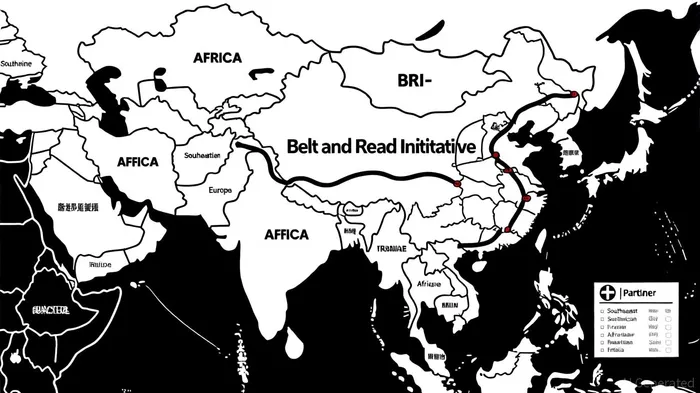
To counter overreliance on any single market, China has aggressively diversified its supply chains through initiatives like the Belt and Road Initiative (BRI) and the Regional Comprehensive Economic Partnership (RCEP). The BRI, which has funneled billions into infrastructure projects across Asia, Africa, and Europe, has enabled China to secure alternative trade routes and raw material sources[1]. For example, in 2024, Chinese investments in African ports and railways facilitated the export of manufactured goods to Europe via non-US-controlled corridors[3].
The RCEP, meanwhile, has solidified China's dominance in Southeast Asia by reducing trade barriers and harmonizing regulations among member states like Vietnam, Malaysia, and Thailand[2]. This has allowed Chinese automakers such as BYD and Geely to expand into regional markets, while telecommunications firms like Huawei have leveraged 5G infrastructure deals to strengthen their global footprint[3].
Sector-Specific Impacts: Automotive and Telecommunications
The automotive sector exemplifies China's dual strategy of self-reliance and regional integration. Domestic brands like BYD and NIO have surged in global markets, supported by government subsidies and a shift toward electric vehicles (EVs). In 2024, China accounted for 60% of global EV battery production, outpacing traditional automakers in Europe and North America[3]. This dominance is further amplified by RCEP-driven trade agreements, which have slashed tariffs on EV components across Southeast Asia[2].
In telecommunications, China's push for 5G leadership has reshaped global standards. Huawei's partnerships with RCEP nations to deploy 5G networks have not only bolstered China's technological influence but also created a parallel ecosystem less reliant on US-designed equipment[3]. However, this strategy has drawn scrutiny from Western governments, highlighting the tension between economic interdependence and geopolitical rivalry.
Geopolitical Risk Mitigation and Long-Term Value
China's strategies underscore a broader shift toward resilience over efficiency in global supply chains. By reducing exposure to US-led economic pressures, China aims to stabilize its growth trajectory while fostering long-term value in sectors like EVs, 5G, and advanced manufacturing. For investors, this presents both opportunities and risks:
- Opportunities: Firms aligned with China's domestic innovation agenda (e.g., semiconductor equipment suppliers, EV battery manufacturers) are well-positioned to capitalize on the country's $500 billion annual tech investment pipeline[3].
- Risks: Geopolitical fragmentation could lead to higher compliance costs and market volatility, particularly for firms operating in dual-use technologies or sensitive sectors[3].
Conclusion
China's strategic pivot to avoid US price wars is redefining global trade dynamics, with far-reaching implications for tech and manufacturing sectors. While the lack of granular data on BRI/RCEP investments remains a limitation, the qualitative evidence suggests a deliberate effort to balance self-reliance with regional collaboration. For investors, the key lies in aligning with China's long-term value drivers—innovation, infrastructure, and geopolitical resilience—while hedging against the risks of a fractured global economy.





Comentarios
Aún no hay comentarios