
China's Strategic Control Over Iron Ore and Rare Earths Supply Chains: Pricing Power and Geopolitical Leverage in 2025
China's dominance over critical commodities like iron ore and rare earth elements (REEs) has evolved into a cornerstone of its economic and geopolitical strategy. Through state-driven quotas, industrial consolidation, and strategic pricing mechanisms, China has positioned itself to exert significant influence over global markets. At the heart of this strategy lies the China Merchants Resource Group (CMRG), a key player in iron ore and rare earth supply chains, whose tactics and alignment with state policies underscore Beijing's broader ambitions to control resource flows and leverage them for geopolitical advantage.
Iron Ore: Speculation, Leverage, and Market Volatility
CMRG, one of China's largest iron ore traders, has consistently highlighted the role of speculative forces in distorting iron ore prices. In 2025, its research unit warned that recent price surges were driven by "false heat" rather than genuine supply-demand fundamentals, a stance that reflects its broader strategy to counter market volatility. This perspective aligns with broader industry trends: weak steel demand and production cuts in China have created downward pressure on iron ore prices, despite short-term spikes.
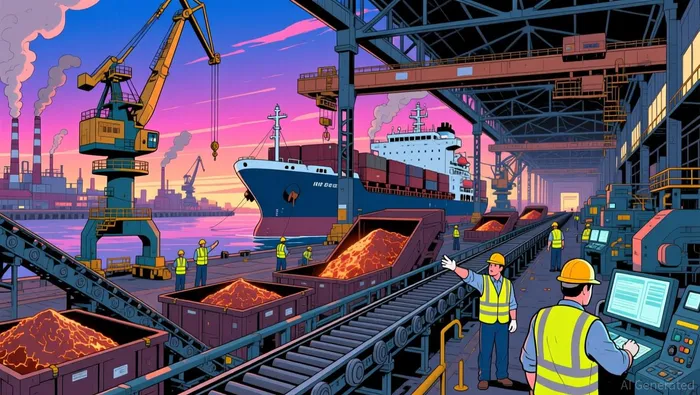 CMRG's leverage in the iron ore market is not merely speculative. The group has historically used its purchasing power to negotiate favorable terms with suppliers, including major miners like BHP Group according to reports. By consolidating demand-side control, CMRG amplifies China's ability to influence pricing dynamics, even as global supply chains face fragmentation. This strategy is particularly potent in a market where China accounts for over 60% of global iron ore demand, ensuring that its procurement decisions can sway prices globally.
Rare Earths: Quotas, Consolidation, and Strategic Bottlenecks
China's control over rare earths has deepened in 2025 through a combination of state-driven quotas and industrial consolidation. The government discreetly issued 2025 mining and smelting quotas, allocating them exclusively to two state-owned enterprises: the China Rare Earth Group and the China Northern Rare Earth Group High-Tech. This centralization, down from six eligible companies, in previous years, reflects a deliberate effort to tighten oversight and reduce market fragmentation.
The quota system, in place since 2006, has long served as a tool to regulate global supply. In 2025, Beijing expanded quotas to include imported raw materials, effectively extending its control beyond domestic resources and creating a bottleneck for foreign producers. This move ensures that even non-Chinese rare earths must pass through China's processing infrastructure, which accounts for 85% of global refining capacity. The strategic importance of this control is evident in applications like electric vehicles, wind turbines, and defense systems, where rare earths are indispensable.
CMRG's role in this ecosystem is pivotal. As part of China's broader industrial strategy, the group reinforces state control from mining to downstream manufacturing, including the production of high-performance magnets. This vertical integration, supported by state subsidies and preferential policies, allows China to manipulate supply and pricing while maintaining a technological edge.
Geopolitical Leverage: Export Controls and Strategic Retaliation
China's rare earth export restrictions in 2025-targeting elements like dysprosium and terbium-have been interpreted as retaliatory measures against U.S. trade policies. These controls, combined with a licensing system that subjects western companies to prolonged scrutiny, enable Beijing to weaponize its dominance in global supply chains. While a trade deal was reached in June 2025, the export licensing framework remains intact, preserving China's ability to adjust supply and prices strategically.
This leverage is not without risks. Analysts warn that blanket export restrictions risk accelerating diversification efforts by the U.S., Australia, and the EU, which are investing in domestic refining capacity and bilateral agreements. However, Beijing appears to be recalibrating its approach, shifting from broad restrictions to targeted, rules-based mechanisms that balance national security with open trade. This nuanced strategy aims to maintain dominance while avoiding overreactions that could destabilize its own market.
Investment Implications: Pricing Power and Systemic Risks
For investors, China's control over iron ore and rare earths presents both opportunities and risks. The state-driven quotas and CMRG's market tactics create pricing power that can amplify returns for domestic players while constraining global competitors. However, this power is contingent on geopolitical stability and the ability to adapt to external pressures.
The rare earth sector, in particular, is vulnerable to systemic shocks. While China's 2025 quotas and processing dominance create a near-monopoly, the push by the U.S. and allies to develop alternative supply chains-despite high technical and financial barriers-introduces long-term uncertainty. Investors must weigh these dynamics against the short-term benefits of China's pricing control and the potential for geopolitical escalation.
Conclusion
China's strategic control over iron ore and rare earths supply chains is a masterclass in state capitalism. Through CMRG's market tactics, state-driven quotas, and geopolitical maneuvering, Beijing has solidified its position as a gatekeeper for critical resources. For investors, this control offers pricing power and market influence but also exposes them to the risks of geopolitical volatility and supply chain diversification efforts. As 2025 unfolds, the interplay between China's industrial strategy and global responses will remain a defining factor in resource markets.







Comentarios
Aún no hay comentarios