
China's Soybean Supply Chain Realignments: Tariffs, Trade Shifts, and Emerging Market Opportunities
The Tariff-Driven Collapse of U.S. Soybean Exports
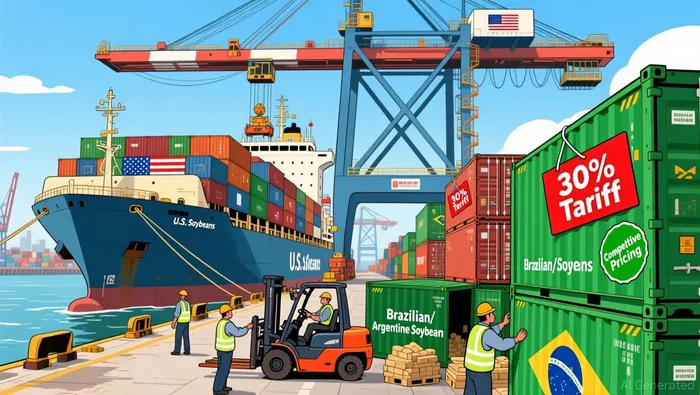
The U.S. soybean market's struggles stem from a combination of policy and pricing pressures. imposed during the 2018 trade war have persisted, with effective duties on U.S. by 2025. This has made American beans uncompetitive against Brazilian and Argentine supplies, which offer lower prices due to reduced trade barriers. For instance, than U.S. imports, a gap that has accelerated the shift in China's sourcing strategy.
Major U.S. exporters, including Delong Co. Inc. and Archer-Daniels-Midland CompanyADM--, have seen their shipments to China shrink drastically. . This trend reflects a structural challenge: U.S. farmers now face not only lost market share but also weaker pricing power, as China's stockpiles grow and domestic production in South America expands.
Brazil and Argentina: The New Powerhouses of Soybean Supply
China's pivot to South America has transformed Brazil into the world's largest soybean exporter, with Argentina and Uruguay also gaining traction. By July 2025, , a figure that aligns with its record 2024/25 production of . Argentina, meanwhile, has benefited from a temporary suspension of , boosting its competitiveness in the Chinese market.
This shift has created winners in the agribusiness sector. Brazilian firms like and Amaggi have seen increased demand, while Argentina's soybean exports to China have surged . For investors, these companies represent opportunities in a market poised for sustained growth, though risks such as weather volatility and Brazil's domestic .
Strategic Implications for Investors
The realignment of China's soybean supply chain highlights two key investment themes:
South American Agribusiness Exposure: Companies with strong ties to Brazil and Argentina's soybean sectors are well-positioned to benefit from China's long-term sourcing strategy. This includes not only producers but also logistics firms and fertilizer suppliers that support South American agriculture.
U.S. Agricultural Policy Reforms: While U.S. exports to China have dwindled, domestic policy changes-such as subsidies for soybean farmers or trade negotiations-could mitigate some of the sector's losses. However, these efforts face an uphill battle against the entrenched cost advantages of South American competitors.
Conclusion
China's soybean imports have become a microcosm of global supply chain shifts, driven by trade policy and pricing dynamics. For investors, the decline of U.S. exports underscores the need to reassess traditional agricultural markets, while the rise of Brazil and Argentina offers compelling opportunities in emerging economies. As geopolitical tensions persist, the ability to adapt to these realignments will be critical for long-term portfolio resilience.







Comentarios
Aún no hay comentarios