
China and South Korea Debut Yuan and Won Stablecoins: A New Era for Cross-Border Trade and Digital Finance in Asia
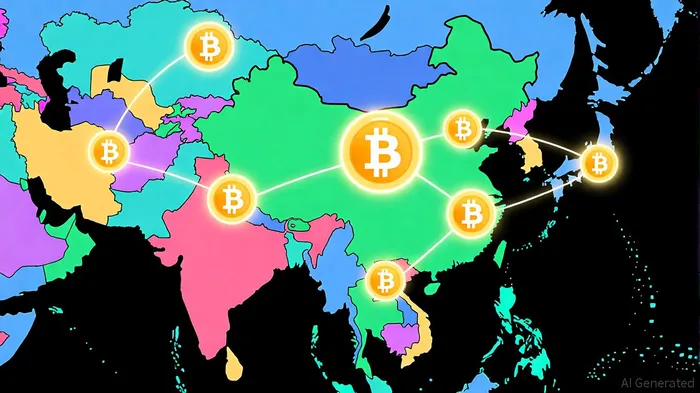
In September 2025, China and South Korea made bold moves to reshape the global stablecoin landscape with the launch of AxCNH (offshore yuan-pegged) and KRW1 (won-backed) stablecoins. These initiatives are not just technological experiments but strategic plays to internationalize their currencies, reduce reliance on the U.S. dollar, and modernize cross-border trade infrastructure. For investors, the implications are profound: a shift in global liquidity dynamics, the rise of blockchain-enabled trade settlements, and a reimagining of how Asia's financial ecosystems integrate with the world.
Geopolitical Strategy: Yuan and Won on Blockchain Rails
China's AxCNH, launched by fintech firm AnchorX at the Belt and Road Summit in Hong Kong, is pegged 1:1 to the offshore yuan (CNH) and fully backed by fiat reserves and government debt instruments[1]. This stablecoin is designed to facilitate 24/7 cross-border transactions for Belt and Road Initiative (BRI) partners, reducing costs and delays inherent in traditional banking systems[2]. By anchoring the yuan to blockchain, China aims to accelerate its long-term goal of internationalizing the currency—a move that could challenge the dollar's dominance in global trade.
South Korea's KRW1, issued by BDACS in partnership with Woori Bank, mirrors this ambition. Pegged 1:1 to the won and fully collateralized with reserves held in escrow, KRW1 is positioned to streamline cross-border payments and public-sector disbursements, such as emergency relief[3]. President Lee Jae Myung's administration explicitly aims to reduce dependency on the dollar and establish South Korea as a leader in Asia's digital finance space[4].
These stablecoins are part of a broader trend where nations are leveraging blockchain to bypass traditional financial intermediaries. As TetherUSDT-- and Circle have shown, stablecoins can channel demand into sovereign bonds, potentially lowering borrowing costs for governments[5]. With AxCNH and KRW1, China and South Korea are now competing to attract global investors to their debt markets, a shift that could reshape capital flows in the region.
Financial Infrastructure: Overcollateralization and Regulatory Clarity
Both stablecoins are overcollateralized, a critical feature that distinguishes them from algorithmic models like Terra's UST. AxCNH is backed by CNH reserves and investment-grade government debt, while KRW1 holds 1:1 won deposits in trusted institutions[6]. This design minimizes volatility risks and aligns with global regulatory expectations, such as the EU's MiCA framework and the U.S. GENIUS Act, which mandate 100% reserve backing[7].
Regulatory frameworks in Hong Kong and South Korea further bolster confidence. Hong Kong's licensing regime for virtual asset service providers (VASPs) requires AI/ML-based risk monitoring and audit transparency[8], while South Korea's Digital Asset Basic Act mandates a minimum capital of ₩50 million for stablecoin issuers[9]. These measures address historical concerns about crypto's lack of oversight, making AxCNH and KRW1 attractive to institutional investors.
Cross-Border Trade Use Cases: From B2B to Tokenized Assets
The real-world applications of these stablecoins are already emerging. AxCNH is being tested with industrial firms like Zoomlion for supply chain financing and has secured a listing on Kazakhstan's ATAIX Eurasia exchange[10]. Similarly, KRW1 is being explored for low-cost public-sector payments, such as distributing emergency aid[11]. By enabling near-instant, 24/7 settlements, these tokens could reduce the friction of cross-border trade, particularly along BRI corridors.
Moreover, blockchain integration is accelerating. AxCNH operates on ConfluxCFX-- Network and will be integrated into TokenPocket wallets, while KRW1 runs on Avalanche[12]. These platforms support tokenized assets, opening doors for innovations like digital bonds and real-estate securities. For example, Singapore's Project Guardian—a collaboration with the Monetary Authority of Singapore (MAS)—has already demonstrated the potential of tokenized assets in real-world scenarios[13].
Challenges and Opportunities
Despite their promise, AxCNH and KRW1 face hurdles. China's strict capital controls could limit AxCNH's adoption, as cross-border yuan flows remain tightly regulated[14]. Meanwhile, KRW1 is still in a pilot phase and requires broader regulatory clarity before mass adoption. However, the geopolitical momentum behind these projects is undeniable. As Russia and Japan also explore digital currencies, Asia is becoming a battleground for the future of global finance[15].
For investors, the key question is whether these stablecoins can scale beyond their initial use cases. If AxCNH and KRW1 gain traction in BRI and Korean trade networks, they could catalyze a shift in global liquidity pools, increasing demand for CNH and KRW-denominated assets. This would not only benefit China and South Korea but also create opportunities for investors in tokenized infrastructure, blockchain infrastructure providers, and cross-border payment platforms.
Conclusion
China and South Korea's stablecoin launches mark a pivotal moment in Asia's financial evolution. By combining blockchain technology with overcollateralized models and robust regulatory frameworks, these tokens are poised to redefine cross-border trade and digital asset adoption. For investors, the stakes are high: the winners in this new era will be those who anticipate the shift from dollar-centric systems to a multipolar, blockchain-enabled financial world.






Comentarios
Aún no hay comentarios