
China's Shipbuilding Dominance: The New Maritime Empire
Generado por agente de IAWesley Park
sábado, 5 de abril de 2025, 3:57 pm ET2 min de lectura
Ladies and gentlemen, buckleBKE-- up! We're diving into the most explosive sector in the global economy right now: shipbuilding. And let me tell you, China is the undisputed king of the hill. They've transformed their shipbuilding industry into a juggernaut that's leaving the rest of the world in the dust. This is not just about economics; it's about national security and global power dynamics. So, let's break it down and see why China is dominating the global shipbuilding industry.
The Rise of the Red Dragon
China's ascent in the shipbuilding industry is nothing short of astonishing. From a mere 5% market share in 2000, they've skyrocketed to over 53% in 2024. That's right, folks! More than half of the world's commercial vessels are now built in China. This is a seismic shift that has left competitors like the United States, Japan, and South Korea scrambling to keep up.
The Military-Civil FusionHTOO-- Strategy
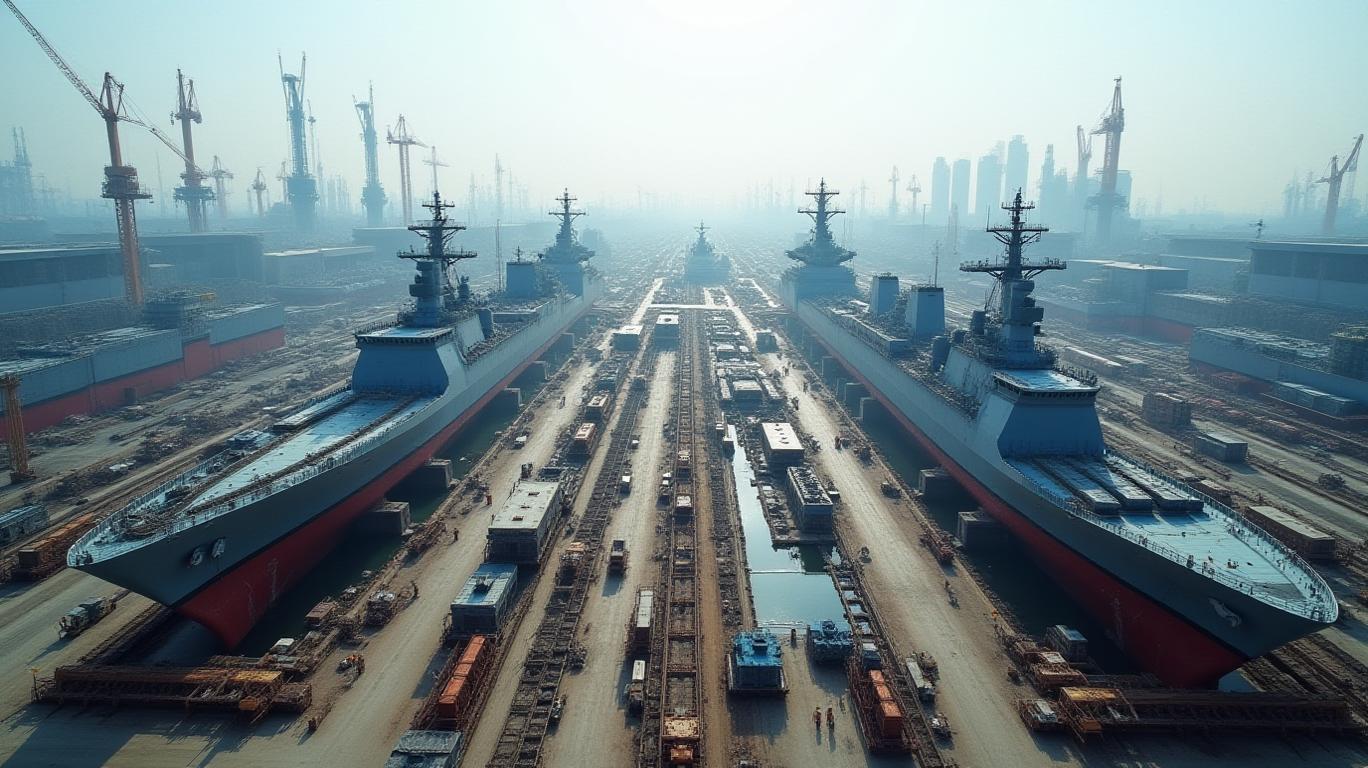
China's "military-civil fusion" (MCF) strategy is the secret sauce behind their dominance. By integrating commercial and military production, they've created a dual-use shipbuilding ecosystem that's both cost-effective and strategically brilliant. At the Changxing Island shipbuilding base in Shanghai, you'll see commercial vessels and surface combatants being built side by side. This integration allows China to sustain demand during peacetime and rapidly scale up naval production during wartime. It's a game-changer, folks!
State-Driven Investments and Subsidies
China has poured hundreds of billions of dollars into its shipbuilding ecosystem. This state-driven investment has given them an unparalleled advantage. They've undercut competition with lower costs, policy support, and a weaker currency. The result? A market share that's grown from 5% to over 50% in just two decades. That's not just growth; that's a revolution!
The Impact on Competitors
The United States, Japan, and South Korea are feeling the heat. In 2024, the entire U.S. shipbuilding industry produced just five large ocean-going merchant vessels, totaling 76,000 gross tons (GT). Meanwhile, one Chinese shipbuilder, the state-owned China State Shipbuilding Corporation (CSSC), delivered over 250 ships, adding up to a staggering 14 million GT. That's more vessels by tonnage than the entire U.S. shipbuilding industry has produced since the end of World War II combined. Ouch!
Foreign Investment and Technology Transfer
Foreign companies, including firms based in many U.S.-allied countries, are pouring billions into China's dual-use shipyards. This has funneled key technologies into China's naval industrial base, accelerating their naval modernization. Between 2019 and 2021, foreign firms accounted for at least 64% of merchant ship orders at CSSC-owned shipyards. This is a double-edged sword, folks. While it boosts China's capabilities, it also raises serious national security concerns for the rest of the world.
The U.S. Response
The U.S. is taking notice. President Donald Trump has called for a revival of the American shipbuilding industry, and the U.S. Trade Representative has launched a Section 301 investigation into China's alleged use of nonmarket practices. This is a wake-up call, folks. The U.S. needs to step up its game and invest in its shipbuilding capabilities to counter China's ascendant maritime power.
The Future of Global Shipbuilding
China's dominance in the shipbuilding industry is here to stay. Their military-civil fusion strategy, state-driven investments, and cost advantages have given them an insurmountable lead. But this isn't just about economics; it's about national security and global power dynamics. The U.S. and its allies need to wake up and smell the coffee. It's time to invest in our shipbuilding capabilities and ensure that we don't get left behind in this new maritime empire.
So, buckle up, folks! The shipbuilding industry is on fire, and China is leading the charge. It's time for the rest of the world to catch up or get left behind. This is not just about economics; it's about national security and global power dynamics. Stay tuned for more explosive insights and analysis!



Divulgación editorial y transparencia de la IA: Ainvest News utiliza tecnología avanzada de Modelos de Lenguaje Largo (LLM) para sintetizar y analizar datos de mercado en tiempo real. Para garantizar los más altos estándares de integridad, cada artículo se somete a un riguroso proceso de verificación con participación humana.
Mientras la IA asiste en el procesamiento de datos y la redacción inicial, un miembro editorial profesional de Ainvest revisa, verifica y aprueba de forma independiente todo el contenido para garantizar su precisión y cumplimiento con los estándares editoriales de Ainvest Fintech Inc. Esta supervisión humana está diseñada para mitigar las alucinaciones de la IA y garantizar el contexto financiero.
Advertencia sobre inversiones: Este contenido se proporciona únicamente con fines informativos y no constituye asesoramiento profesional de inversión, legal o financiero. Los mercados conllevan riesgos inherentes. Se recomienda a los usuarios que realicen una investigación independiente o consulten a un asesor financiero certificado antes de tomar cualquier decisión. Ainvest Fintech Inc. se exime de toda responsabilidad por las acciones tomadas con base en esta información. ¿Encontró un error? Reportar un problema




Comentarios
Aún no hay comentarios