
China Shenhua Energy's Strategic Stake in China Energy Finance: A Blueprint for ESG-Driven Energy Logistics and Long-Term Earnings Growth
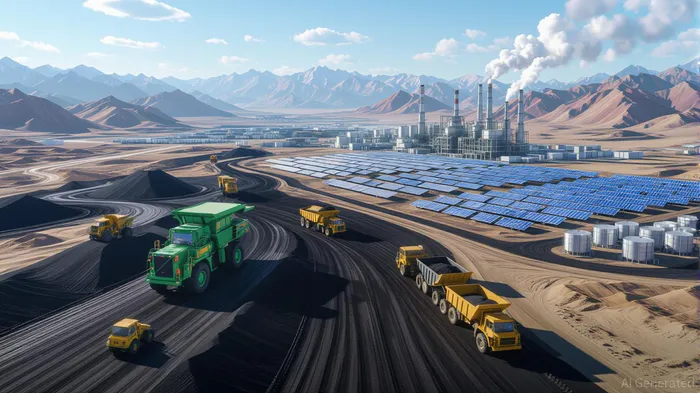
China Shenhua Energy's recent acquisition of a 7.43% stake in China Energy Finance Co., Ltd. for CNY 2.9 billion marks a pivotal moment in the company's strategy to dominate energy logistics while aligning with China's carbon neutrality goals. By increasing its ownership in Energy Finance to 40%, Shenhua consolidates control over critical coal transportation, power generation, and chemical logistics assets. This move not only strengthens its operational efficiency but also positions it at the forefront of ESG-driven infrastructure consolidation in China's energy transition.
ESG Alignment and Strategic Rationale
The acquisition aligns with Beijing's 2060 carbon neutrality target, as Energy Finance's portfolio includes investments in clean coal technologies and carbon capture projects. Shenhua's ESG Risk Rating of 126/302 in the Oil & Gas Producers industry (as of July 2024) places it in a mid-tier position, but the company is actively repositioning itself through initiatives like ultra-low emission upgrades and hydrogen-electric hybrid mining trucks. By leveraging Energy Finance's resources, Shenhua can accelerate these projects, enhancing its ESG credentials while maintaining profitability.
Financially, the stake provides immediate value. Energy Finance reported CNY 3.5 billion in net income for 2024, which Shenhua can now access. The company's logistics infrastructure, including the Baoshen Railway (which moves 400 million tons of coal annually), ensures cost efficiencies and reduces reliance on third-party logistics—a critical advantage in a volatile industry.
Infrastructure Consolidation and Earnings Potential
China's energy logistics sector is undergoing rapid consolidation, driven by ESG policies and the need for resilient supply chains. Shenhua's stake in Energy Finance exemplifies this trend, as it integrates coal, power, and transportation operations under a unified framework. This vertical integration reduces costs and enhances predictability in cash flows, which is vital for sustaining high dividends (Shenhua's proposed 2024 payout of CN¥2.26 per share yields 7.2%).
The company's governance restructuring in 2025—abolishing the supervisory committee and elevating Zhang Changyan to lead ESG initiatives—further underscores its commitment to sustainable growth. While Shenhua remains heavily reliant on coal (70% of revenue), its diversification into green hydrogen and renewable energy integration mitigates long-term risks. For instance, its parent company, China Energy Group, is advocating for government-funded green hydrogen projects to decarbonize the steel industry, a market projected to reach $200 billion by 2030.
Risks and Opportunities
Despite its strengths, Shenhua faces challenges. A 90.9% cash payout ratio raises concerns about reinvestment capacity, and a 32% drop in Q1 2025 EPS to CN¥0.60 highlights earnings volatility. However, its fortress balance sheet (asset-liability ratio of 23.4%) and market cap of HK$824.3 billion provide a buffer. Investors must monitor coal price trends and regulatory shifts, as a prolonged dip in demand could strain cash flows.
Investment Outlook
Shenhua's strategic pivot toward ESG leadership and infrastructure consolidation makes it a compelling, albeit complex, opportunity. The company's undervaluation (P/E of 11.3x below historical averages) reflects investor skepticism about coal's future, but its dominance in China's energy backbone and proactive ESG initiatives could drive long-term growth. For investors seeking income and sustainability, Shenhua's dividend resilience and ESG alignment offer a balanced proposition—provided they are willing to monitor macroeconomic and regulatory risks.
In conclusion, Shenhua's acquisition of Energy Finance is not just a financial maneuver but a calculated step toward securing its role in China's energy transition. By harmonizing profitability with ESG goals, the company is building a model that could redefine energy logistics in the 21st century.







Comentarios
Aún no hay comentarios