
China's Services Sector Stumbles as Trade Tensions Take Toll, Caixin PMI Reveals
The Caixin China General Services Purchasing Managers' Index (PMI) for April 2025 fell to 50.7, marking a 7-month low and underscoring the growing strain of U.S.-China trade tensions on China’s economic recovery. This decline, the weakest expansion since September 2023, reflects a confluence of tariff-driven demand slumps, eroding business confidence, and spillover effects from manufacturing sector contractions. With services accounting for 56.7% of China’s GDP, the slowdown raises critical questions about the sustainability of growth amid escalating global trade frictions.
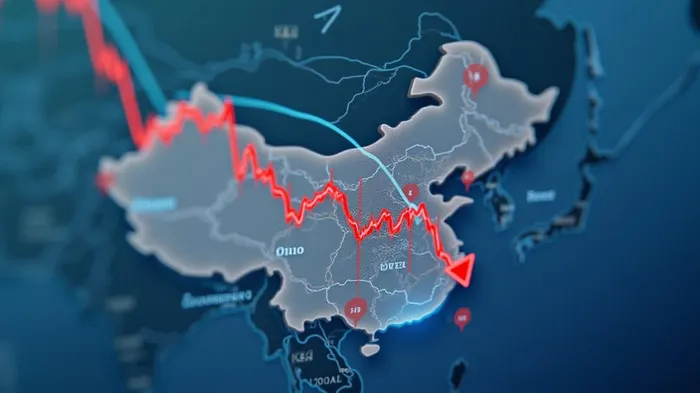
Key Tariff-Driven Impacts
- Demand and New Business Decline:
New business growth slowed to its weakest pace since December 2022, driven by heightened uncertainty from U.S. tariffs. The Services PMI’s new orders component fell to 49.8, signaling contraction for the first time since late 2023. While tourism recovery edged export orders higher, broader domestic demand weakened, with firms citing tariff-driven supply chain disruptions and cost pressures.
The Australian dollar’s 0.3% drop to 0.6450 on the data highlights China’s economic weight in global trade, particularly for commodity exporters like Australia.
Employment Cuts and Cost Pressures:
Services firms cut jobs for the second consecutive month, marking the first employment contraction since early 2020. This reflects efforts to control costs amid slowing demand, exacerbating backlogs—pushing the corresponding gauge to its highest level since late 2022. Despite rising input costs, firms reduced prices to attract customers, squeezing profit margins and signaling a loss of pricing power.Sector-Specific Vulnerabilities:
Export-driven sub-sectors, such as logistics and cross-border trade support, faced disproportionate strain. The manufacturing sector’s parallel decline—its PMI fell to 50.4—reduced demand for related services, amplifying the slowdown. Tourism saw marginal export order growth but remained constrained by lingering geopolitical risks.Policy Responses and Forecasts:
China’s ruling Communist Party has pledged support for tariff-affected firms, including potential stimulus measures. However, Morgan Stanley analysts warn that second-quarter GDP growth could slow by 1 percentage point due to tariff impacts. They anticipate uneven policy responses, favoring emerging sectors like tech and urban renewal over broader consumer stimulus.
Global and Domestic Risks Escalate
- Trade War Escalation: U.S. threats to impose a 100% tariff on foreign movies underscore the risk of services sectors being drawn into the trade conflict. While not yet implemented, such measures would further dampen business sentiment and investment.
- Deflationary Pressures: Services sector input costs rose at a slower rate than output prices, reflecting weak demand. This dynamic risks embedding deflationary trends, complicating central bank efforts to stabilize growth.
- Labor Market Stress: The Caixin Composite PMI’s employment component contracted for the first time since early 2023, signaling broader labor market fragility.
Investment Implications
The data paints a cautionary picture for investors:
- Avoid Tariff-Exposed Sectors: Companies reliant on U.S. exports or supply chains—particularly in logistics, consumer goods, and tech—are vulnerable to margin pressures and demand volatility.
- Focus on Domestic Consumption Plays: With policy emphasis on urban renewal and emerging sectors, infrastructure and green energy firms may offer resilience.
- Monitor Policy Responses: Investors should track fiscal stimulus announcements and central bank measures, such as reserve requirement ratio cuts, which could stabilize credit conditions.
The CHIX ETF’s 8% decline year-to-date reflects investor skepticism about consumption recovery, aligning with the PMI’s weak demand signals.
Conclusion
China’s services sector slowdown underscores the pervasive impact of U.S. tariffs on economic momentum. With the Caixin PMI at a 7-month low and business sentiment hitting record lows, the risks of a deeper downturn are acute. Policymakers face a narrow path to balance stimulus with structural reforms, while global markets—exemplified by Australia’s currency decline—highlight the spillover risks of trade tensions.
Investors should prioritize defensive positions, favoring firms with diversified revenue streams and limited exposure to export-dependent sectors. The 1% GDP growth slowdown warning and record-low future expectations suggest that without swift policy action, China’s recovery could falter further in the second half of 2025. For now, the data reinforces a cautious stance, with tariffs acting as a persistent drag on both domestic and global economic stability.







Comentarios
Aún no hay comentarios