
China's Taiwan Move: Economic Ripples and Strategic Moves
Generado por agente de IAWesley Park
jueves, 5 de diciembre de 2024, 3:41 am ET1 min de lectura
China's recent imposition of sanctions on 13 US military firms, following a US arms sale to Taiwan, has sent shockwaves through global defense markets and geopolitical dynamics. This strategic move by Beijing underscores its resolve to protect its core interests and the potential economic and political repercussions that may arise from this action. This article delves into the potential impacts of these sanctions on the defense industry, US-China relations, and the broader economy.
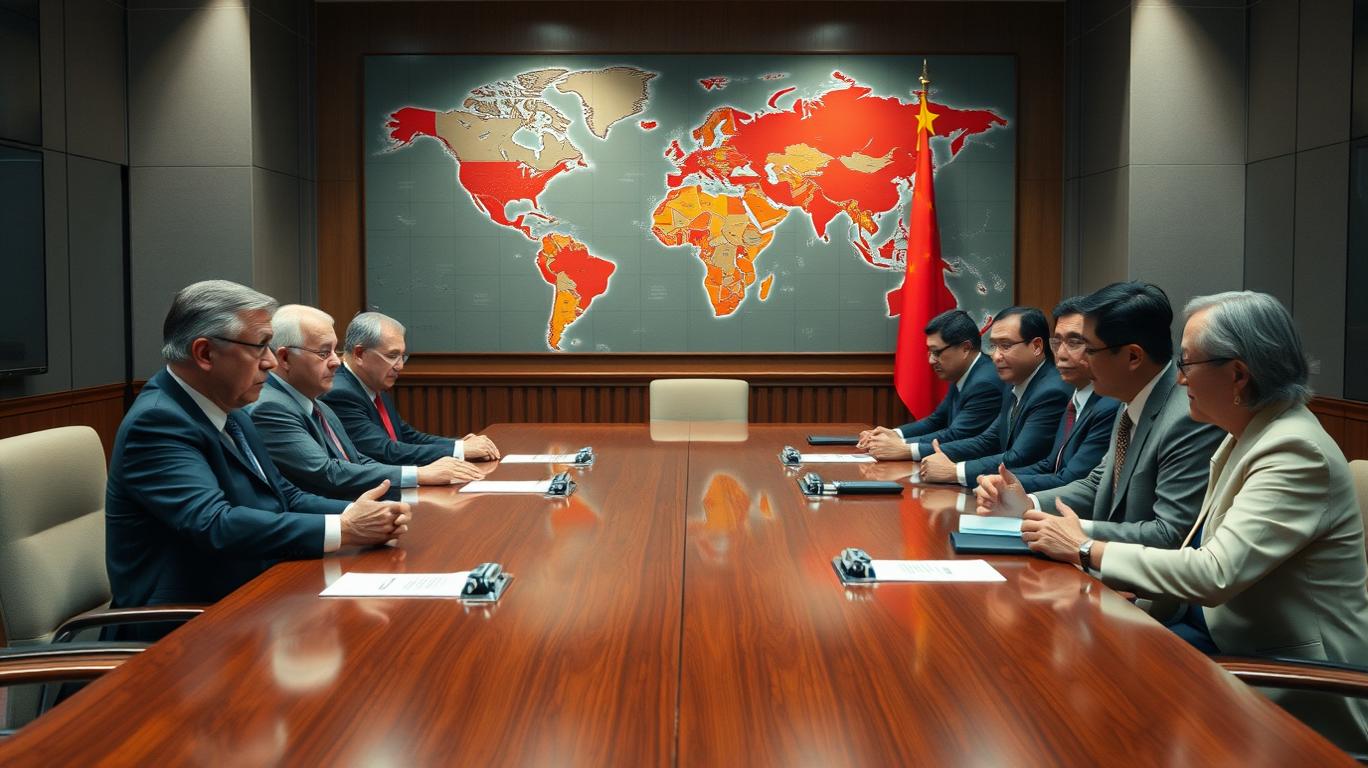
The sanctions, targeting companies involved in the recent $228 million arms sale, aim to deter future arms sales and demonstrate China's resolve in opposing "Taiwan independence". The move comes as the US has approved a series of arms sales to Taiwan, which China views as a violation of the one-China principle. The sanctions include freezing the companies' assets and prohibiting transactions with them, effectively blocking them from doing business in China. This will likely lead to a reduction in US military exports to Taiwan, impacting Taiwan's ability to maintain and upgrade its military aircraft.
The sanctions could have far-reaching implications for the defense industry and global supply chains. In the short term, the targeted companies will face significant disruptions in their operations and financial performance. Long-term impacts may include reputational damage, with potential clients in other countries hesitant to engage due to geopolitical concerns. The sanctions also highlight the inherent risks of operating in politically sensitive regions, further impacting these companies' risk profiles and potentially their stock valuations.
Moreover, the sanctions could influence US policy on arms sales to Taiwan and US-China relations. China's resolve in protecting its core interests and its willingness to employ economic measures could lead to a recalibration of US policy, balancing national interests and economic considerations. The move also raises concerns about potential retaliation and further escalation, which could have broader implications for the defense and technology sectors.
In conclusion, China's sanctions on 13 US military firms underscore the geopolitical tensions surrounding Taiwan and the economic consequences of US arms sales. While the sanctions aim to deter future arms sales and protect China's core interests, they also highlight the potential risks and challenges for defense companies and global supply chains. As the situation unfolds, investors should monitor the developments closely, as any escalation could have broader implications for the defense and technology sectors.



Divulgación editorial y transparencia de la IA: Ainvest News utiliza tecnología avanzada de Modelos de Lenguaje Largo (LLM) para sintetizar y analizar datos de mercado en tiempo real. Para garantizar los más altos estándares de integridad, cada artículo se somete a un riguroso proceso de verificación con participación humana.
Mientras la IA asiste en el procesamiento de datos y la redacción inicial, un miembro editorial profesional de Ainvest revisa, verifica y aprueba de forma independiente todo el contenido para garantizar su precisión y cumplimiento con los estándares editoriales de Ainvest Fintech Inc. Esta supervisión humana está diseñada para mitigar las alucinaciones de la IA y garantizar el contexto financiero.
Advertencia sobre inversiones: Este contenido se proporciona únicamente con fines informativos y no constituye asesoramiento profesional de inversión, legal o financiero. Los mercados conllevan riesgos inherentes. Se recomienda a los usuarios que realicen una investigación independiente o consulten a un asesor financiero certificado antes de tomar cualquier decisión. Ainvest Fintech Inc. se exime de toda responsabilidad por las acciones tomadas con base en esta información. ¿Encontró un error? Reportar un problema


SOBRE NOSOTROS
Nuestra historiaAutores de noticiasBase de conocimientosPolítica de privacidadTérmino de usoDescargo de responsabilidad de corretaje de tercerosTérminos de uso de AIMEDivulgaciones de riesgos de AInvest AICarrerasCONTÁCTENOS
Email: support@ainvest.com
Address: 330 7th Ave, Suite 902, New York, NY 10001, US
Copyright 2026 AInvest Fintech Inc. All rights reserved.


Comentarios
Aún no hay comentarios