
China's Monetary Shift: A Surge, But Volatility Looms
Generado por agente de IAWesley Park
lunes, 9 de diciembre de 2024, 3:02 pm ET1 min de lectura
China's recent monetary policy shift, characterized by a reduction in interest rates and a relaxation of lending restrictions, has sparked a surge in the Chinese stock market. This shift, aimed at stimulating economic growth, has attracted both domestic and foreign investors, drawn to the potential for higher returns. However, the investment landscape remains volatile, with several factors contributing to this uncertainty.
First, the Fed's interest rate hike policy has negatively impacted the Chinese stock market, particularly the Shanghai Securities Composite Index (SSEC) and Shenzhen Securities Composite Index (SZSE), as evidenced by a study by Yingran Zhang. This suggests that future Fed policy decisions could continue to influence the Chinese market. Additionally, the COVID-19 pandemic has led to a series of monetary policy announcements by central banks worldwide, including the Federal Reserve, the European Central Bank, and the People's Bank of China. These announcements have produced diverse market reactions, as analyzed by a study using a quantitative event study approach. Furthermore, the Chinese monetary policy has been found to significantly impact corporate investment growth, with positive shocks increasing investment growth and negative ones decreasing it, as demonstrated by a study by Huang et al.
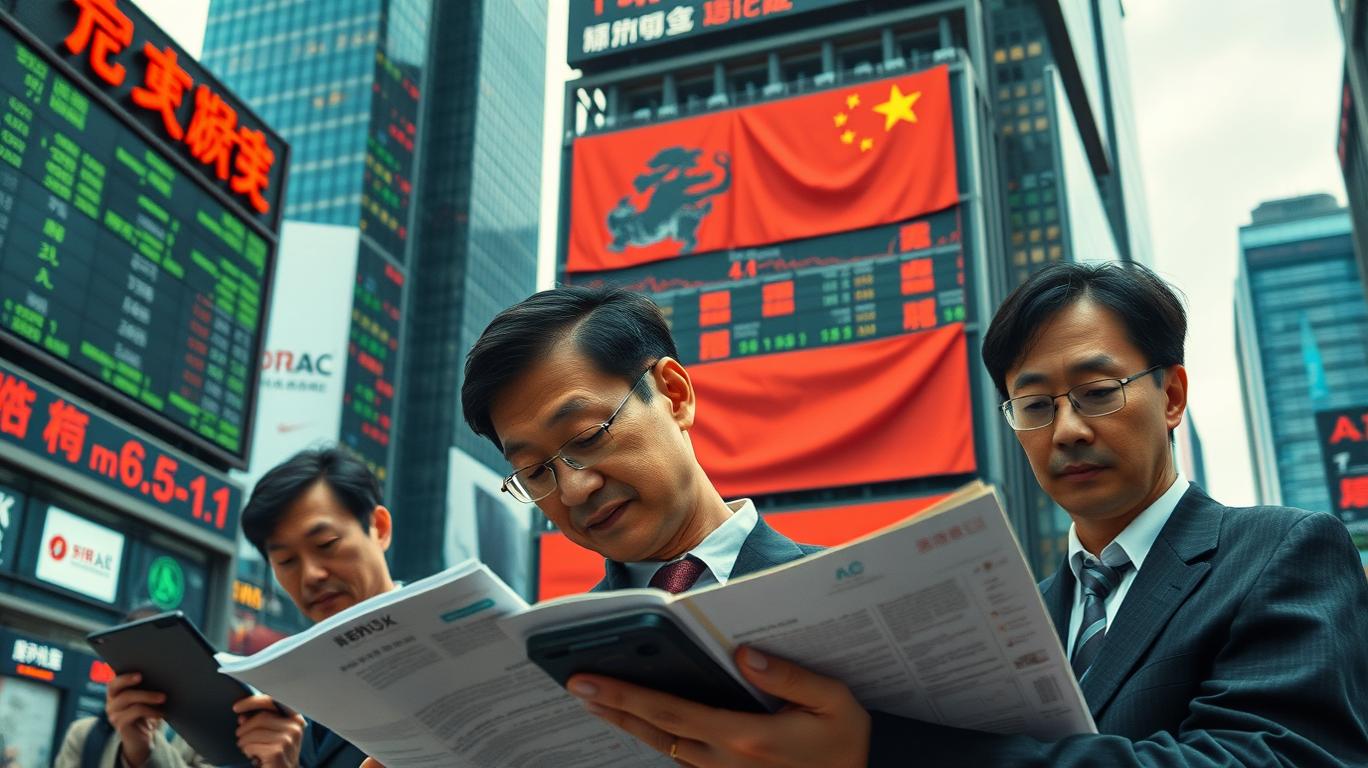
The recent shift in China's monetary policy has sparked a surge in the Chinese stock market, with the Shanghai Composite Index (SSEC) and Shenzhen Composite Index (SZSE) experiencing significant gains. However, the market remains volatile, and investors should be cautious. According to a study by Yingran Zhang, the SZSE index was more adversely impacted by the Fed's rate hike than the SSEC index, indicating that certain sectors within the Chinese stock market are more sensitive to monetary policy changes. The study found that the SSEC index's market volatility was significantly impacted by the Fed's rate hike, while the SZSE index's market volatility remained relatively unaffected. This suggests that sectors listed on the SZSE, such as technology and healthcare, may be more sensitive to monetary policy changes than those on the SSEC, such as financials and energy. Investors should closely monitor these sectors and consider adjusting their portfolios accordingly to mitigate potential risks.
In conclusion, while China's monetary policy shift has spurred a stock surge, the investment landscape remains volatile, with influences from global monetary policy decisions and the ongoing pandemic. Investors should be aware of the potential impacts of monetary policy changes on the Chinese stock market and consider adjusting their portfolios accordingly to mitigate risks.



Divulgación editorial y transparencia de la IA: Ainvest News utiliza tecnología avanzada de Modelos de Lenguaje Largo (LLM) para sintetizar y analizar datos de mercado en tiempo real. Para garantizar los más altos estándares de integridad, cada artículo se somete a un riguroso proceso de verificación con participación humana.
Mientras la IA asiste en el procesamiento de datos y la redacción inicial, un miembro editorial profesional de Ainvest revisa, verifica y aprueba de forma independiente todo el contenido para garantizar su precisión y cumplimiento con los estándares editoriales de Ainvest Fintech Inc. Esta supervisión humana está diseñada para mitigar las alucinaciones de la IA y garantizar el contexto financiero.
Advertencia sobre inversiones: Este contenido se proporciona únicamente con fines informativos y no constituye asesoramiento profesional de inversión, legal o financiero. Los mercados conllevan riesgos inherentes. Se recomienda a los usuarios que realicen una investigación independiente o consulten a un asesor financiero certificado antes de tomar cualquier decisión. Ainvest Fintech Inc. se exime de toda responsabilidad por las acciones tomadas con base en esta información. ¿Encontró un error? Reportar un problema


SOBRE NOSOTROS
Nuestra historiaAutores de noticiasBase de conocimientosPolítica de privacidadTérmino de usoDescargo de responsabilidad de corretaje de tercerosTérminos de uso de AIMEDivulgaciones de riesgos de AInvest AICarrerasCONTÁCTENOS
Email: support@ainvest.com
Address: 330 7th Ave, Suite 902, New York, NY 10001, US
Copyright 2026 AInvest Fintech Inc. All rights reserved.


Comentarios
Aún no hay comentarios