
China's Export Slowdown: Global Implications and Domestic Challenges
Generado por agente de IAWesley Park
lunes, 9 de diciembre de 2024, 11:47 pm ET2 min de lectura
As the world's second-largest economy, China's export slowdown and import decline in November 2024, falling below forecasts, signals potential weakness in trade. This article explores the global implications and domestic challenges stemming from this development.
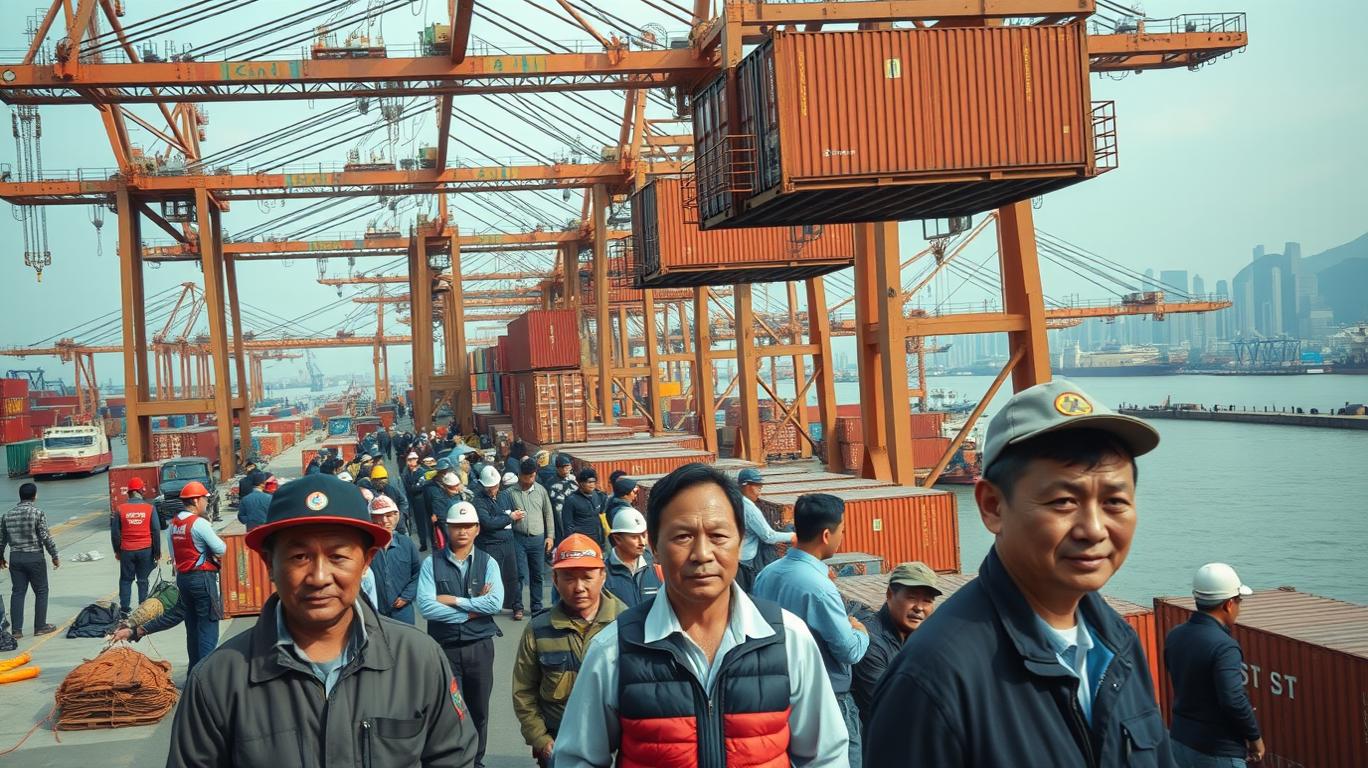
1. Global Demand for Commodities and Intermediate Goods: China's slowdown in exports and imports has significant implications for global demand. As a major consumer of commodities and intermediate goods, a decline in China's imports could lead to a decrease in global demand for these commodities, affecting prices and production in commodity-producing countries. Additionally, the slowdown in exports may impact global demand for finished goods, further affecting global supply chains and economies.
2. Domestic Consumption and Economic Growth: The decline in China's imports signals a potential slowdown in domestic consumption and economic growth. With imports falling 3.9% year-on-year, this indicates weak demand from industries and consumers. As consumer spending accounts for around 40% of China's GDP, a decline in imports could suggest a slowdown in domestic consumption. This, in turn, may impact China's trade surplus and foreign exchange reserves, potentially leading to a decrease in economic growth.
3. Impact on Global Supply Chain: The decline in Chinese demand will have significant implications for global supply chains, particularly for industries heavily reliant on Chinese imports. As China's economy slows, its demand for raw materials and intermediate goods will decrease, leading to a reduction in orders from Chinese manufacturers. This will impact the production and export of these goods from other countries, causing a ripple effect throughout the global supply chain. Industries such as electronics, textiles, and automotive components, which are heavily dependent on Chinese imports, will be particularly affected.
4. Exposure to Chinese Demand: Using data from the OECD's trade in value added database (TiVA), we find that countries with the highest exposure to Chinese demand include South Korea, Japan, and Germany. These countries have significant trade ties with China, particularly in the secondary sector, which accounts for a larger share of their exports to China. A 1% point negative shock to final demand from China's secondary sector reduces export growth by almost 0.3% points on impact for these countries, with Asia being most affected. This suggests that the slowdown in Chinese exports and imports may have substantial spillover effects on these economies, highlighting the importance of considering sector-specific shocks when examining spillovers.
In conclusion, China's export slowdown and import decline in November 2024 have significant implications for both the global economy and China's domestic consumption and economic growth. As the world's second-largest economy, China's trade performance directly impacts global demand for commodities and intermediate goods, as well as the global supply chain. The slowdown in exports and imports may also signal a potential slowdown in domestic consumption and economic growth, with significant implications for China's trade surplus and foreign exchange reserves. Understanding the exposure of various countries to Chinese demand is crucial for assessing the global impact of China's trade performance.



Divulgación editorial y transparencia de la IA: Ainvest News utiliza tecnología avanzada de Modelos de Lenguaje Largo (LLM) para sintetizar y analizar datos de mercado en tiempo real. Para garantizar los más altos estándares de integridad, cada artículo se somete a un riguroso proceso de verificación con participación humana.
Mientras la IA asiste en el procesamiento de datos y la redacción inicial, un miembro editorial profesional de Ainvest revisa, verifica y aprueba de forma independiente todo el contenido para garantizar su precisión y cumplimiento con los estándares editoriales de Ainvest Fintech Inc. Esta supervisión humana está diseñada para mitigar las alucinaciones de la IA y garantizar el contexto financiero.
Advertencia sobre inversiones: Este contenido se proporciona únicamente con fines informativos y no constituye asesoramiento profesional de inversión, legal o financiero. Los mercados conllevan riesgos inherentes. Se recomienda a los usuarios que realicen una investigación independiente o consulten a un asesor financiero certificado antes de tomar cualquier decisión. Ainvest Fintech Inc. se exime de toda responsabilidad por las acciones tomadas con base en esta información. ¿Encontró un error? Reportar un problema


SOBRE NOSOTROS
Nuestra historiaAutores de noticiasBase de conocimientosPolítica de privacidadTérmino de usoDescargo de responsabilidad de corretaje de tercerosTérminos de uso de AIMEDivulgaciones de riesgos de AInvest AICarrerasCONTÁCTENOS
Email: support@ainvest.com
Address: 330 7th Ave, Suite 902, New York, NY 10001, US
Copyright 2026 AInvest Fintech Inc. All rights reserved.


Comentarios
Aún no hay comentarios