
China's ETF Fee War: A Booming Market's Price Battle
Generado por agente de IAEli Grant
martes, 19 de noviembre de 2024, 10:32 pm ET1 min de lectura
SLVO--
In the rapidly expanding Chinese exchange-traded fund (ETF) market, a price war has erupted as fund managers slash fees to attract investors and capture market share. This competitive landscape, driven by regulatory changes and surging demand, is reshaping the market and presenting opportunities for both investors and asset managers.
The Chinese ETF market has witnessed unprecedented growth, reaching Rmb2 trillion ($283 billion) in 2023, double the size of October 2020. This expansion aligns with the government's agenda and investor preferences for lower-cost passive strategies. However, the intense competition has led to a significant reduction in fees, with 125 ETFs now charging an annual management fee of 0.15%, accounting for about 13% of the total 934 onshore ETFs.
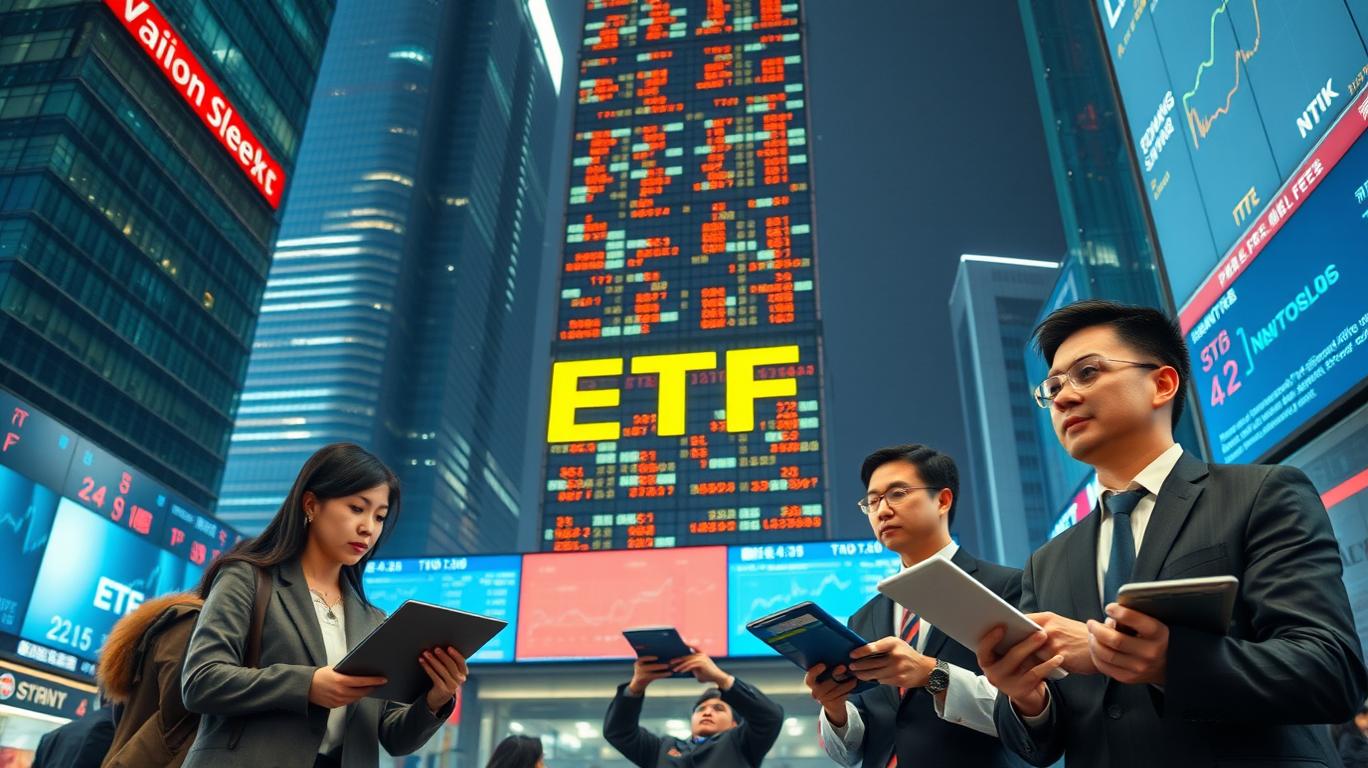
The fee-cutting trend, initiated by regulatory reforms and increasing demand for onshore equities ETFs, has pushed down fee levels further. Large asset managers like E Fund Management and ICBC Credit Suisse AM have strategically reduced fees on their ETFs, igniting a price war that benefits investors by making ETFs more affordable. As of February 2024, 125 ETFs have annual management fees of 0.15%, accounting for 13% of the total 934 onshore ETFs, with 38 being broad-market ETFs.
The competitive dynamics among asset managers in the Chinese ETF market are significantly influenced by regulatory changes. The CSRC's fee reforms, which cap management fees at 1.2% per year for equities and mixed-asset funds, have prompted asset managers to lower fees to attract investors. This has led to an escalating price war, with six CSI 300 ETFs now charging as low as 0.15%.
While the fee war presents opportunities for investors, it also poses challenges for smaller competitors and the market's long-term sustainability. The low barriers to entry and vulnerability of local firms to market volatility may hinder the ETF landscape's ability to maintain a healthy balance between competition and investor protection.
In conclusion, the escalating price war in China's booming ETF market is reshaping the competitive landscape and presenting opportunities for both investors and asset managers. As regulatory changes and investor preferences drive fee cuts, the market must navigate the challenges of intense competition and ensure long-term sustainability. With a balanced approach that considers multiple perspectives and factors, investors can capitalize on the ongoing market growth and adapt to the evolving dynamics of the Chinese ETF market.
The Chinese ETF market has witnessed unprecedented growth, reaching Rmb2 trillion ($283 billion) in 2023, double the size of October 2020. This expansion aligns with the government's agenda and investor preferences for lower-cost passive strategies. However, the intense competition has led to a significant reduction in fees, with 125 ETFs now charging an annual management fee of 0.15%, accounting for about 13% of the total 934 onshore ETFs.
The fee-cutting trend, initiated by regulatory reforms and increasing demand for onshore equities ETFs, has pushed down fee levels further. Large asset managers like E Fund Management and ICBC Credit Suisse AM have strategically reduced fees on their ETFs, igniting a price war that benefits investors by making ETFs more affordable. As of February 2024, 125 ETFs have annual management fees of 0.15%, accounting for 13% of the total 934 onshore ETFs, with 38 being broad-market ETFs.
The competitive dynamics among asset managers in the Chinese ETF market are significantly influenced by regulatory changes. The CSRC's fee reforms, which cap management fees at 1.2% per year for equities and mixed-asset funds, have prompted asset managers to lower fees to attract investors. This has led to an escalating price war, with six CSI 300 ETFs now charging as low as 0.15%.
While the fee war presents opportunities for investors, it also poses challenges for smaller competitors and the market's long-term sustainability. The low barriers to entry and vulnerability of local firms to market volatility may hinder the ETF landscape's ability to maintain a healthy balance between competition and investor protection.
In conclusion, the escalating price war in China's booming ETF market is reshaping the competitive landscape and presenting opportunities for both investors and asset managers. As regulatory changes and investor preferences drive fee cuts, the market must navigate the challenges of intense competition and ensure long-term sustainability. With a balanced approach that considers multiple perspectives and factors, investors can capitalize on the ongoing market growth and adapt to the evolving dynamics of the Chinese ETF market.

Divulgación editorial y transparencia de la IA: Ainvest News utiliza tecnología avanzada de Modelos de Lenguaje Largo (LLM) para sintetizar y analizar datos de mercado en tiempo real. Para garantizar los más altos estándares de integridad, cada artículo se somete a un riguroso proceso de verificación con participación humana.
Mientras la IA asiste en el procesamiento de datos y la redacción inicial, un miembro editorial profesional de Ainvest revisa, verifica y aprueba de forma independiente todo el contenido para garantizar su precisión y cumplimiento con los estándares editoriales de Ainvest Fintech Inc. Esta supervisión humana está diseñada para mitigar las alucinaciones de la IA y garantizar el contexto financiero.
Advertencia sobre inversiones: Este contenido se proporciona únicamente con fines informativos y no constituye asesoramiento profesional de inversión, legal o financiero. Los mercados conllevan riesgos inherentes. Se recomienda a los usuarios que realicen una investigación independiente o consulten a un asesor financiero certificado antes de tomar cualquier decisión. Ainvest Fintech Inc. se exime de toda responsabilidad por las acciones tomadas con base en esta información. ¿Encontró un error? Reportar un problema


SOBRE NOSOTROS
Nuestra historiaAutores de noticiasBase de conocimientosPolítica de privacidadTérmino de usoDescargo de responsabilidad de corretaje de tercerosTérminos de uso de AIMEDivulgaciones de riesgos de AInvest AICarrerasCONTÁCTENOS
Email: support@ainvest.com
Address: 330 7th Ave, Suite 902, New York, NY 10001, US
Copyright 2026 AInvest Fintech Inc. All rights reserved.


Comentarios
Aún no hay comentarios