
China's Currency Stance: A Red Line Amidst Uncertainty
Generado por agente de IAEli Grant
lunes, 25 de noviembre de 2024, 10:44 pm ET1 min de lectura
PUK--
RAND--
As the United States braces for the potential return of Donald Trump to the White House, China has drawn a red line in the sand for its currency, the yuan. The PBOC's recent moves, including the introduction of a "counter-cyclical factor" in the CNY fixing rate quotation model, signal China's commitment to maintaining the stability of its currency amidst ongoing trade tensions.
In the first half of 2024, China's GDP grew by 5% year on year, showcasing the country's resilience in the face of global economic uncertainty. The PBOC has been proactive in managing the yuan's exchange rate, balancing market forces with macroeconomic management. This approach has helped to stabilize the RMB exchange rate, with the CFETS RMB Index rising by 2.7% from the end of 2023.
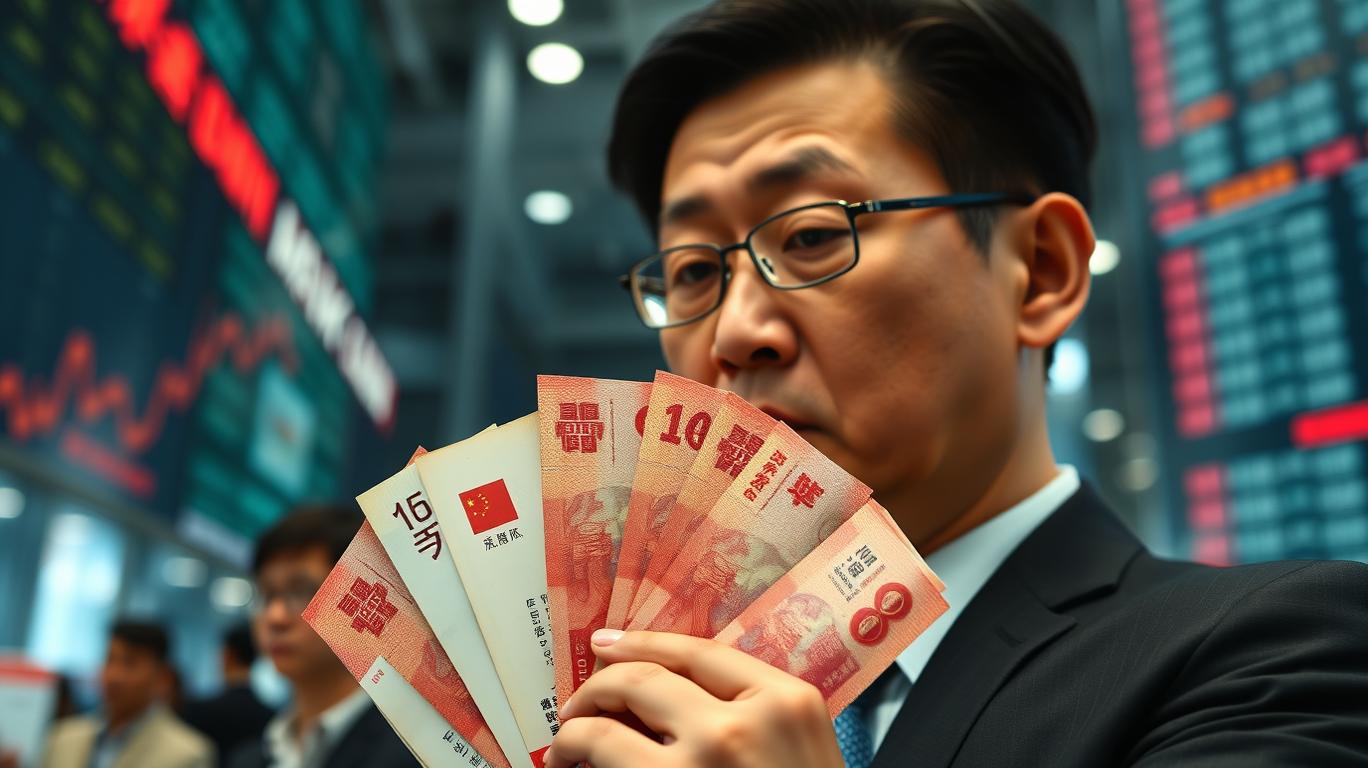
However, the prospect of a Trump presidency has raised concerns about a potential escalation in the US-China trade war. In response to Trump's reelection, China has indicated its unwillingness to devalue the yuan to boost exports, potentially setting the stage for a standoff between the two countries. This stance is a departure from China's approach during Trump's first term, reflecting the country's growing economic strength and resolve in negotiating with the US.
A renewed trade war would have significant implications for global supply chains, particularly in the manufacturing and technology sectors. According to a RAND Corporation report, U.S.-China trade tensions have persisted since 2017, with policies aimed at reducing dependence on Chinese suppliers and controlling key technology transfers. This could lead to supply chain diversification away from China, impacting industries like smartphones.
Furthermore, a full-blown financial crisis could be triggered by an escalation in the trade war. The PBOC has implemented measures to mitigate risks, such as raising the macro-prudential adjustment parameter for cross-border financing and cutting the RRR for foreign currency deposits. However, only a breakthrough agreement between the two countries could restore business confidence and reinvigorate the capital and credit markets quickly enough to stop the collapse of the global financial, economic, and trading systems.
In conclusion, China's red line for the yuan reflects the country's determination to maintain currency stability amidst geopolitical uncertainty. As the US election approaches, China is strengthening its position, poised to shape international trade rules and norms in response to a potential Trump presidency. Only a constructive breakthrough in US-China relations can prevent a catastrophic breakdown and restore confidence in global markets.
In the first half of 2024, China's GDP grew by 5% year on year, showcasing the country's resilience in the face of global economic uncertainty. The PBOC has been proactive in managing the yuan's exchange rate, balancing market forces with macroeconomic management. This approach has helped to stabilize the RMB exchange rate, with the CFETS RMB Index rising by 2.7% from the end of 2023.
However, the prospect of a Trump presidency has raised concerns about a potential escalation in the US-China trade war. In response to Trump's reelection, China has indicated its unwillingness to devalue the yuan to boost exports, potentially setting the stage for a standoff between the two countries. This stance is a departure from China's approach during Trump's first term, reflecting the country's growing economic strength and resolve in negotiating with the US.
A renewed trade war would have significant implications for global supply chains, particularly in the manufacturing and technology sectors. According to a RAND Corporation report, U.S.-China trade tensions have persisted since 2017, with policies aimed at reducing dependence on Chinese suppliers and controlling key technology transfers. This could lead to supply chain diversification away from China, impacting industries like smartphones.
Furthermore, a full-blown financial crisis could be triggered by an escalation in the trade war. The PBOC has implemented measures to mitigate risks, such as raising the macro-prudential adjustment parameter for cross-border financing and cutting the RRR for foreign currency deposits. However, only a breakthrough agreement between the two countries could restore business confidence and reinvigorate the capital and credit markets quickly enough to stop the collapse of the global financial, economic, and trading systems.
In conclusion, China's red line for the yuan reflects the country's determination to maintain currency stability amidst geopolitical uncertainty. As the US election approaches, China is strengthening its position, poised to shape international trade rules and norms in response to a potential Trump presidency. Only a constructive breakthrough in US-China relations can prevent a catastrophic breakdown and restore confidence in global markets.

Divulgación editorial y transparencia de la IA: Ainvest News utiliza tecnología avanzada de Modelos de Lenguaje Largo (LLM) para sintetizar y analizar datos de mercado en tiempo real. Para garantizar los más altos estándares de integridad, cada artículo se somete a un riguroso proceso de verificación con participación humana.
Mientras la IA asiste en el procesamiento de datos y la redacción inicial, un miembro editorial profesional de Ainvest revisa, verifica y aprueba de forma independiente todo el contenido para garantizar su precisión y cumplimiento con los estándares editoriales de Ainvest Fintech Inc. Esta supervisión humana está diseñada para mitigar las alucinaciones de la IA y garantizar el contexto financiero.
Advertencia sobre inversiones: Este contenido se proporciona únicamente con fines informativos y no constituye asesoramiento profesional de inversión, legal o financiero. Los mercados conllevan riesgos inherentes. Se recomienda a los usuarios que realicen una investigación independiente o consulten a un asesor financiero certificado antes de tomar cualquier decisión. Ainvest Fintech Inc. se exime de toda responsabilidad por las acciones tomadas con base en esta información. ¿Encontró un error? Reportar un problema


SOBRE NOSOTROS
Nuestra historiaAutores de noticiasBase de conocimientosPolítica de privacidadTérmino de usoDescargo de responsabilidad de corretaje de tercerosTérminos de uso de AIMEDivulgaciones de riesgos de AInvest AICarrerasCONTÁCTENOS
Email: support@ainvest.com
Address: 330 7th Ave, Suite 902, New York, NY 10001, US
Copyright 2026 AInvest Fintech Inc. All rights reserved.


Comentarios
Aún no hay comentarios