
China's Chip Curbs: A New Geopolitical Tension
Generado por agente de IAEli Grant
jueves, 28 de noviembre de 2024, 5:23 am ET1 min de lectura
BAND--
SMCI--
SQ--
The global semiconductor industry is at the heart of a growing geopolitical tension between the United States and China. As the U.S. contemplates further restrictions on exports of semiconductor equipment and technology to China, the Asian giant has warned of "necessary actions" if Washington escalates the curbs. This article delves into the implications of this developing geopolitical standoff on the global semiconductor market and the broader geopolitical landscape.
The Biden administration is expected to unveil new export controls on China as early as next week, building on earlier measures aimed at limiting the country's access to advanced semiconductor technology. The latest proposal could include sanctioning dozens of Chinese companies that produce semiconductor equipment, as well as placing restrictions on a handful of chip manufacturing plants with ties to Huawei.
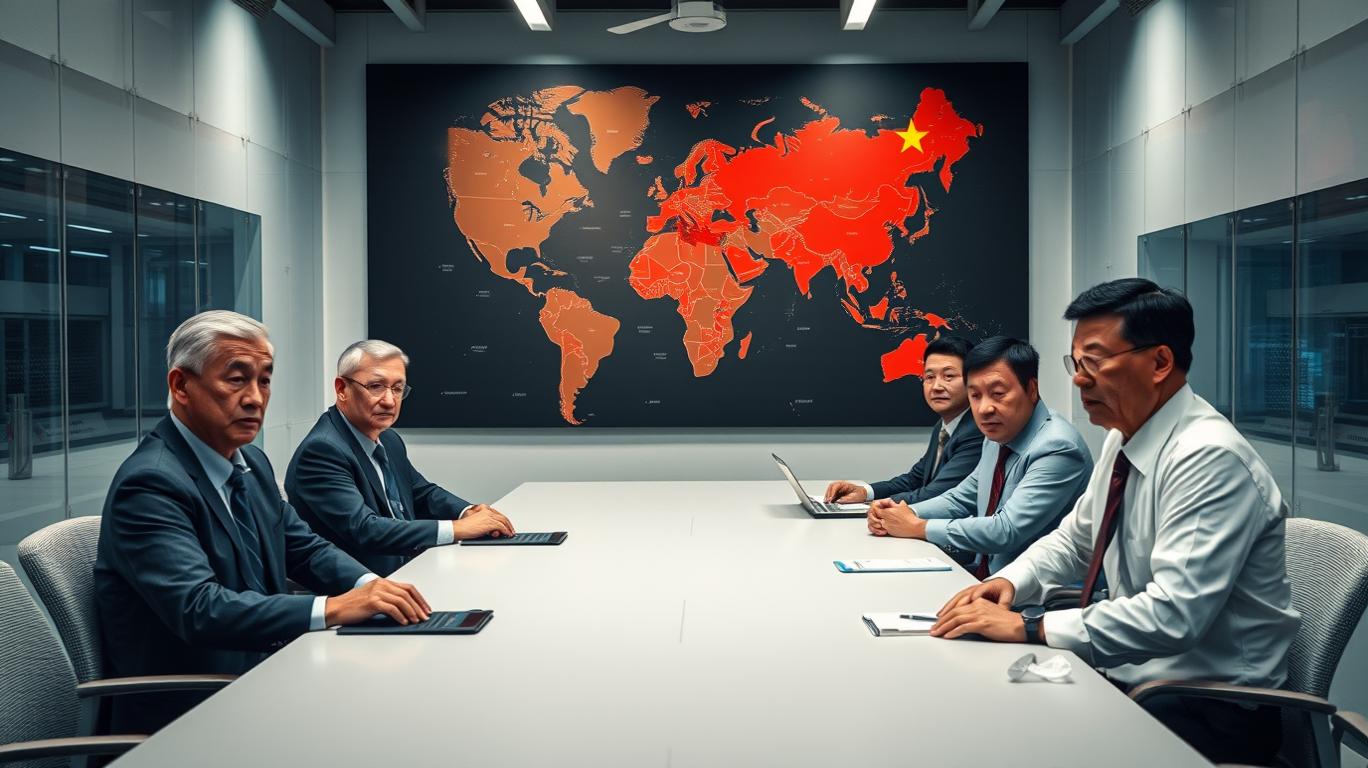
China's Ministry of Commerce has been vocal in its opposition to the U.S. curbs, warning of retaliatory measures if Washington escalates the restrictions. "China is firmly opposed to the US overstretching the concept of national security, abusing export control measures and making malicious attempts to block and suppress China," said Mao Ning, a spokesperson for China's Foreign Ministry.
The potential retaliation from China could have significant implications for the global semiconductor market and supply chains. Targeted Chinese chip companies may struggle to source semiconductor equipment, leading them to explore alternative suppliers or develop their own technology. This could result in higher costs and slower innovation. Chinese retaliation could also disrupt global supply chains, impacting both U.S. and Chinese industries.
The geopolitical tension between the U.S. and China is reshaping the global semiconductor market. Competitors like South Korea and Taiwan may step in to fill the void left by Chinese companies, leading to increased competition and innovation. However, the U.S. may also impose secondary sanctions on these competitors, complicating the situation.
The political dynamics surrounding the semiconductor industry are influencing investment decisions, particularly in the AI memory chip sector. China's threat of retaliation could lead to supply chain disruptions and increased investment in domestic semiconductor production, benefiting firms like SMIC and ChangXin. However, U.S. restrictions on AI memory chips, such as high-bandwidth memory (HBM), could hinder China's AI development, potentially spurring innovation in alternative memory technologies.
In conclusion, the geopolitical tension between the U.S. and China over semiconductor technology is a complex and evolving situation. The potential impacts on the global semiconductor market and supply chains, as well as the broader geopolitical landscape, are significant. Investors and businesses should closely monitor this developing situation and consider the potential implications for their portfolios and operations.
The Biden administration is expected to unveil new export controls on China as early as next week, building on earlier measures aimed at limiting the country's access to advanced semiconductor technology. The latest proposal could include sanctioning dozens of Chinese companies that produce semiconductor equipment, as well as placing restrictions on a handful of chip manufacturing plants with ties to Huawei.
China's Ministry of Commerce has been vocal in its opposition to the U.S. curbs, warning of retaliatory measures if Washington escalates the restrictions. "China is firmly opposed to the US overstretching the concept of national security, abusing export control measures and making malicious attempts to block and suppress China," said Mao Ning, a spokesperson for China's Foreign Ministry.
The potential retaliation from China could have significant implications for the global semiconductor market and supply chains. Targeted Chinese chip companies may struggle to source semiconductor equipment, leading them to explore alternative suppliers or develop their own technology. This could result in higher costs and slower innovation. Chinese retaliation could also disrupt global supply chains, impacting both U.S. and Chinese industries.
The geopolitical tension between the U.S. and China is reshaping the global semiconductor market. Competitors like South Korea and Taiwan may step in to fill the void left by Chinese companies, leading to increased competition and innovation. However, the U.S. may also impose secondary sanctions on these competitors, complicating the situation.
The political dynamics surrounding the semiconductor industry are influencing investment decisions, particularly in the AI memory chip sector. China's threat of retaliation could lead to supply chain disruptions and increased investment in domestic semiconductor production, benefiting firms like SMIC and ChangXin. However, U.S. restrictions on AI memory chips, such as high-bandwidth memory (HBM), could hinder China's AI development, potentially spurring innovation in alternative memory technologies.
In conclusion, the geopolitical tension between the U.S. and China over semiconductor technology is a complex and evolving situation. The potential impacts on the global semiconductor market and supply chains, as well as the broader geopolitical landscape, are significant. Investors and businesses should closely monitor this developing situation and consider the potential implications for their portfolios and operations.

Divulgación editorial y transparencia de la IA: Ainvest News utiliza tecnología avanzada de Modelos de Lenguaje Largo (LLM) para sintetizar y analizar datos de mercado en tiempo real. Para garantizar los más altos estándares de integridad, cada artículo se somete a un riguroso proceso de verificación con participación humana.
Mientras la IA asiste en el procesamiento de datos y la redacción inicial, un miembro editorial profesional de Ainvest revisa, verifica y aprueba de forma independiente todo el contenido para garantizar su precisión y cumplimiento con los estándares editoriales de Ainvest Fintech Inc. Esta supervisión humana está diseñada para mitigar las alucinaciones de la IA y garantizar el contexto financiero.
Advertencia sobre inversiones: Este contenido se proporciona únicamente con fines informativos y no constituye asesoramiento profesional de inversión, legal o financiero. Los mercados conllevan riesgos inherentes. Se recomienda a los usuarios que realicen una investigación independiente o consulten a un asesor financiero certificado antes de tomar cualquier decisión. Ainvest Fintech Inc. se exime de toda responsabilidad por las acciones tomadas con base en esta información. ¿Encontró un error? Reportar un problema


SOBRE NOSOTROS
Nuestra historiaAutores de noticiasBase de conocimientosPolítica de privacidadTérmino de usoDescargo de responsabilidad de corretaje de tercerosTérminos de uso de AIMEDivulgaciones de riesgos de AInvest AICarrerasCONTÁCTENOS
Email: support@ainvest.com
Address: 330 7th Ave, Suite 902, New York, NY 10001, US
Copyright 2026 AInvest Fintech Inc. All rights reserved.


Comentarios
Aún no hay comentarios