
China's Robot Revolution: Strategic Opportunities in Automation, Reskilling, and the AI-Driven Workforce
The Automation Surge: A Nation Rewired
China's automation revolution is accelerating at an unprecedented pace. In 2024 alone, the country installed nearly 300,000 industrial robots, surpassing the combined installations of the rest of the world and accounting for 54% of global deployments. By 2025, China's operational robot stock exceeded 2 million units, with a robot density of 470 per 10,000 manufacturing employees-placing it third globally. This surge is fueled by government initiatives like "Made in China 2025," which prioritize self-sufficiency in high-tech manufacturing, and the rising cost of labor, which now exceeds $5 per hour in many sectors.
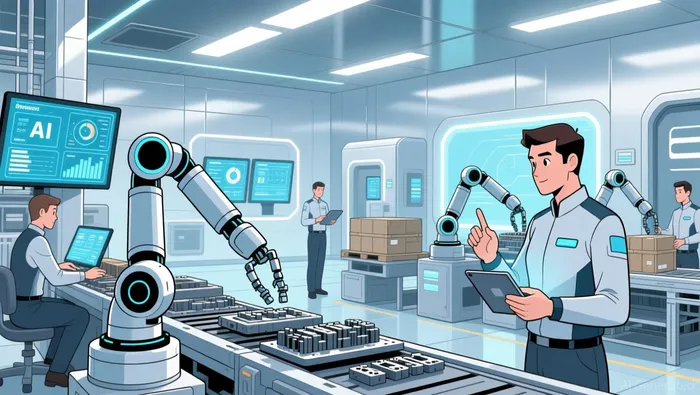 Domestic robotics firms are capitalizing on this momentum. Companies like Estun Automation and SIASUN Robot & Automation have emerged as key players, producing AI-powered robots tailored for SMEs and specialized industries such as automotive and food processing. Meanwhile, global giants like ABB and Yaskawa are adapting to China's needs by localizing R&D and manufacturing, as seen in ABB's 2025 launch of AI-integrated robot families in Shanghai. The market is projected to grow at a 6.1% CAGR through 2033, reaching $16.5 billion in revenue, with service robotics alone expected to dominate at $7.3 billion in 2025.
Demographic Decline and the Labor Market Reboot
Underpinning this automation boom is a demographic crisis. Over the past five years, China's working-age population has declined, while the aging population has grown to 26% of the total. This has created acute labor shortages in manufacturing and construction, exacerbated by the property market collapse, which has displaced millions of workers. Rising wages-up 8% annually in recent years have further incentivized automation adoption, as companies seek to offset labor costs and maintain competitiveness.
The government's response has been twofold: accelerating automation and investing in reskilling. The 14th Five-Year Plan (2021–2025) emphasizes vocational education, with over 70% of new high-skilled workers in modern industries trained through these programs. Additionally, the state-backed venture capital fund aims to inject nearly RMB 1 trillion over 20 years to support robotics and AI, ensuring a steady pipeline of talent and innovation.
Reskilling Platforms: Bridging the Skills Gap
As automation displaces traditional jobs, reskilling has become a national priority. By 2025, China aims to train 30 million workers in advanced manufacturing, the digital economy, and low-altitude industries like drones. This effort is supported by a robust policy framework, including an eight-level worker system that ties vocational qualifications to wages and promotions. Digital tools, such as AI-based training courses powered by domestic large language models, are also being deployed to scale reskilling efforts.
The online learning platforms market is booming, projected to reach $40.43 billion in 2025, with 21.8% user penetration and an average revenue per user of $130.16. While specific platform names are not disclosed in the data, the government's focus on aligning education with industrial needs-such as AI literacy and data science-suggests strong demand for platforms that bridge the gap between academia and industry.
Strategic Investment Opportunities
For investors, three sectors stand out as high-conviction plays in China's robot revolution:
Robotics Manufacturers: Domestic firms like Estun Automation and SIASUN are well-positioned to benefit from the 57% market share held by Chinese producers. Their focus on cost-effective, AI-enhanced robots for SMEs aligns with the government's push for localized innovation.
AI Infrastructure: China's AI investment hit $125 billion in 2025, with 38% coming from the state. Companies like Alibaba and Tencent, which are investing heavily in cloud AI, e-commerce intelligence, and AI chip startups, are key beneficiaries. The rise of AI unicorns and public market activity-such as ByteDance's $4.2 billion Series F round-further underscores the sector's potential.
Reskilling Platforms: With the government allocating $45 billion for AI education and talent development, platforms that offer scalable, AI-driven training programs are set to thrive. The integration of vocational education with industry needs, as seen in the 14th Five-Year Plan, ensures sustained demand for these services.
Conclusion: A Future Built on Automation and Adaptability
China's robot revolution is not merely a technological shift but a strategic imperative to sustain economic growth amid demographic headwinds. By investing in robotics, AI infrastructure, and reskilling platforms, investors can align with a nation determined to lead the next industrial era. The government's aggressive policies, coupled with the private sector's innovation, create a compelling case for long-term exposure to these sectors. As the world watches, China's transformation offers a blueprint for how automation and education can redefine the future of work.







Comentarios
Aún no hay comentarios