
China's Policy Shift: Implications for Global Commodity and EM Equity Markets
Central Bank Signaling and Policy Tools
The PBOC's recent pledge to prioritize "counter-cyclical adjustments" and maintain ample liquidity underscores its commitment to supporting growth, according to a Business Times report. Key measures include potential reductions in interest rates and reserve requirement ratios (RRR), alongside closer monitoring of bond yields to manage financial stability; a CTOL article also highlights these tools and their aim to bolster credit supply while mitigating risks from external shocks, such as trade tensions or global growth slowdowns.
However, the central bank's communication strategy-emphasizing "gradualism" and "policy coordination"-has introduced a layer of complexity for global investors. Academic research highlights that even subtle shifts in PBOC announcements, such as increased focus on macroeconomic conditions or regulatory reforms, can sway international capital flows, as shown in the PBC communications study. For instance, the study finds that heightened attention to topics like foreign exchange management or banking sector reforms tends to deter investment, while clarity on growth-supporting measures encourages inflows.
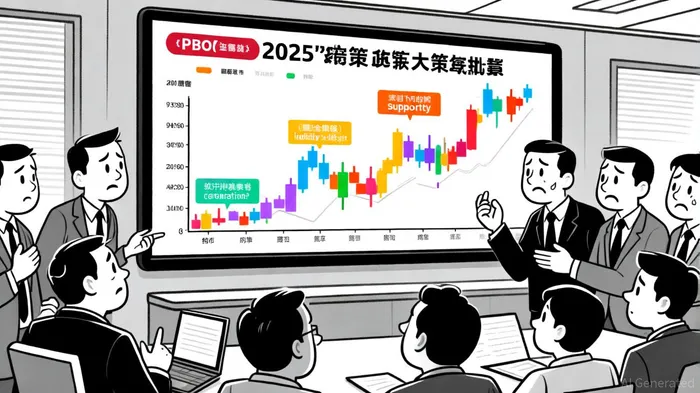
Capital Flows and EM Equity Markets
The MSCI EM Index, a barometer for emerging market equities, has exhibited mixed reactions to PBOC policy signals. While institutional investors like Carlyle Group have trimmed stakes in EM-focused vehicles such as Smart Share Global Limited (NYSE: EM), others, including Palliser Capital UK Ltd, have increased holdings, reflecting divergent risk appetites, as reported in a MarketBeat filing. As of late October 2025, the EM index saw a 2.3% rebound, potentially influenced by PBOC assurances of continued liquidity support; the MarketBeat filing also noted the position changes by large institutional holders.
This volatility underscores the asymmetric nature of EM markets, where policy clarity can unlock opportunities but ambiguity breeds caution. The PBOC's emphasis on "normalized institutional arrangements" for stock and bond markets, noted in the CTOL piece, may further stabilize investor confidence, though competing narratives-such as governance disputes in EM-listed firms-complicate the outlook, as discussed in a Yahoo Finance piece.
Commodity Market Dynamics
Global commodity prices, particularly for copper and crude oil, remain sensitive to China's policy trajectory. As the world's largest consumer of industrial metals and energy, China's demand outlook directly influences price trends. While the PBOC's 2025 plan does notNOT-- explicitly target commodity markets, its focus on economic growth and infrastructure-linked credit expansion implies sustained demand for raw materials, a point the CTOL article highlights.
Academic studies suggest that PBOC communication can indirectly affect commodity prices by altering investor perceptions of China's growth resilience. For example, during periods of heightened policy uncertainty (e.g., 2008 financial crisis, COVID-19 pandemic), commodity markets exhibited sharp corrections as investors recalibrated risk premiums; the PBC communications study similarly documents these transmission channels. The current environment, marked by the PBOC's "gradualist" approach, may limit such volatility but not eliminate it entirely.
Forward-Looking Implications
Analysts anticipate further monetary easing and fiscal stimulus in the coming months as China's growth momentum weakens, per the Business Times report. Such measures could drive capital inflows into EM equities and commodities, particularly if global central banks adopt dovish stances. However, the PBOC's communication will remain pivotal: clear, consistent messaging will be critical to avoiding misinterpretations that could trigger abrupt market reversals.
Investors should monitor two key areas:
1. Policy Coordination: How effectively the PBOC aligns with fiscal authorities to avoid conflicting signals.
2. Communication Nuance: Shifts in emphasis on topics like foreign exchange or regulatory reforms, which could signal tightening or easing biases, as the PBC communications study suggests.
In conclusion, China's 2025 policy shift represents both an opportunity and a challenge for global markets. By dissecting the PBOC's communication strategies and policy tools, investors can better navigate the interplay between capital flows, commodity demand, and EM equity valuations.







Comentarios
Aún no hay comentarios