
China's Phosphate Export Freeze and Global Fertilizer Market Disruption: Investment Risks and Opportunities in a Supply-Constrained Agrichemical Sector
The global agrichemical sector is navigating a pivotal inflection point, driven by China's strategic phosphate export freeze and its cascading effects on fertilizer markets. As the world's largest producer and exporter of phosphate-based fertilizers, China's decision to prioritize domestic supply and stabilize prices has reshaped global trade dynamics, creating both risks and opportunities for investors. This analysis examines the structural shifts in the agrichemical sector, evaluates the implications of phosphate supply constraints, and identifies pathways for resilient investment in a fragmented market.
China's Export Controls: A Strategic Shift with Global Ramifications
China's dual-track pricing model for phosphate fertilizers-where domestic prices are tightly regulated while export prices reflect global market conditions-has been a cornerstone of its 2025 policy framework according to reports. By imposing export quotas and urging major producers to suspend phosphate exports until August 2025 as per Beijing's directive, Beijing aims to secure domestic agricultural output ahead of the planting season and address lithium-iron-phosphate demand for electric vehicles according to market analysis. These measures, however, have tightened global phosphate supplies, with Morocco and Saudi Arabia unable to fully offset the shortfall according to IFPRI research.
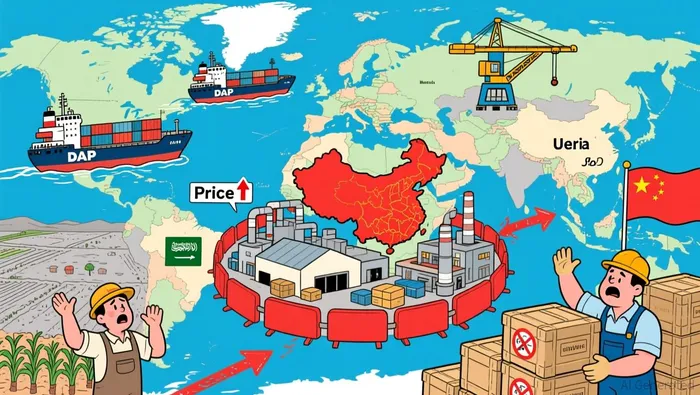 The immediate consequence has been a surge in global phosphate prices. Diammonium Phosphate (DAP) prices, for instance, rose 41% year-on-year in September 2025, reaching $554.8 per ton, while phosphate prices hit a three-year high of $795.10 per metric ton in August 2025 according to agricultural forecasts. Such volatility underscores the fragility of a market reliant on concentrated production hubs and highlights the risks of overexposure to geopolitical and regulatory shifts.
Investment Risks: Volatility, Affordability, and Geopolitical Tensions
The phosphate crisis has exacerbated existing vulnerabilities in the agrichemical sector. Elevated fertilizer prices have strained farmer profitability, particularly for crops like maize, wheat, and rice, which are highly dependent on phosphate inputs according to World Bank data. The phosphate price-to-crop price ratio remains elevated relative to pre-2022 levels according to IFPRI analysis, squeezing margins and raising concerns about food security in import-dependent regions.
Geopolitical tensions further compound these risks. The EU's tariffs on Russian and Belarusian fertilizers, coupled with U.S. tariffs on Saudi phosphate imports according to market reports, have fragmented trade flows and intensified supply chain bottlenecks. Meanwhile, structural supply challenges-such as the concentration of phosphate production in a few key regions-make the market acutely sensitive to policy changes or geopolitical shocks according to market intelligence. For investors, this environment demands rigorous risk assessment and diversified portfolios to mitigate exposure to single points of failure.
Opportunities in Innovation and Resilience
Amid the disruption, the agrichemical sector is witnessing a pivot toward innovation and sustainability. The phosphate crisis has accelerated interest in biofertilizers, which leverage microbial technology to solubilize phosphorus and reduce reliance on mined resources. The global biofertilizer market, valued at $2.70 billion in 2024, is projected to grow at a 9.1% CAGR, reaching $4.90 billion by 2032. These products not only address supply constraints but also align with global sustainability goals, offering long-term value for investors seeking to capitalize on the transition to regenerative agriculture.
Regional producers are also repositioning themselves to thrive in a supply-constrained world. In India and Brazil, governments are incentivizing biofertilizer adoption through subsidies and sustainable farming initiatives, while agrodealers are integrating biological inputs into their offerings and developing in-house microbial production capabilities. Technological advancements, such as microbial consortia and nano-carriers, are enhancing the efficacy of biofertilizers, creating opportunities for companies at the forefront of agritech innovation.
Navigating the New Normal: A Strategic Investment Framework
For investors, the path forward requires balancing short-term volatility with long-term resilience. Key strategies include:
1. Diversification: Allocating capital across traditional agrichemical players and emerging biofertilizer firms to hedge against phosphate price swings.
2. Geographic Exposure: Targeting regions like India and Brazil, where policy support and local demand for sustainable inputs are driving growth according to market research.
3. Technology-Driven Solutions: Investing in companies developing advanced delivery mechanisms (e.g., encapsulation) and digital tools to optimize nutrient management according to market analysis.
4. Risk Mitigation: Engaging with stakeholders to address regulatory hurdles and quality control challenges in the biofertilizer sector according to industry reports.
The phosphate crisis also underscores the importance of supply chain localization. As tariffs and trade restrictions persist, companies that prioritize regional production and diversified supplier networks will be better positioned to navigate disruptions.
Conclusion
China's phosphate export freeze has exposed the vulnerabilities of a global agrichemical sector long reliant on centralized production and trade. While the immediate risks-price volatility, affordability challenges, and geopolitical tensions-remain significant, the crisis also catalyzes a shift toward innovation and sustainability. Investors who recognize this duality and align their strategies with the evolving landscape-whether through biofertilizers, regional producers, or technology-driven solutions-stand to benefit from a sector in transformation. In an era of constrained supplies, the ability to adapt and innovate will define long-term success.







Comentarios
Aún no hay comentarios