
China Natural Resources (CHNR): Navigating Delisting Risk and Regulatory Turbulence Amid Stagnant Fundamentals
China Natural Resources (NASDAQ: CHNR) has become a cautionary tale in the U.S. market for Chinese-listed companies, with its stock teetering on the brink of delisting and its financial health increasingly scrutinized. As of December 2025, the company faces a dual challenge: regaining compliance with Nasdaq's minimum bid price rule while navigating a complex web of regulatory and operational headwinds in its core markets of Inner Mongolia and Zimbabwe. This analysis evaluates CHNR's investment merit by dissecting its delisting risk, financial instability, and the compounding effects of regulatory shifts in critical mineral sectors.
Delisting Risk: A Looming Deadline
CHNR's stock has languished below Nasdaq's $1.00 minimum bid price threshold for 30 consecutive business days, triggering a delisting notice in July 2024. The company was granted a second 180-day grace period, with compliance now required by June 30, 2025. To avoid delisting, CHNRCHNR-- must maintain a closing bid price of at least $1.00 for ten consecutive business days before this deadline. , , reflecting deep investor skepticism.
. However, CHNR's positive free cash flow yield and a cash balance exceeding debt notably, $0.10 million in cash and cash equivalents as of June 2025 offer limited flexibility to stabilize its stock price. Analysts caution that without a significant capital infusion or strategic restructuring, CHNR's delisting is not a question of if but when.
Regulatory Challenges: A Double-Edged Sword
Regulatory shifts in both China and Zimbabwe are compounding CHNR's operational and financial pressures. In China, the centralization of lithium mining oversight under the Ministry of Natural Resources has introduced stringent compliance requirements, including a minimum lithium content threshold of 0.4% Li₂O and "green mine" sustainability criteria according to reports. These reforms, part of a broader effort to consolidate control over strategic minerals, have already triggered on the Guangzhou Futures Exchange. While CHNR's Inner Mongolia operations are not directly tied to lithium, the sector-wide regulatory tightening signals a shift toward controlled, sustainable development-a model that could limit CHNR's growth potential if it fails to adapt.
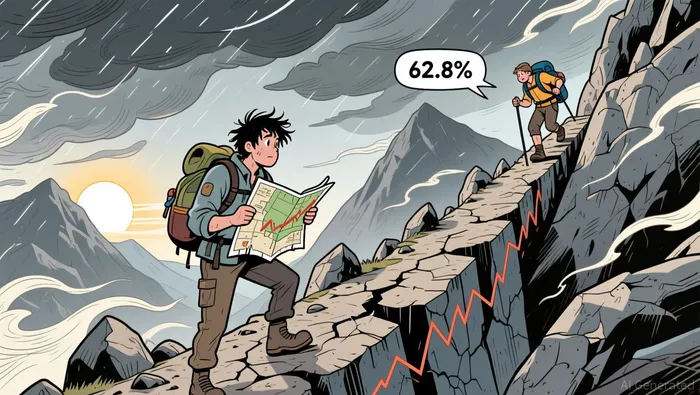 In Zimbabwe, CHNR's mining activities face a different set of challenges. The Zimbabwean government's January 2026 decision to double gold royalty rates has immediately reduced profitability for mining firms, including CHNR. Local governance issues, such as weak enforcement of environmental and labor standards, further exacerbate risks. Reports of environmental degradation in areas like Christmas Pass Mountain and the Cactus Port Dam have drawn public backlash, with critics accusing the government of enabling corporate malfeasance for personal gain. These factors not only threaten CHNR's operational licenses but also its reputation as a responsible investor.
Acquisition Ambiguity: A High-Stakes Gamble
, a lithium mine in Zimbabwe, was initially positioned as a strategic lifeline. The deal, structured with 50% paid in restricted shares and 50% in promissory notes or cash, was expected to close in 2024 according to reports. However, as of December 2025, the acquisition remains in limbo, with the company citing unresolved conditions precedent such as financing and due diligence as reported. While the transaction could diversify CHNR's asset base and align with global demand for lithium, its delays raise questions about the company's ability to execute large-scale projects under financial and regulatory strain.
Investment Merit: A Calculated Risk?
For investors, CHNR presents a high-risk, high-reward proposition. The company's delisting risk and weak fundamentals suggest a speculative bet, but its cash position and the potential upside of the Williams Minerals acquisition-if completed-could justify limited exposure. However, the regulatory environment in both China and Zimbabwe remains a critical wildcard. In China, the centralization of mineral control may limit CHNR's access to critical resources, while in Zimbabwe, political and environmental risks could derail operations.
Moreover, broader geopolitical trends, such as U.S. policy shifts aimed at curbing financial ties with China, add another layer of uncertainty. These factors could amplify CHNR's volatility, making it unsuitable for risk-averse portfolios.
Conclusion
China Natural Resources' path forward is fraught with challenges. Its delisting risk, coupled with regulatory turbulence in key markets and an uncertain acquisition timeline, paints a picture of a company struggling to balance survival with growth. While its cash reserves and strategic ambitions offer glimmers of hope, the odds of a turnaround appear slim without significant external support. For investors, CHNR remains a speculative play-best approached with caution and a clear understanding of the risks.







Comentarios
Aún no hay comentarios