
China Merchants Shekou's September Sales Surge and Growth Potential: A Strategic Play in Post-Pandemic Urban Renewal
China Merchants Shekou Industrial Zone Holdings (CMSK) has emerged as a standout performer in China's post-pandemic real estate market, with September 2025 contracted sales hitting 16.7 billion yuan-a figure that underscores its resilience, according to a Reuters report. This follows an August sales surge of 19.455 billion yuan and a cumulative total of 124.008 billion yuan for the first eight months of the year, as noted in a FilingReader article. Such performance is not accidental but a reflection of the company's strategic alignment with national urban renewal priorities and its diversified operational model.
Market Recovery: Stabilization in Tier-1 Cities Drives Demand
China's real estate sector in 2025 is marked by uneven recovery, with Tier-1 cities like Shanghai and Shenzhen leading the rebound. According to a Pandaperspectives analysis, national housing prices stabilized in Q1 2025, with year-on-year declines slowing to 2%-a marked improvement from the 6% declines in 2024. In contrast, Tier-2 and Tier-3 cities continue to face price declines of 3–5%, though at a decelerating pace (the Pandaperspectives analysis highlights this divergence). CMSK's focus on Tier-1 and select Tier-2 markets has positioned it to capitalize on that split.
Policy interventions, including reduced down payment requirements and lower mortgage rates, have further bolstered demand in Tier-1 cities, where transaction volumes rose 15–20% year-on-year, according to the same Pandaperspectives analysis. This aligns with CMSK's aggressive land acquisitions in prime urban centers, such as Beijing's Tongzhou District and Hangzhou's Yuhang District (reported in the Reuters piece). The company's mixed-use developments, like the PAVILIA COLLECTION in Hong Kong's Northern Metropolis-a project featuring 2,300 residential units and a commercial complex-exemplify its ability to tap into high-demand, government-backed urbanization trends (also noted by Reuters).
Strategic Positioning: Urban Renewal and Government Subsidies
The Chinese government's 2025 urban renewal initiatives have become a critical growth driver for CMSK. As outlined by a Beijing Post article, up to 20 cities-including Beijing, Guangzhou, and Tianjin-are receiving subsidies to modernize infrastructure, with allocations ranging from 800 million yuan for eastern cities to 1.2 billion yuan for western cities. While CMSK has not received direct subsidies, its subsidiary, Shanghai Merchants Real Estate, has invested 2 billion yuan in Shanghai's urban renewal guidance fund, targeting projects like old city reconstruction and rental housing, according to an EqualOcean briefing. This strategic alignment with government priorities ensures CMSK's participation in high-impact, long-term urban development.
Moreover, CMSK's sustainability initiatives-such as low-energy pre-fabricated buildings and a 20% carbon emission reduction target by 2025-position it to meet regulatory and consumer demands for eco-friendly development, as detailed in a Pestel Analysis profile. The company's use of Building Information Modeling (BIM) and big data analytics further enhances operational efficiency, a critical advantage in a sector grappling with overcapacity and affordability challenges (the Pestel Analysis profile also highlights these capabilities).
Risks and Opportunities in a Fragmented Market
Despite its strengths, CMSK operates in a sector still plagued by structural issues. Office and retail markets, for instance, face persistently high vacancy rates and declining rents, a trend noted by Pandaperspectives. However, CMSK's focus on residential and mixed-use projects-segments showing greater resilience-mitigates this risk. Its expansion into industrial park management and port logistics also diversifies revenue streams, reducing reliance on volatile property sales (as the Reuters report discusses).
Looking ahead, Pandaperspectives cites CBRE projections of 4.7% GDP growth for 2025, supported by a moderately loose monetary policy. If urban renewal subsidies are extended beyond 2025, CMSK's pipeline of projects in Tier-1 cities and its partnerships with state-owned enterprises could further accelerate its growth.
Conclusion: A Model for Sustainable Urban Development
China Merchants Shekou's September sales surge is not an isolated event but a symptom of its strategic foresight. By aligning with government-led urban renewal, leveraging policy-driven demand in Tier-1 cities, and prioritizing sustainability, CMSK has carved out a niche in a sector transitioning from speculative growth to long-term resilience. For investors, the company represents a compelling case study in navigating China's post-pandemic real estate landscape.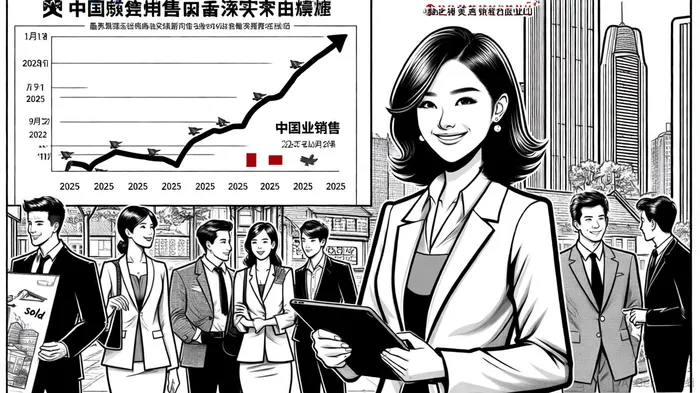







Comentarios
Aún no hay comentarios