
China's Landslide-Prone Regions: A Groundbreaking Opportunity for Climate Resilience Investors
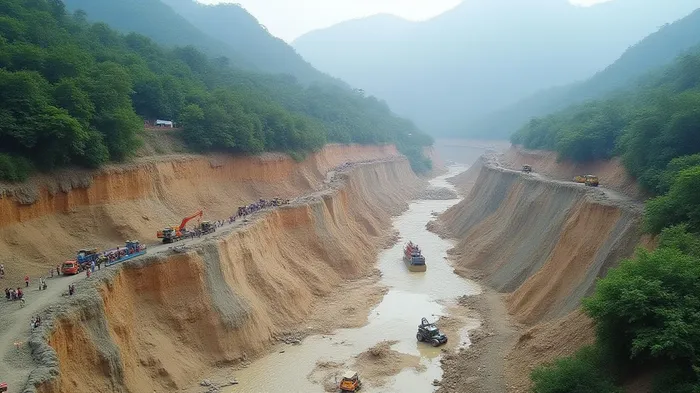
The recent surge in landslides across southern China—from the devastating February 2025 landslide in Sichuan-Yunnan to the May floods in Guangxi—has laid bare the vulnerabilities of existing infrastructure in the face of climate-driven extreme weather. These disasters, which claimed dozens of lives and displaced hundreds of thousands, are not isolated incidents. They are harbingers of a growing crisis demanding urgent investment in climate resilience. For investors, this is a golden opportunity to back companies and technologies that can rebuild and future-proof China’s landslide-prone regions. The combination of government mandates, rising climate risk, and technological innovation is creating a multi-billion-dollar market for climate resilience infrastructure.
The Call for Resilience: China’s Policy Response
China’s 14th Five-Year Plan (2021–2025) already earmarked ¥2.3 trillion (US$320 billion) for disaster prevention and ecological restoration. In 2023, the National Development and Reform Commission (NDRC) launched a “Climate Resilience Infrastructure Initiative”, prioritizing landslide-prone regions in provinces like Sichuan, Yunnan, and Guangxi. The initiative targets three pillars:
1. Smart Urban Planning: Flood-resistant materials, green infrastructure, and AI-driven risk mapping.
2. Geotechnical Engineering: Slope stabilization, landslide early warning systems, and advanced drainageWMS-- networks.
3. Disaster Recovery Tech: Drones for post-disaster assessment, IoT sensors for real-time monitoring, and rapid-response construction materials.
The February 2025 Sichuan-Yunnan landslide, which buried 47 people, prompted President Xi Jinping to order ¥6.9 billion (US$1.0 billion) in immediate infrastructure repairs and long-term risk mitigation. This reflects a broader shift: China’s disaster recovery spending is now prioritizing resilience over mere reconstruction.
Investment Themes to Watch
1. Smart Urban Planning:
The NDRC’s mandate to retrofit flood-prone cities with climate-resilient designs is fueling demand for companies like Broad Sustainable Building (BSB), which specializes in modular, disaster-resistant construction. BSB’s prefabricated buildings, designed to withstand earthquakes and floods, are already being deployed in Guangdong’s landslide zones.
Geotechnical Engineering:
Companies such as China Railway Construction Corporation (CRRC) are at the forefront of landslide mitigation. CRRC’s patented “slope reinforcement net” technology, combined with AI-driven risk assessment tools, has been deployed in Yunnan’s mountainous regions to stabilize unstable terrain. The company’s exposure to infrastructure projects in landslide-prone areas is expected to grow by 15–20% annually through 2027.Disaster Recovery Tech:
Huawei and ZTE are leveraging 5G and IoT to create real-time landslide monitoring systems. Their sensors, embedded in slopes and rivers, can alert authorities to risks 48–72 hours in advance—a critical upgrade from current systems. Meanwhile, drone manufacturers like DJI are partnering with provincial governments to map landslide zones and accelerate post-disaster assessments.
The ESG Advantage
Investments in climate resilience infrastructure align perfectly with global ESG trends. China’s climate targets—including its goal to peak carbon emissions by 2030—depend on reducing disaster-related carbon footprints. For example, smart urban planning projects often integrate renewable energy systems and green spaces, lowering long-term emissions. Investors in this sector can expect ESG-focused funds and sovereign wealth funds to drive demand for these companies.
Risks and Considerations
While the opportunity is vast, execution risks remain. Logistical bottlenecks, as seen during the Hebei floods of 2024, underscore the need for streamlined coordination between local governments and contractors. Additionally, securing financing for smaller firms may prove challenging without explicit policy guarantees. Investors should prioritize companies with existing government contracts and proven track records in high-risk regions.
Conclusion: A Multi-Decade Growth Story
The landslides of 2023–2025 are not just disasters—they are catalysts for a seismic shift in China’s infrastructure priorities. With climate risks intensifying and urbanization advancing into vulnerable zones, the demand for climate resilience solutions will only grow. Investors who act now to back the companies and technologies leading this transformation will position themselves to profit from a market that could exceed ¥5 trillion (US$700 billion) by 2030. The time to act is now: the ground is shifting, and the stakes could not be higher.







Comentarios
Aún no hay comentarios